


|
Seven Roller Universal Fairlead with Upper Roller | CB 3062 Type D for Ship Mooring and Towing
Product Details:
| Place of Origin: | China |
| Brand Name: | Zhongyuan Marine Equipmen |
| Certification: | CCS, NK, BV, ABS, DNV, LR, KR, IRS, RS, RINA, CRS, Makers Test Certificate |
| Model Number: | Standard or Customized |
Payment & Shipping Terms:
| Minimum Order Quantity: | 1 Unit |
|---|---|
| Price: | Based on quotation |
| Packaging Details: | Export standard pallet or customized packing |
| Delivery Time: | Based on project requirements |
| Payment Terms: | T/T, L/C |
| Supply Ability: | Customized production based on project requirements |
|
Detail Information |
|||
| Model Type: | Type D | Materials: | C-Mn Steel, Mild Steel, Stainless Steel |
|---|---|---|---|
| Standard: | CB/T*3062-79 | Roller No.: | 7 Rollers |
| Steel Cable Diameters: | 19.5mm~68.0mm | Nylon Rope Diameters: | 36mm~100mm |
| Weight: | 247kg~5100kg | Surface Treatment: | Sandblasting To S2.5 + One Layer Of Epoxy Shop Primer, Polished, Galvanized, Customized Surface Treatment Available |
| Classification Certificates: | CCS, NK, BV, ABS, DNV, LR, KR, IRS, RS, RINA | ||
| Highlight: | Universal Fairleads Rollers,CB 3062 Rollers,Seven Tube Rollers |
||
Product Description
Shipside Seven-Roller Universal Fairlead with Upper Roller for Mooring & Towing | CB/T 3062-79 Type D
Product Overview
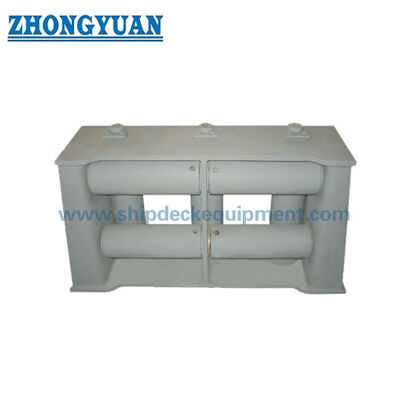
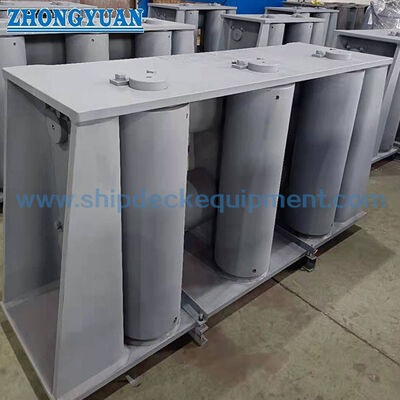
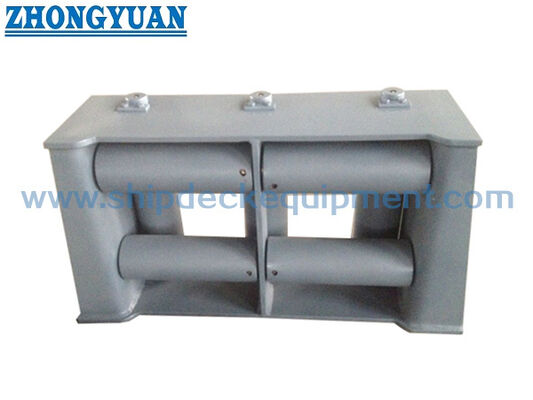
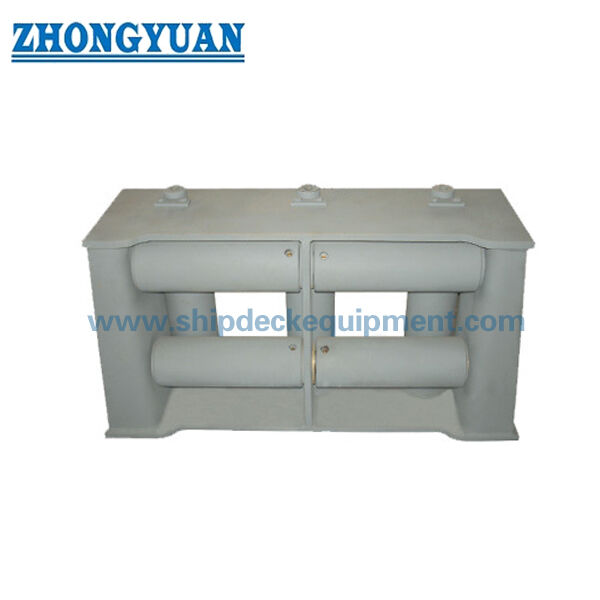
The CB 3062 Type D seven-roller universal fairlead is a shipside rope-guiding arrangement used where mooring ropes or towing cables may approach the fairlead from several directions. The Type D arrangement uses three vertical rollers and four horizontal rollers, including the upper roller arrangement, to guide steel wire ropes and nylon ropes through a wider operating angle while reducing direct rubbing against the vessel structure.
This page is written for the CB/T*3062-79 Type D seven-roller fairlead based on the supplied parameter table. It is normally installed at the shipside of the freeboard deck or a comparable mooring / towing rope lead position. The product should be treated as a rope-guiding fairlead, not as a winch, lifting device, or standalone load-bearing towing fitting. Rope diameter, installation structure, local reinforcement, roller material, shaft details, and certificate scope should be confirmed according to the vessel drawing and project requirement.
Quick Specifications
- Product type: Seven-roller universal fairlead with upper roller → multi-direction rope guidance for shipside mooring and towing rope paths.
- Standard and model: CB/T*3062-79 Type D → supplied data identifies the product as Type D with 7 rollers.
- Roller arrangement: 3 vertical rollers + 4 horizontal rollers → helps guide ropes from multiple lead directions around the fairlead opening.
- Applicable rope range: steel wire rope 19.5 to 68.0 mm / nylon rope 36 to 100 mm → use as rope-size selection reference, not as SWL or rope breaking load.
- Main size range: L 944 to 2330 mm and H 508 to 1130 mm → useful for shipside layout checking, installation clearance, and quotation confirmation.
- Weight range: 247 to 5100 kg from the supplied table → important for handling, lifting during installation, packing, and freight planning.
- Installation focus: shipside / freeboard deck area → hull reinforcement, weld detail, and rope lead angle should be confirmed by the shipyard or design office.
- Manufacturing focus: roller rotation, axle fit, contact surface smoothness, frame alignment, corrosion protection, and maintainable roller assembly.
Main Technical Parameters
| Steel Rope Dia. |
Nylon Rope Dia. |
E | F | D | d | L | Ll | L2 | L3 | B | Bl | B2 | H | Hl | Weight (kg) |
| 19.5 | 36 | 200 | 150 | 100 | 40-0.5 | 944 | 716 | 300 | 844 | 238 | 194 | 108 | 508 | 250 | 247 |
| 22.5 | 40 | 200 | 150 | 120 | 50-0.5 | 1048 | 776 | 320 | 928 | 280 | 232 | 128 | 552 | 270 | 377 |
| 26 | 45 | 200 | 180 | 130 | 55-0.5 | 1106 | 810 | 330 | 976 | 304 | 250 | 138 | 606 | 310 | 485 |
| 32 | 70 | 220 | 180 | 150 | 65-0.5 | 1250 | 910 | 370 | 1100 | 346 | 288 | 158 | 670 | 330 | 716 |
| 34.5 | 80 | 240 | 200 | 160 | 70-0.5 | 1340 | 980 | 400 | 1180 | 370 | 308 | 168 | 710 | 360 | 849 |
| 37.5 | 85 | 240 | 200 | 180 | 80-0.5 | 1450 | 1040 | 420 | 1270 | 417 | 345 | 190 | 770 | 380 | 951 |
| 43 | 95 | 260 | 210 | 200 | 90-0.5 | 1596 | 1146 | 460 | 1396 | 459 | 385 | 210 | 820 | 410 | 1546 |
| 52 | 100 | 260 | 220 | 230 | 100-0.5 | 1746 | 1236 | 490 | 1516 | 521 | 445 | 240 | 910 | 450 | 2143 |
| 60.5 | - | 300 | 240 | 260 | 120-0.5 | 1990 | 1990 | 560 | 1730 | 590 | 500 | 270 | 1000 | 500 | 3134 |
| 68 | - | 320 | 250 | 320 | 150-0.5 | 2330 | 2330 | 640 | 2010 | 714 | 620 | 330 | 1130 | 570 | 5100 |
Selection & Inquiry Guide
Step 1: Confirm CB/T*3062-79 Type D seven-roller universal fairlead and the required steel wire rope or nylon rope diameter.
Step 2: Confirm the rope lead arrangement, including whether the rope may enter from the side, top, bottom, or diagonal direction around the shipside fairlead.
Step 3: Confirm the installation position on the freeboard deck, bulwark, or shipside structure, together with available clearance and surrounding reinforcement.
Step 4: Confirm roller, axle, frame, bush / bearing, fastener, and stopper material requirements before production.
Step 5: Confirm surface treatment: Sa 2.5 blasting + epoxy shop primer, final coating, galvanized finish, polished stainless steel, or other specified treatment.
Step 6: Confirm certificate scope before quotation: maker certificate, material certificate, class certificate, NDT report, witness inspection, or project-specific approval.
Step 7: Provide quantity, vessel type, destination, required delivery time, installation drawing, and reference photos if available.
Structure
Welded fairlead frame | 3 vertical rollers | 4 horizontal rollers | Upper roller arrangement | Roller shafts / axles | Bush or bearing contact area | Shipside mounting interface | Smooth rope-contact surfaces | Painted or specified surface treatment
Roller Guidance, Installation & Engineering Advantages
- The seven-roller arrangement helps the rope enter and leave the fairlead through a wider angle range than simple two-roller or three-roller arrangements.
- Three vertical and four horizontal rollers help limit direct contact between the rope and the ship structure, which supports rope protection during mooring and towing operations.
- Each roller contact surface should be smooth, rounded, and free from sharp edges that may damage steel wire rope or nylon rope.
- Roller rotation should be checked after assembly so the rope can be redirected with reduced friction rather than dragging over a fixed surface.
- Axles, bushes or bearings, fasteners, and stopper arrangements are maintenance-critical parts and should remain accessible for inspection and replacement.
- The shipside installation structure should be reviewed together with the rope lead angle, local hull reinforcement, weld details, and class or owner inspection requirement.
- The supplied rope diameter table is used as a selection reference only; it should not be converted into SWL, MBL, rope breaking load, test load, or permissible load without approved engineering data.
Custom Attributes
- Standard: CB/T*3062-79 → use when the project drawing or owner specification calls for this seven-roller fairlead arrangement.
- Type: Type D → seven-roller universal fairlead with upper roller for multi-direction rope guidance.
- Roller Quantity: 7 rollers → 3 vertical and 4 horizontal rollers according to the supplied description.
- Applicable Rope: steel wire rope 19.5-68.0 mm / nylon rope 36-100 mm → select by rope type, vessel arrangement, and project drawing.
- Material: C-Mn steel / mild steel / stainless steel → exact roller, axle, frame, and fastener materials should be confirmed before quotation.
- Installation: shipside / freeboard deck area → hull reinforcement, weld detail, and available space should be confirmed by drawing.
- Surface Treatment: Sa 2.5 blasting + epoxy shop primer as reference → final coating, galvanizing, or polished finish follows project specification.
- Certificate Requirement: Available according to order scope → class inspection and certificate level should be confirmed before quotation.
How It Works
Rope approaches the shipside fairlead → The rope enters between vertical and horizontal rollers → Rollers rotate as the rope changes direction → Contact with fixed ship structure is reduced → Local reaction forces pass through the roller shafts and fairlead frame into the reinforced shipside structure
Applications
Commercial vessels | Naval support vessels | Tugboats | Workboats | Offshore service vessels when specified by project | Shipside mooring stations | Towing rope lead positions | Freeboard deck rope guidance | Newbuilding and replacement projects
Certifications & Advantages
Certificates can be arranged according to project requirement, inspection scope, material traceability, and classification society approval procedure.
Certification: CCS, NK, BV, ABS, DNV, LR, KR, IRS, RS, RINA, CRS, Makers Test Certificate.
Drawing & Photos

FAQ
Q1: What makes CB 3062 Type D different from simpler roller fairleads?
A1: Type D uses seven rollers, including three vertical and four horizontal rollers, to guide the rope from a wider range of directions. This makes it more suitable where the rope lead angle changes around the shipside mooring or towing station.
Q2: Can the rope diameter table be used as SWL or breaking load?
A2: No. The supplied table provides applicable steel wire rope and nylon rope diameters with main dimensions and weight. It does not provide SWL, MBL, rope breaking load, test load, or permissible load. Load approval should be checked according to the vessel mooring or towing design.
Q3: What should be checked before ordering this fairlead?
A3: Confirm the standard, Type D, rope diameter, rope lead direction, installation position, material, surface treatment, local reinforcement, certificate scope, quantity, delivery destination, and required delivery time. Installation drawings and reference photos are strongly recommended.