


|
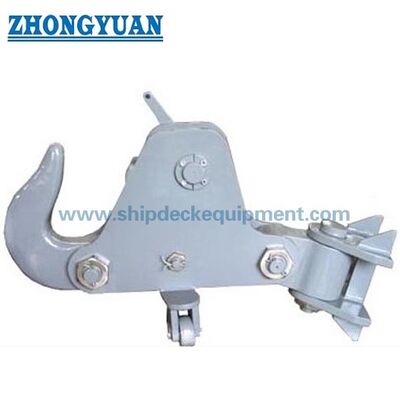
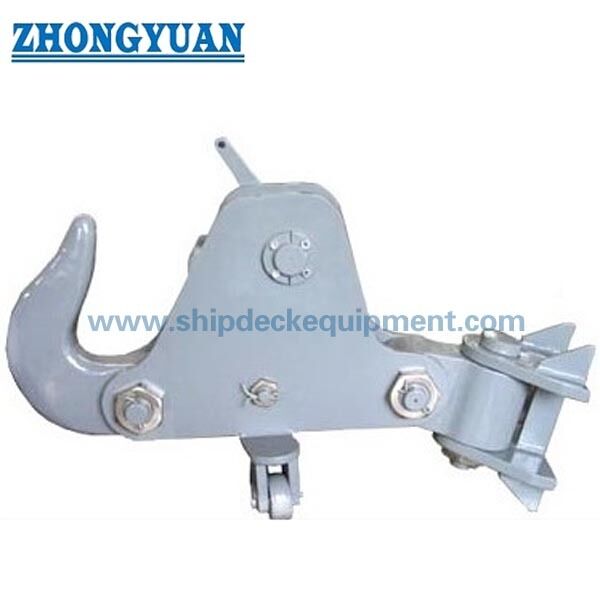
30–100T Marine Quick Release Towing Hook | Manual Release for Tugboats and Work Vessels
Product Details:
| Place of Origin: | China |
| Brand Name: | Zhongyuan Marine Equipmen |
| Certification: | CCS, NK, BV, ABS, DNV, LR, KR, IRS, RS, RINA, CRS, Makers Test Certificate |
| Model Number: | Standard or Customized |
Payment & Shipping Terms:
| Minimum Order Quantity: | 1 Unit |
|---|---|
| Price: | Based on quotation |
| Packaging Details: | Export standard pallet or customized packing |
| Delivery Time: | Based on project requirements |
| Payment Terms: | T/T, L/C |
| Supply Ability: | Customized production based on project requirements |
|
Detail Information |
|||
| Safe Working Load: | 30 To 100ton | Material: | Mild Steel, C-Mn Steel |
|---|---|---|---|
| Usage: | Mooring And Towing | Application: | Harbor, Dry Dock, Floating Dock, Engineering Vessel, Tug Boat |
| Test: | Prototype Test, Break Load Test, Safe Working Load Test, Operation Test | Operation System: | Manual Release |
| Surface Treatment: | Sandblasting To S2.5 + One Layer Of Epoxy Shop Primer | Classification Certificates: | CCS, NK, BV, ABS, DNV, LR, KR, RINA, IRS, RS, Etc |
| Highlight: | Marine quick release towing hook,100t quick release towing hook,100t boat towing equipment hook |
||
Product Description
30–100T Marine Quick Release Towing Hook | Manual Release for Tugboats and Work Vessels
Product Overview
The marine quick release towing hook is a vessel-mounted towline connection device for tugboats, workboats, engineering vessels, floating docks, and other marine units that require a controlled towline release point. The hook retains the towline eye during towing and is released locally through the manual release arrangement specified for this product page.
The hook assembly transfers towing force through the hook body, pivot connection, locking mechanism, mounting base, and supporting vessel structure. Selection therefore requires confirmation of SWL, towline arrangement, expected lead angle, foundation design, release method, inspection scope, and class requirement. This product is a towing hook, not a lifting hook, not a towing winch, and not a dock-mounted multiple quick release mooring hook.
Quick Specifications
- Safe Working Load: 30 / 40 / 50 / 60 / 80 / 100 t → six standard capacity points for matching the vessel towing arrangement.
- Release Mode: local manual release → current supplied data does not confirm pneumatic or hydraulic remote release for this model.
- Material: mild steel or C-Mn steel → the exact plate, forging, pin, and hook material grades require project confirmation.
- Overall Length L: 1050 to 2100 mm → installation space and deck foundation envelope increase with the selected SWL.
- Steel Structure: hook body, pivot connection, locking and release mechanism, and mounting base → final component configuration follows the approved drawing.
- Surface Treatment: blast-cleaning to Sa 2.5 + one coat epoxy shop primer → final marine coating system and dry film thickness follow the vessel specification.
- Test Scope: prototype, break load, SWL, and operation tests → test factors, witnessing, and acceptance criteria are subject to approved procedure and class requirement.
- Application Focus: tug and work-vessel towing → SWL selection must be checked with bollard pull, towline data, operating angles, and dynamic service conditions.
Main Technical Parameters
| SWL(t) | A(mm) | B(mm) | L(mm) | R1(mm) | R2 |
| 30 | 210 | 340 | 1050 | 65 | 430 |
| 40 | 220 | 345 | 1100 | 65 | 450 |
| 50 | 276 | 448 | 1332 | 80 | 577 |
| 60 | 295 | 475 | 1415 | 85 | 613 |
| 80 | 350 | 560 | 1680 | 100 | 721 |
| 100 | 450 | 630 | 2100 | 125 | 921 |
Selection & Inquiry Guide
Step 1: Confirm the required SWL according to the vessel towing plan, tug bollard pull, towline MBL, expected dynamic loading, and naval architect or class calculation. Do not select the hook by vessel deadweight alone.
Step 2: Confirm towline eye or shackle size, hook throat requirement, towing lead direction, expected horizontal and vertical angles, and whether side loading may occur.
Step 3: Confirm the installation position, available deck space, foundation arrangement, structural reinforcement, connection method, and load transfer into the vessel structure.
Step 4: Confirm the release arrangement. This page covers local manual release; pneumatic or hydraulic remote release requires a separate approved configuration and control-system scope.
Step 5: Confirm material grades, corrosion-protection system, lubrication and maintenance access, NDT requirement, test procedure, witnessing, and certificate scope before quotation.
Step 6: Provide selected SWL, quantity, vessel type, installation drawing, towline information, class society, destination, and required delivery time.
Structure
Towing hook body | Hook pivot connection | Locking and release mechanism | Local manual release lever / wire interface | Mounting base | Vessel foundation interface | Protective coating
Towing, Release and Installation Advantages
- The quick release function provides a controlled method of disconnecting the towline when the approved operating procedure requires the tow to be released.
- The current product data identifies manual release, which keeps the basic actuation arrangement mechanically direct and separates this page from pneumatic or hydraulic remote-release models.
- The hook, pivot, locking parts, and mounting base form one load path. The supporting deck foundation and surrounding structure must be verified for the declared towing loads and load directions.
- Hook geometry should be matched to the towline eye, soft eye, or connecting shackle so that the connection can be fitted, retained, and released without harmful local interference.
- Allowable tow angles and side-load limits must be defined by the approved design. A stated SWL should not be interpreted as permitting unrestricted multidirectional loading.
- Functional release testing should verify engagement, locking, manual actuation, resetting, and release behavior according to the approved inspection and test plan.
Custom Attributes
- Product Category: Marine quick release towing hook → vessel-mounted towline connection and release equipment.
- SWL Range: 30 to 100 t → select from the six listed capacities only after towing-system review.
- Release Mode: Manual release → local release arrangement for the current page; remote actuation is not included unless separately specified.
- Material: Mild steel / C-Mn steel → exact grades, heat treatment, and material traceability are to be confirmed.
- Installation: Foundation-mounted assembly → connection details, reinforcement, and allowable load direction follow the approved vessel drawing.
- Testing: Prototype / break load / SWL / operation test → load factors and witness scope are to be confirmed before manufacture.
- Surface Treatment: Sa 2.5 blast-cleaning + epoxy shop primer → final coating, color, and DFT follow project requirements.
- Customization: Dimensions, release arrangement, coating, and inspection scope → subject to technical review and approved drawing.
How It Works
Towline eye is placed on the hook → Locking mechanism retains the hook in the towing position → Towing load passes through the hook and mounting structure → Operator actuates the approved manual release → Hook opens and releases the towline → Mechanism is inspected and reset
Applications
Harbor tugboats | Coastal and river tugs | Workboats | Engineering vessels | Floating docks | Dry-dock service craft | Marine construction support vessels | Replacement towing-hook projects
Certifications & Advantages
Certificates and survey attendance can be arranged according to project requirement, approved test scope, material traceability, and classification society procedure. Availability is subject to technical review and class approval.
Certification: CCS, NK, BV, ABS, DNV, LR, KR, IRS, RS, RINA, CRS, Makers Test Certificate.
Drawing & Photos

FAQ
Q1: How should the correct towing hook SWL be selected?
A1: Selection should consider the vessel towing plan, tug bollard pull, towline MBL, dynamic loading, tow angle, connection geometry, and class or naval architect requirements. The hook SWL should not be selected from vessel deadweight alone.
Q2: Can this hook be released while the towline is loaded?
A2: The supplied description states release under slack or safe working load conditions, but the permitted release load must be confirmed for the exact model through the approved design, operating instructions, and witnessed test procedure. It should not be treated as an unrestricted under-load release claim.
Q3: What installation information is required before production?
A3: Provide the vessel foundation drawing, installation position, load direction and allowable angles, towline or shackle details, selected SWL, release-wire arrangement, material and coating requirements, class society, and required inspection scope.