


|
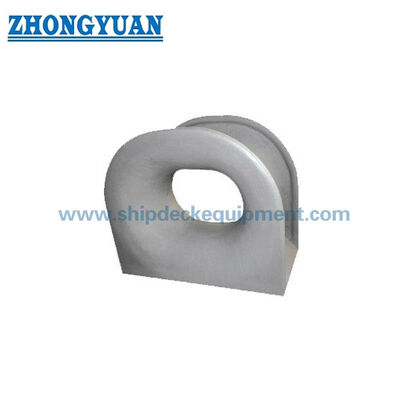
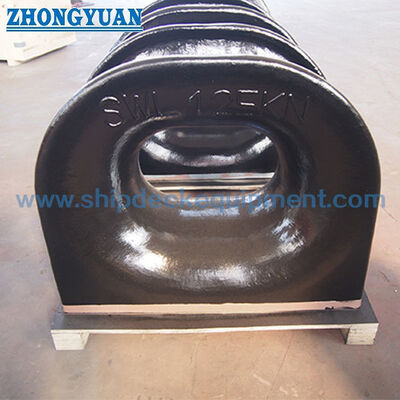
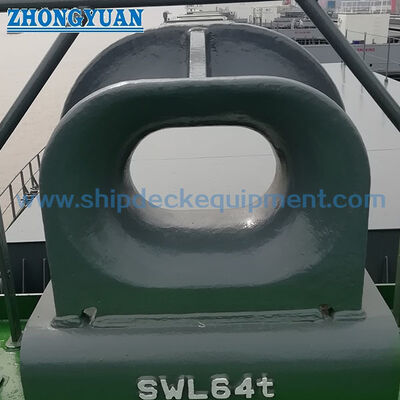
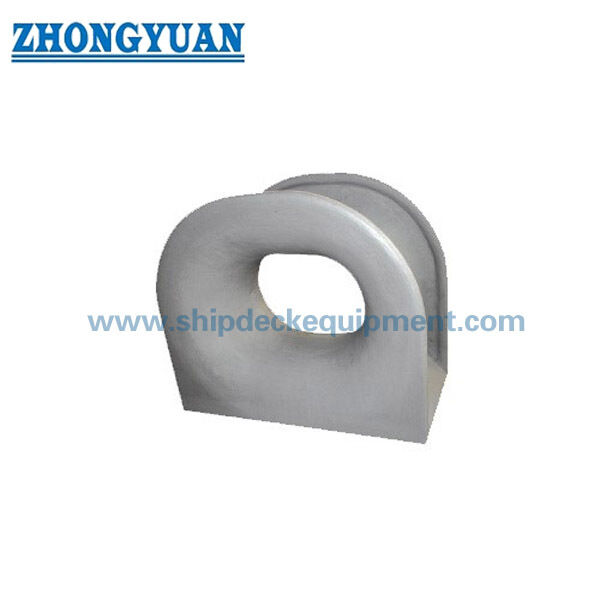
Deck-Mounted Cast Steel Mooring Chock | DIN 81915:1998-08 Type C, SWL 10–320 kN
Product Details:
| Place of Origin: | China |
| Brand Name: | Zhongyuan Marine Equipmen |
| Certification: | CCS, NK, BV, ABS, DNV, LR, KR, IRS, RS, RINA, CRS, Makers Test Certificate |
| Model Number: | Standard or Customized |
Payment & Shipping Terms:
| Minimum Order Quantity: | 1 Unit |
|---|---|
| Price: | Based on quotation |
| Packaging Details: | Export standard pallet or customized packing |
| Delivery Time: | Based on project requirements |
| Payment Terms: | T/T, L/C |
| Supply Ability: | Customized production based on project requirements |
|
Detail Information |
|||
| Type: | Type C | SWL Range: | 10-320KN |
|---|---|---|---|
| Materials: | Casting C-Mn Steel, Casting Stainless Steel, Also Can Supply Special Steel For Icebreaker. | Technical Standard: | DIN 81915:1998-8 |
| Weight: | 18 To 795kg | Surface Treatment: | Sandblasting To S2.5 + One Layer Of Epoxy Shop Primer, Polished Stainless Steel, Customized Surface Treatment Available |
| Classification Certificates: | CCS, NK, BV, ABS, DNV, LR, KR, IRS | ||
| Highlight: | Mooring Chock Ship Towing Equipment |
||
Product Description
Deck-Mounted Cast Steel Mooring Chock | DIN 81915:1998-08 Type C, SWL 10–320 kN
Product Overview
The DIN 81915 Type C deck-mounted mooring chock is a closed cast steel rope guide used to lead mooring or towing lines between the vessel's inboard deck arrangement and the ship side. Its closed opening controls the rope path, while the rounded rope-contact surfaces reduce sharp local contact and help limit abrasion during line handling.
Type C is installed on a welded deck seat or directly at the specified deck foundation, depending on the vessel drawing. The supplied range covers Type C1 to C32 with stated SWL values from 10 to 320 kN. Selection should consider the fitting SWL, rope type and diameter, rope MBL, lead direction, deck reinforcement, weld details, material grade, coating system, inspection scope, and classification requirement.
Quick Specifications
- Product type: Closed deck-mounted multi-purpose chock → guides and contains the mooring or towing line at the vessel side.
- Standard and type: DIN 81915:1998-08 Type C → DIN Media lists this edition as the current standard for multi-purpose chocks.
- Type range: C1 / C2 / C3 / C5 / C8 / C12 / C20 / C32 → allows staged selection for different vessel load requirements.
- SWL range: 10 to 320 kN → fitting SWL; it must not be treated as the rope MBL or as a lifting rating.
- Cast steel reference mass: 19.5 to 840 kg → taken from the supplied GS weight column for handling and freight estimation.
- Material options: C-Mn cast steel as the main product basis → stainless cast steel or special low-temperature steel requires project confirmation.
- Installation: Deck welded arrangement → seat geometry, weld detail, load direction, and deck reinforcement require drawing review.
- Surface treatment: Sa 2.5 blasting + one epoxy shop-primer coat as reference → final coating or polished stainless finish follows the order specification.
Main Technical Parameters
| Nominal size |
SWL KN |
b1 | b2 | d | e | f | h1 | h2 | h3 | l1 | l2 | r1 | r2 | s1 | s2 | w1 | w2 | Weight (GGG) kg |
Weight (GS) kg |
| 1 | 10 | 250 | 175 | 30 | 125 | 15 | 160 | 65 | 20 | 285 | 115 | R80 | R45 | 10 | 5 | 125 | 90 | 18 | 19.5 |
| 2 | 20 | 315 | 225 | 35 | 158 | 18 | 200 | 70 | 25 | 360 | 125 | R100 | R57.5 | 12 | 6 | 160 | 115 | 27 | 29 |
| 3 | 30 | 390 | 275 | 40 | 195 | 21 | 250 | 75 | 32 | 450 | 140 | R125 | R70 | 14 | 7 | 200 | 140 | 44 | 48 |
| 5 | 50 | 480 | 340 | 45 | 240 | 24 | 300 | 80 | 38 | 550 | 160 | R150 | R90 | 16 | 8 | 250 | 180 | 78 | 85 |
| 8 | 80 | 585 | 415 | 50 | 293 | 27 | 360 | 90 | 45 | 680 | 180 | R180 | R112.5 | 18 | 9 | 320 | 225 | 127 | 136 |
| 12 | 120 | 710 | 500 | - | 355 | 30 | 440 | 110 | 55 | 840 | - | R220 | R135 | 20 | 10 | 400 | 270 | 199 | 211 |
| 20 | 200 | 840 | 595 | - | 420 | 33 | 520 | 130 | 65 | 1020 | - | R260 | R160 | 22 | 11 | 500 | 320 | 302 | 325 |
| 32 | 320 | 1100 | 800 | - | 550 | - | 700 | 150 | 80 | 1300 | - | R350 | R200 | 35 | 20 | 600 | 400 | 770 | 840 |
Selection & Inquiry Guide
Step 1: Confirm DIN 81915 Type C and select C1 to C32 according to the required chock SWL and the vessel's approved mooring or towing arrangement.
Step 2: Provide rope type, rope diameter, rope MBL, expected line direction, lead angle, and whether the duty is mooring, towing-line guidance, or replacement service.
Step 3: Confirm deck installation position, available seat space, foundation plate, weld detail, surrounding deck reinforcement, and any interference with nearby fittings.
Step 4: Confirm material grade and temperature requirement: C-Mn cast steel, cast stainless steel, or special low-temperature steel for ice-service projects.
Step 5: Confirm surface treatment, rope-contact finishing, material traceability, NDT or load-test requirement, and the classification society inspection scope before quotation.
Step 6: Provide quantity, vessel type, drawing or reference photo, delivery destination, required delivery date, packing requirement, and replacement dimensions if applicable.
Structure
Closed cast steel chock body | Rounded rope-contact opening | Deck-mounted base / seat interface | Welded connection area | Reinforced transition geometry | Blasted and primed surface or specified finish
Casting, Installation & Engineering Advantages
- The closed opening helps retain the rope within a defined lead path and reduces the risk of the line leaving an open guide during normal handling.
- Rope-contact radii and transition surfaces can be dressed and smoothed after casting to reduce sharp edges and local abrasion points.
- The Type C deck-mounted arrangement is suitable where the vessel layout requires the chock above the deck rather than integrated through the bulwark.
- The range from 10 to 320 kN provides several standard selection steps; final selection should follow the vessel's mooring or towing load analysis, not size alone.
- Casting heat treatment, MT, UT, RT, dimensional inspection, or proof-load testing can be arranged according to the agreed manufacturing and class inspection plan.
- The deck seat, weld length, local reinforcement, and load path must be checked by the shipyard or vessel design office so the fitting load is transferred into the hull structure.
- For replacement projects, matching b1, b2, h1, l1, seat dimensions, and surrounding clearance helps reduce modification work at the installation location.
Custom Attributes
- Standard: DIN 81915:1998-08 → current DIN edition identified online as Multi-purpose chocks.
- Type: Type C → closed deck-mounted configuration; not the bulwark-mounted Type A arrangement.
- SWL: 10 / 20 / 30 / 50 / 80 / 120 / 200 / 320 kN → use the project-specified fitting load basis and approved vessel drawing.
- Construction: Cast steel body → casting quality, rope-contact finishing, and weld-interface preparation are key production controls.
- Material: C-Mn cast steel → exact grade, impact requirement, stainless option, or ice-service material to be confirmed before production.
- Installation: Welded deck seat / foundation → deck reinforcement and welding details remain the responsibility of the approved vessel design.
- Surface Treatment: Sa 2.5 blasting + epoxy shop primer as reference → final paint system follows the vessel coating specification.
- Inspection: Available according to project requirement → certificate type, NDT method, load-test scope, and witnessing must be stated in the purchase order.
How It Works
Mooring or towing line approaches the chock → Line passes through the closed rounded opening → Contact surfaces control the lead direction and reduce sharp rubbing → Local fitting load is transferred through the chock base and welds into the reinforced deck structure
Applications
Cargo vessels | Tankers | Tugs | Workboats | Service vessels | Ship bow and stern mooring stations | Deck-mounted towing-line guides | Newbuilding projects | Repair and replacement projects
Certifications & Advantages
Material certificates, maker certificates, class inspection, NDT witnessing, and load-test documentation can be arranged according to project requirement, agreed inspection scope, and class approval procedure.
Certification: CCS, NK, BV, ABS, DNV, LR, KR, IRS, RS, RINA, CRS, Makers Test Certificate.
Drawing & Photos

FAQ
Q1: Is the stated SWL the same as the rope MBL?
A1: No. The table identifies the chock fitting SWL, while rope MBL is the minimum breaking load of the line. The vessel designer should confirm the relationship between rope MBL, design load, fitting SWL, load direction, and the applicable safety or design factors.
Q2: What is the practical difference between DIN 81915 Type C and Type A?
A2: Type C is the deck-mounted closed chock configuration. Type A is generally supplied as the bulwark-mounted configuration. The correct type must match the vessel drawing, rope lead height, installation position, and available structure.
Q3: What information is required for an accurate quotation?
A3: Confirm standard and type, required SWL, rope data, material grade, surface treatment, quantity, installation drawing, deck seat and reinforcement arrangement, class requirement, inspection scope, delivery destination, and required delivery date.