


|
Deck-Mounted Marine Chock | DIN 81915:1998 Type E, 80–200 kN Cast Steel Rope Guide
Product Details:
| Place of Origin: | China |
| Brand Name: | Zhongyuan Marine Equipmen |
| Certification: | CCS, NK, BV, ABS, DNV, LR, KR, IRS, RS, RINA, CRS, Makers Test Certificate |
| Model Number: | Standard or Customized |
Payment & Shipping Terms:
| Minimum Order Quantity: | 1 Unit |
|---|---|
| Price: | Based on quotation |
| Packaging Details: | Export standard pallet or customized packing |
| Delivery Time: | Based on project requirements |
| Payment Terms: | T/T, L/C |
| Supply Ability: | Customized production based on project requirements |
|
Detail Information |
|||
| Type: | Type E | SWL Range: | 80-200KN |
|---|---|---|---|
| Materials: | Casting C-Mn Steel, Casting Stainless Steel, Also Can Supply Special Steel For Icebreaker | Technical Standard: | DIN 81915:1998-8 |
| Weight: | 185 To 540kg | Surface Treatment: | Sandblasting To S2.5 + One Layer Of Epoxy Shop Primer, Polished Stainless Steel, Customized Surface Treatment Available. |
| Classification Certificates: | CCS, NK, BV, ABS, DNV, LR, KR, RINA, IRS | ||
| Highlight: | Marine deck chock,DIN 81915 deck chock,Type E bulwark chock |
||
Product Description
Deck-Mounted Marine Chock | DIN 81915:1998 Type E, 80–200 kN Cast Steel Rope Guide
Product Overview
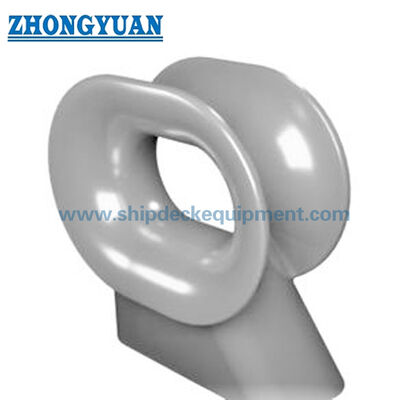
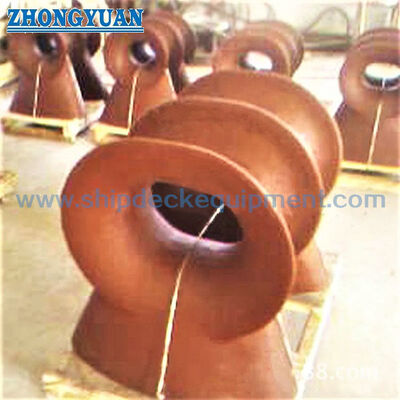
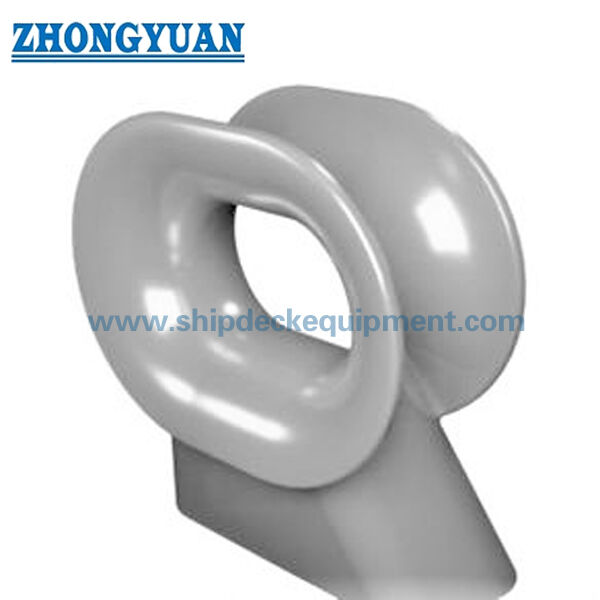
The DIN 81915 Type E deck-mounted marine chock is a cast steel rope-guiding fitting installed on the vessel deck. It controls the lead of a mooring or towing line, keeps the line within the intended route, and provides radiused contact surfaces to reduce sharp local abrasion as the line passes toward the winch, bollard, towing fitting, or shore connection.
Type E is supplied in nominal sizes 8, 12, and 20 with stated safe working loads from 80 to 200 kN. Selection must be coordinated with the vessel mooring or towing arrangement, rope type and diameter, line lead direction, deck foundation, welding detail, and the applicable classification or shipyard requirements. This chock is a line-guiding fitting and is not a lifting product.
Quick Specifications
- Standard and type: DIN 81915:1998-08 Type E → standardized deck-mounted chock geometry for projects specifying the German marine fitting standard.
- Nominal sizes: 8 / 12 / 20 → three standard selections corresponding to the supplied 80 / 120 / 200 kN SWL table.
- Safe working load: 80 to 200 kN → chock rating for selection; it must not be confused with rope MBL or breaking load.
- Cast weight: 185 to 540 kg → important for deck handling, lifting planning during installation, packing, and freight calculation.
- Material options: cast C-Mn steel, cast stainless steel, or project-specific special steel → exact grade, low-temperature toughness, and traceability are to be confirmed.
- Rope-contact design: standard radii and smooth dressed surfaces → intended to guide the line and reduce concentrated edge contact.
- Surface treatment: abrasive blasting to Sa 2.5 plus epoxy shop primer → final coating system and dry-film thickness follow the vessel specification.
- Installation basis: welded deck seating with supporting structure → weld size, load direction, foundation plate, and deck reinforcement require vessel drawing confirmation.
Main Technical Parameters
|
Selection & Inquiry Guide
Step 1: Confirm DIN 81915 Type E and select nominal size 8, 12, or 20 according to the required chock SWL and the approved vessel arrangement.
Step 2: Provide the intended service: mooring, towing, or a project-specific combined duty, together with rope type, rope diameter, rope MBL, and expected lead directions.
Step 3: Provide the deck arrangement drawing showing installation position, load direction, surrounding equipment, weld interface, foundation plate, and supporting deck reinforcement.
Step 4: Confirm material grade and service temperature. Stainless steel or low-temperature / ice-service steel requires separate material, toughness, welding, and class confirmation.
Step 5: Confirm surface treatment, final coating system, rope-contact finishing, marking, material traceability, NDT, and certificate scope before quotation.
Step 6: Provide quantity, vessel type, classification society requirement, destination, required delivery time, and the DIN drawing or approved project drawing if available.
Structure
Cast steel chock body | Radiused rope-contact opening | Deck seating and weld interface | Reinforced supporting deck structure | Identification and SWL marking area | Project coating system
Casting, Installation & Quality Advantages
- The cast body provides a continuous rope-contact profile without fabricated internal joints across the principal contact surface.
- Standard radii r1 to r4 define the intended line-contact geometry; dressing and grinding should remove harmful sharp edges without changing the controlled profile.
- Dimensional inspection should verify the Type E geometry, seating dimensions, opening profile, and the relationship between the casting and the vessel installation drawing.
- Material certificates, heat-number traceability, visual inspection, and additional NDT can be arranged according to the purchase specification and class inspection plan.
- The chock body alone does not define the complete load path. Welds, foundation plate, deck plating, stiffeners, and local reinforcement must be checked for the specified line direction and design load.
- Special steel for low-temperature or ice-service projects is subject to confirmed grade, impact-test temperature, welding procedure, and classification approval; it is not a default DIN Type E material claim.
Custom Attributes
- Standard: DIN 81915:1998-08 → use when the vessel specification or approved drawing calls for DIN Type E dimensions.
- Type: Type E deck-mounted chock → confirm the exact standard figure and installation orientation before production.
- Nominal Size: 8 / 12 / 20 → select together with the stated 80 / 120 / 200 kN chock SWL.
- Material: Cast C-Mn steel → exact grade and mechanical properties are to be confirmed in the purchase specification.
- Optional Material: Cast stainless steel or special low-temperature steel → subject to technical review, weld compatibility, and class acceptance.
- Surface Treatment: Sa 2.5 blasting plus epoxy shop primer → final paint build-up follows the vessel coating schedule.
- Inspection: Dimensional, visual, material, NDT, and load-related inspection as specified → scope must be agreed before quotation.
- Customization: Project-specific material, coating, marking, and inspection → standard geometry should not be changed without approved engineering review.
How It Works
Mooring or towing line approaches the deck chock → Line enters the standard radiused opening → Contact surface controls the line lead and limits sharp local rubbing → Contact load passes through the cast body and welded seating → Reinforced deck structure distributes the load into the vessel hull
Applications
Cargo vessels | Tankers | Tugboats | Workboats | Engineering vessels | Deck mooring stations | Approved towing lead positions | Newbuilding and replacement projects specifying DIN 81915 Type E
Certifications & Advantages
Certificates and inspection witnessing can be arranged according to project requirement, material traceability, test scope, and classification society approval procedure. Availability must be confirmed before quotation.
Certification: CCS, NK, BV, ABS, DNV, LR, KR, IRS, RS, RINA, CRS, Makers Test Certificate.
Drawing & Photos

FAQ
Q1: How should the correct DIN 81915 Type E size be selected?
A1: Start with the required chock SWL and the approved vessel arrangement, then verify rope type, diameter, MBL, lead angle, contact geometry, deck space, weld interface, and supporting structure. The stated SWL is the chock rating and is not the rope breaking load.
Q2: Can the same Type E chock be used for both mooring and towing?
A2: Only when the vessel design and approved drawing allocate the relevant mooring or towing load to that fitting and its supporting structure. Towing duty should not be assumed solely because the chock can physically guide a towing line.
Q3: What inspection and certification should be specified?
A3: Confirm the required material certificate, heat traceability, dimensional inspection, surface inspection, NDT method, SWL marking, load-test requirement, witness points, and class certificate before production. These items are supplied according to the agreed project scope, not automatically as a complete package.