


|
OCIMF-Type Emergency Towing Bracket (SMIT Bracket) for Tankers | Chafing Chain Strongpoint
Product Details:
| Place of Origin: | China |
| Brand Name: | Zhongyuan Marine Equipmen |
| Certification: | CCS, NK, BV, ABS, DNV, LR, KR, IRS, RS, RINA, CRS, Makers Test Certificate |
| Model Number: | Standard or Customized |
Payment & Shipping Terms:
| Minimum Order Quantity: | 1 Unit |
|---|---|
| Price: | Based on quotation |
| Packaging Details: | Export standard pallet or customized packing |
| Delivery Time: | Based on project requirements |
| Payment Terms: | T/T, L/C |
| Supply Ability: | Customized production based on project requirements |
|
Detail Information |
|||
| Name: | OCIMF Type Towing Brackets Ship Emergency Towing Equipment | Material: | High Tensile Steel And Forging Steel |
|---|---|---|---|
| Applicable Chain: | 54-114mm | Safe Working Load: | 1000 To3800 KN |
| Weight: | 118 To 1184 Kg | Application: | For Emergency Towing System & Arrangement |
| Installation:: | Welded On Deck With Enforcement Underneath | Test: | Proof Load Test |
| Certificate: | CCS, NK, BV, ABS, DNV, LR, KR, IRS, RS, RINA, Makers Test Certificate, Etc. | ||
| Highlight: | Towing JIS F 2029-1997 Mooring Brackets,JIS F 2029-1997 Mooring Brackets,OCIMF Ship Towing Equipment |
||
Product Description
OCIMF-Type Emergency Towing Bracket (Smit Bracket) for Tankers | Chafing Chain Strongpoint
Product Overview
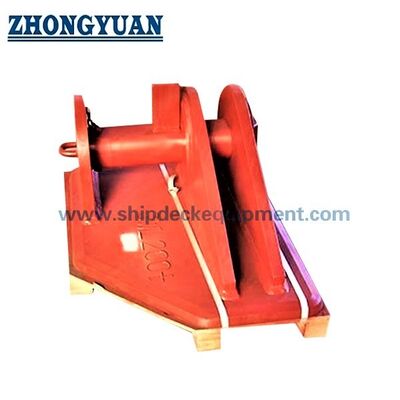
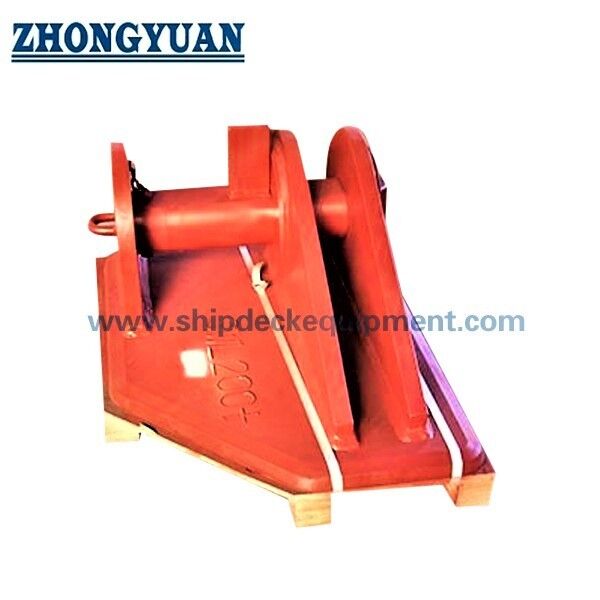
The OCIMF-type emergency towing bracket, commonly called a Smit bracket, is a deck-welded strongpoint used to secure the inboard end of a tanker emergency-towing chafing chain. The assembly typically consists of two parallel cheek plates mounted on a base plate and a removable or sliding forged pin passing through the pear-shaped end link. When the chain is connected, towing force is transferred through the pin and bracket body into the deck foundation and the supporting hull structure below deck.
This product is a component of an emergency towing arrangement, not a complete towing system. It is normally coordinated with the chafing chain, fairlead, towing pennant, pick-up gear, deck layout and ship-specific emergency towing procedure. Final model selection should be based on the approved chafing-chain size and end-link geometry, required working strength and ultimate strength, relevant towline directions, vessel deadweight, deck reinforcement and classification or Administration approval.
Quick Specifications
• Product function: emergency-towing strongpoint and chafing-chain connection → secures the chain end link at the deck foundation; it does not guide the towline like a fairlead.
• Applicable chafing-chain nominal diameter: 54 to 114 mm → five supplied sizes for matching the project chain and pear-shaped end link.
• Supplied load range: SWL 1,000 to 3,800 kN → the required rating must be selected from the vessel emergency-towing design rather than chain diameter alone.
• Specified maximum breaking load: 2,000 to 7,600 kN → every supplied row uses a 2:1 relationship to SWL; confirm that this value represents bracket ultimate strength in the approved design.
• Construction: twin cheek plates + welded base plate + removable/sliding pin + pin-retention arrangement → provides a direct chain-to-strongpoint connection with access for rigging and inspection.
• Materials: high-tensile structural steel for bracket body and forged steel for pin → exact grades, toughness temperature, weldability and traceability are to be confirmed.
• Installation: welded to deck with engineered supporting structure below deck → bracket, attachment welds, deck plate and underdeck stiffening must be checked as one load path.
• Inspection and testing: proof-load testing, NDT and class witnessing according to the approved ITP → test load, holding time and acceptance criteria are project-specific.
Main Technical Parameters
| Nominal No. (mm) |
A | B | C | D | E | F | G | H | K | R | Weight (kg) |
Safe Working Load SWL(kN) |
Max. Breaking Load (kN) |
| 54 | 500 | 555 | 20 | 300 | 259 | 140 | 78 | 118 | 80 | 110 | 118 | 1000 | 2000 |
| 64 | 600 | 625 | 28 | 360 | 300 | 175 | 88 | 122 | 100 | 135 | 184 | 1500 | 3000 |
| 76 | 720 | 800 | 30 | 430 | 360 | 200 | 112 | 170 | 110 | 160 | 312 | 2000 | 4000 |
| 102 | 940 | 1000 | 40 | 560 | 470 | 260 | 144 | 216 | 140 | 210 | 886 | 3200 | 6400 |
| 114 | 1100 | 1180 | 50 | 628 | 548 | 290 | 162 | 250 | 170 | 235 | 1184 | 3800 | 7600 |
Selection & Inquiry Guide
Step 1: Confirm the application: tanker emergency towing arrangement, installation at bow or stern, pre-rigged or non-pre-rigged arrangement, vessel deadweight, flag and classification society.
Step 2: Provide the chafing-chain details: nominal diameter, chain grade, stud-link construction, pear-shaped end-link drawing, end-link inside dimensions, width, thickness, tolerances and required pin fit.
Step 3: Confirm the design load basis: required SWL or working strength, specified ultimate or breaking strength, towing-line directions, dynamic factors and the approved emergency-towing arrangement plan.
Step 4: Provide installation data: deck thickness, bracket orientation, available pin-withdrawal space, deck camber, surrounding equipment, foundation drawing, underdeck stiffeners and required attachment-weld details.
Step 5: Confirm material grades, minimum design temperature, impact-toughness requirement, forged-pin material and heat treatment, corrosion protection, WPS/PQR, NDT, proof-load test and marking requirements.
Step 6: Confirm quantity, certificate and witness scope, delivery destination, required delivery time, approved GA drawing, chain/end-link drawing and shipyard installation drawing.
Structure
Twin vertical cheek plates | Welded base plate | Removable or sliding forged pin | Pin keeper / retention device | Pear-link seating space | Welded deck interface | Vessel deck plate | Underdeck supporting structure
Emergency Towing, Installation & Quality Advantages
• The bracket provides a direct mechanical connection between the chafing-chain end link and the vessel strongpoint. Its function is different from a fairlead, which supports and redirects the towing line at the ship side.
• The removable or sliding pin allows the pear-shaped end link to be placed between the cheek plates and mechanically captured. Pin diameter, end-link opening, cheek spacing and side clearances must be checked together so the connection can be assembled without excessive looseness or interference.
• The supplied ratings follow a 2:1 relationship between SWL and maximum breaking load. This is consistent with the working-strength-to-ultimate-strength relationship used in IMO emergency-towing guidance, but the project drawing and approval basis remain controlling.
• For tanker emergency towing, the strongpoint and connected components should be checked for the relevant horizontal and downward towline directions defined by the approved arrangement. The bracket should not be selected only by a vertical pull or a single idealized direction.
• The complete load path includes the pin, cheek plates, base plate, welds, deck plate and underdeck reinforcement. Foundation analysis and plan approval are therefore separate from the product’s standalone rating.
• Pin retention, handling access, corrosion protection and inspection clearance are important operational details. The pin should not be described as a quick-release device under load unless the approved design and operating procedure specifically allow that function.
• Material traceability, plate and forging inspection, pin machining, heat-treatment records, dimensional control, weld preparation, NDT and proof-load testing can be included in the project ITP according to the agreed certification scope.
• The bracket is only one component of the emergency towing arrangement. Compatibility must also be confirmed with the chafing chain, fairlead, towing pennant, pick-up gear, stowage arrangement and ship-specific emergency towing procedure.
Custom Attributes
• Type: OCIMF-type Smit emergency towing bracket → industry configuration for securing a chafing-chain end link; not an OCIMF product certification.
• Function: Deck strongpoint / inboard chain fastening → transfers emergency towing load from the chafing chain to the vessel supporting structure.
• Applicable Chafing Chain Diameter: 54 / 64 / 76 / 102 / 114 mm → confirm chain grade and pear-link geometry before production.
• SWL Range: 1,000 / 1,500 / 2,000 / 3,200 / 3,800 kN → use the approved vessel load basis and arrangement plan.
• Specified Maximum Breaking Load: 2,000 / 3,000 / 4,000 / 6,400 / 7,600 kN → confirmation required that this is complete-bracket ultimate strength.
• Bracket Material: High-tensile structural steel → exact grade, plate quality, toughness and weldability to be confirmed.
• Pin Material: Forged steel → exact grade, heat treatment, hardness, toughness, machining tolerance and traceability to be confirmed.
• Installation: Welded deck mounting with supporting structure below deck → weld size and foundation are determined by approved structural calculations.
• Testing: Proof-load test according to approved procedure → test load, setup, holding time, measurement and acceptance criteria are to be agreed.
• Certificate Requirement: According to project scope → class product certification, material certification, witness testing and maker documentation are not assumed as standard supply.
How It Works
Open or withdraw the bracket pin → Position the chafing-chain pear-shaped end link between the cheek plates → Insert and secure the forged pin → Chain tension is carried through the pin and bracket body → Welded base and underdeck structure distribute the load into the hull
Applications
Oil tankers | Chemical tankers | Gas carriers | Product tankers | Tanker bow emergency-towing strongpoint | Tanker stern emergency-towing strongpoint | Chafing-chain deck connection | Newbuilding and approved retrofit projects
Certifications & Advantages
Certificates, design approval, inspection witnessing and proof-load testing can be arranged according to project requirements, approved drawings, material traceability, the agreed ITP and classification-society acceptance.
Certification: CCS, NK, BV, ABS, DNV, LR, KR, IRS, RS, RINA, CRS, Makers Test Certificate.
Drawing & Photos

FAQ
Q1: Is the towing bracket the same as an emergency-towing fairlead?
A1: No. The bracket is the strongpoint that secures the inboard end of the chafing chain. The fairlead is a separate component that guides the chafing chain, towing pennant or towing line at the ship side and supports the required lead angles.
Q2: How should the correct bracket size be selected?
A2: Select it from the approved chafing-chain diameter and pear-link geometry, required working and ultimate strength, vessel deadweight, towline directions, deck arrangement, foundation capacity and class or Administration approval. Chain diameter alone is not sufficient.
Q3: Does “OCIMF type” mean that OCIMF certifies the bracket?
A3: No. OCIMF is an industry organization and the market term describes a recognized bracket configuration. Product certification, design approval, material certification, NDT and proof-load witnessing must be agreed with the shipyard, owner, Administration and classification society.