


|
Cast Steel Mooring Anchor | Permanent Mooring Anchor for Hard / Rocky Bottoms
Product Details:
| Place of Origin: | China |
| Brand Name: | Zhongyuan Marine Equipmen |
| Certification: | CCS, NK, BV, ABS, DNV, LR, KR, IRS, RS, RINA, CRS, Makers Test Certificate |
| Model Number: | Standard or Customized |
Payment & Shipping Terms:
| Minimum Order Quantity: | 1 Unit |
|---|---|
| Price: | Based on quotation |
| Packaging Details: | Export standard pallet or customized packing |
| Delivery Time: | Based on project requirements |
| Payment Terms: | T/T, L/C |
| Supply Ability: | Customized production based on project requirements |
|
Detail Information |
|||
| Material: | Casting Steel, Casting Iron, Casting Stainless Steel | Type: | Shaped Anchor |
|---|---|---|---|
| Surface Treatment: | Hot Dip Galvanized, Black Bitumen Paint, Anti-rusting Paint Or Customized | Classification Certificates: | CCS, NK, BV, ABS, DNV, LR, KR, IRS, RS, RINA, Etc |
| Highlight: | CCS pyramid mooring anchor,200 lb pyramid anchor,ABS pyramid boat anchor |
||
Product Description
Cast Steel Mooring Anchor | Permanent Mooring Anchor for Hard / Rocky Bottoms
Product Overview
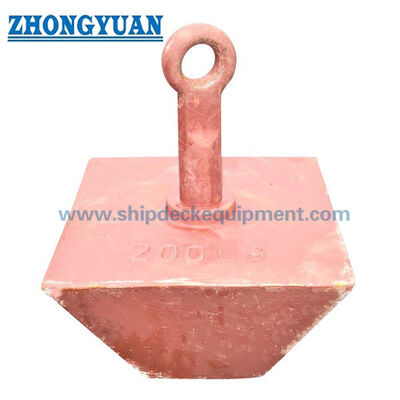
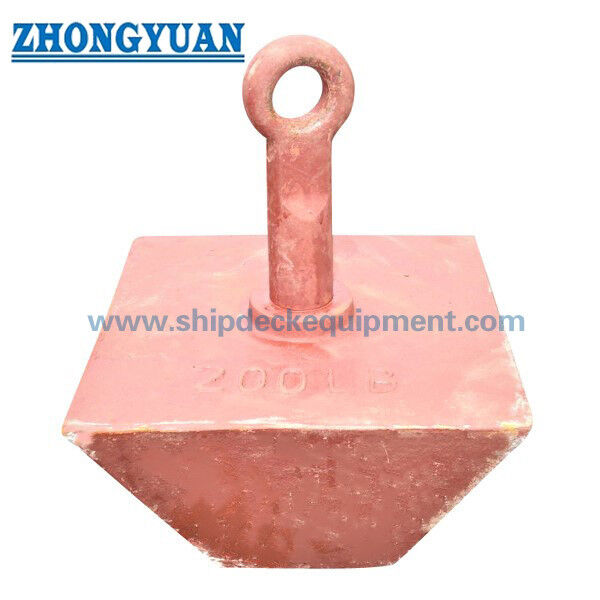
The cast steel mooring anchor is a compact permanent mooring anchor used for mooring buoys, small craft moorings, workboat mooring points, floating dock systems, nearshore marine facilities, and other anchor-and-chain arrangements where seabed condition, anchor weight, chain size, corrosion protection, and inspection scope must be confirmed together. The form concentrates the initial contact force at the lower edge and corners, helping the anchor bite into hard, rocky, sandy, or mixed bottoms when the mooring line load is applied in the proper direction.
This page is prepared for shaped anchors supplied in cast steel, cast iron, or cast stainless steel according to project requirement. The short shank and large connection eye are important purchasing points because they help reduce chain wrap-up in shallow or tidal areas and allow the anchor to be matched with a proper shackle and chain. Holding capacity, anchor weight, eye size, proof test, and certificate scope are not fixed by the supplied data and should be confirmed before quotation.
Quick Specifications
- Product type: mooring anchor → compact permanent mooring anchor for anchor-and-chain mooring arrangements. Typical bottom condition: hard / rocky / sandy / mixed bottoms → final suitability depends on seabed survey, anchor weight, chain scope, and mooring load.
- Material options: cast steel, cast iron, or cast stainless steel → select according to weight requirement, corrosion environment, and certificate scope.
- Structural feature: body with short shank and top eye → supports chain connection and helps reduce chain wrap in shallow or tidal water.
- Surface treatment: hot dip galvanized, black bitumen paint, anti-rusting paint, or customized finish → chosen according to marine exposure and service life requirement.
- Connection point: large-diameter eye to be confirmed → shackle size, chain diameter, and wear allowance should be checked before production.
- Supply note: anchor can be supplied alone or together with chain / shackle when specified → complete mooring system interface should be confirmed.
- Load and test data: to be confirmed → no SWL, holding power, proof load, or test load should be declared without project calculation or test requirement.
Main Technical Parameters
| Item | Supplied Data / Options | Engineering / Purchasing Meaning |
| Product Type | shaped mooring anchor | Used as a compact permanent mooring anchor for anchor-and-chain arrangements. |
| Main Application | Hard / rocky bottoms; marine mooring use | Bottom survey and mooring calculation should confirm suitability before final selection. |
| Material | Cast steel / cast iron / cast stainless steel | Final grade, casting method, and material certificate scope should be confirmed. |
| Surface Treatment | Hot dip galvanized / black bitumen paint / anti-rusting paint / customized | Selected according to corrosion environment, expected service life, and client specification. |
| Connection Eye | Large-diameter eye, size to be confirmed | Must match shackle size, chain diameter, wear allowance, and inspection access. |
| Anchor Weight | To be confirmed | Critical for holding performance, handling, freight, and mooring system design. |
| Holding Capacity / SWL | To be confirmed | Not declared from supplied data; should be based on anchor weight, seabed condition, chain arrangement, and test basis. |
| Certificate | CCS / NK / BV / ABS / DNV / LR / KR / IRS / RS / RINA available according to project requirement | Certificate type and class witness scope should be agreed before order. |
Selection & Inquiry Guide
Step 1: Confirm the anchor type: cast steel / cast iron / cast stainless steel mooring anchor.
Step 2: Confirm seabed condition: hard rock, mixed rock and sand, sand, mud, gravel, tidal area, or other bottom condition from site survey.
Step 3: Confirm required anchor weight, overall size, eye diameter, chain diameter, shackle size, and whether the anchor is part of a complete mooring system.
Step 4: Confirm mooring arrangement: buoy / floating dock / small vessel / workboat / nearshore facility, water depth, current, wind, wave, and chain scope if available.
Step 5: Confirm material grade, surface treatment, corrosion allowance, galvanizing or paint system, and expected service environment.
Step 6: Confirm inspection and certificate requirement: material certificate, maker certificate, proof load test, class witness, or other project-specific document.
Step 7: Provide quantity, delivery destination, required delivery time, drawing or photo if available, and any local installation or retrieval requirement.
Structure
cast body | Compact lower edges and corners | Short shank / top neck | Large chain connection eye | Smooth dressed eye area | Cast steel / cast iron / stainless steel material option | Hot dip galvanized, bitumen painted, anti-rusting painted, or specified finish
Mooring Holding & Engineering Advantages
- The form presents a concentrated digging edge to the seabed, which helps the anchor start setting when mooring load is applied in the correct direction.
- As the anchor settles into suitable seabed material, the broad surfaces can increase soil resistance and suction effect; actual holding performance still depends on bottom condition, anchor weight, chain scope, and loading direction.
- The dense cast metal body provides effective underwater weight and compact geometry for permanent mooring applications where concrete blocks or simple deadweights may be less efficient for the same deck-handling volume.
- A short shank helps reduce chain wrap-up compared with longer-shank anchor forms, which is useful for shallow water, tidal swing, or areas where chain movement around the anchor must be limited.
- The large eye allows matching with a properly sized shackle and chain. Eye diameter, edge radius, wear allowance, and corrosion protection should be confirmed before production.
- Cast steel, cast iron, or cast stainless steel material can be selected according to project requirement; material grade and certificate level should not be assumed without order confirmation.
- Hot dip galvanizing, black bitumen paint, anti-rusting paint, or customized coating can be selected according to corrosion environment, installation method, and expected maintenance plan.
Custom Attributes
- Product Name: Mooring Anchor → use for permanent mooring and anchor-and-chain arrangements, not as a certified lifting product.
- Material: Cast steel / cast iron / cast stainless steel → final material grade, casting route, and certificate scope should be confirmed before quotation.
- Seabed Condition: Hard / rocky / sandy / mixed bottom → actual suitability should be checked with local bottom survey and mooring design.
- Connection: Large top eye → must match chain, shackle, wear allowance, and installation practice.
- Surface Treatment: Hot dip galvanized / black bitumen paint / anti-rusting paint / customized → select by corrosion exposure and service life target.
- Holding Performance: To be confirmed → do not use dry anchor weight alone as guaranteed holding power.
- Testing: To be confirmed → proof load, pull test, holding test, or visual / dimensional inspection should be agreed before order.
- Certificate Requirement: Available according to order scope → class certificate, material certificate, maker certificate, or witness report should be confirmed before production.
How It Works
Anchor is lowered with chain and shackle → Pyrmid edge contacts the seabed → Mooring load encourages the anchor to bite and settle → Broad cast body and seabed resistance help hold the mooring system → Chain, shackle, eye wear, coating, and seabed condition are inspected according to the maintenance plan
Applications
Permanent mooring buoys | Workboat mooring points | Small vessel mooring systems | Floating dock and marina moorings | Nearshore marine facilities | Hard / rocky / sandy bottom mooring locations | Anchor and chain supply projects
Certifications & Advantages
Certificates can be arranged according to project requirement, material traceability, inspection scope, testing requirement, and class society approval procedure.
Certification: CCS, NK, BV, ABS, DNV, LR, KR, IRS, RS, RINA, CRS, Makers Test Certificate.
Drawing & Photos

FAQ
Q1: Is a mooring anchor suitable for hard or rocky bottoms?
A1: It can be considered for hard, rocky, sandy, or mixed bottoms when the anchor weight, chain arrangement, water depth, local current, and mooring load are checked. Final selection should be confirmed by the mooring designer or project engineer according to the site condition.
Q2: Can the holding power be calculated only from anchor weight?
A2: No. Anchor weight is important, but holding performance also depends on seabed type, burial or setting condition, chain scope, loading direction, current, wave, and installation quality. No guaranteed holding power should be published unless calculation or test basis is confirmed.
Q3: What information is needed before quotation?
A3: Confirm anchor weight, overall dimensions, eye diameter, material grade, surface treatment, chain and shackle size, quantity, seabed condition, certificate requirement, delivery destination, and whether proof testing or class witness inspection is required.