


|
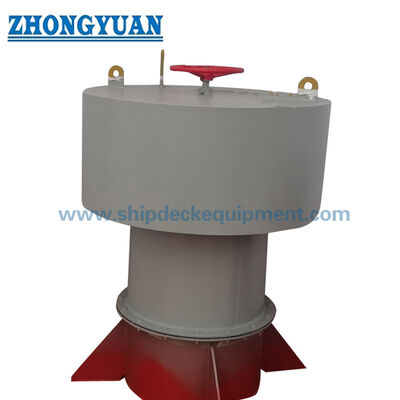
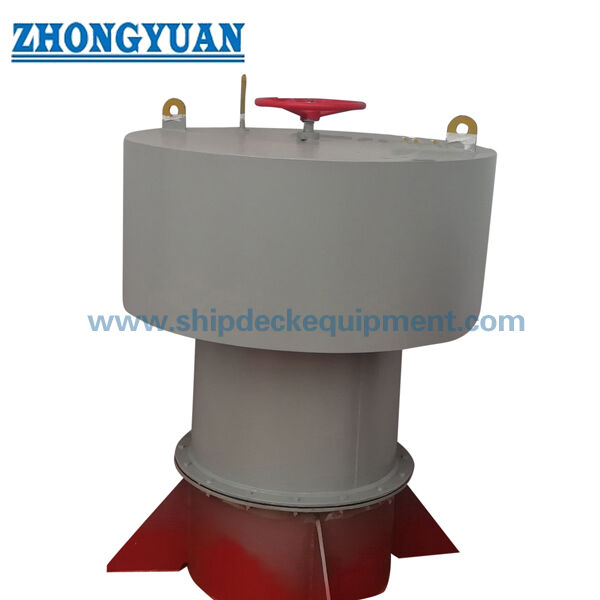
Marine Mushroom Ventilator | CB/T 295 Type C Handwheel-Operated Weathertight Deck Vent
Product Details:
| Place of Origin: | China |
| Brand Name: | Zhongyuan Marine Equipmen |
| Certification: | CCS, NK, BV, ABS, DNV, LR, KR, IRS, RS, RINA, CRS, Makers Test Certificate |
| Model Number: | Standard or Customized |
Payment & Shipping Terms:
| Minimum Order Quantity: | 1 Unit |
|---|---|
| Price: | Based on quotation |
| Packaging Details: | Export standard pallet or customized packing |
| Delivery Time: | Based on project requirements |
| Payment Terms: | T/T, L/C |
| Supply Ability: | Customized production based on project requirements |
|
Detail Information |
|||
| Technical Standard: | CB/T 295-2000 | Type: | C |
|---|---|---|---|
| Nominal Size: | 250-1400mm | Materials: | Mild Steel, Stainless Steel, Bronze, Copper |
| Surface Treatment: | Sandblasting To S2.5 + One Layer Of Epoxy Shop Primer, Galvanized, Polished, Customized Surface Treatment Available. | Classification Certificates: | CCS, NK, BV, ABS, DNV, LR, KR, IRS, RS, Etc. |
| Highlight: | Type C CB T295 mushroom ventilation system,CB T295 mushroom ventilation system,1200mm Marine Outfitting CB T295 |
||
Product Description
Marine Mushroom Ventilator | CB/T 295 Type C Handwheel-Operated Weathertight Deck Vent
Product Overview
The CB/T 295 Type C marine mushroom ventilator is an adjustable deck ventilation terminal used on exposed weather decks. A domed hood covers the ventilation opening, while an indoor handwheel drives a left-hand trapezoidal screw to raise or lower the hood. This arrangement allows crew to regulate the annular airflow opening from inside the vessel and to close the ventilator without going onto the weather deck.
The supplied range covers nominal diameters DN 250 to DN 1400, with approximate ventilator weights from 52 kg to 674 kg excluding the connected air duct. CB/T 295-2000 has been withdrawn and fully replaced by CB/T 4444-2017; therefore, the Type C designation is most relevant to repair, replacement, and projects that retain the earlier drawing basis. For newbuilding work, the applicable current standard, airflow requirement, free ventilation area, deck location, coaming and duct interface, sealing arrangement, operating clearance, material combination, coating system, and class inspection scope should be confirmed before quotation.
Quick Specifications
- Product type: handwheel-operated marine mushroom ventilator → adjustable ventilation and weather closure from inside the vessel.
- Standard and type: CB/T 295-2000 Type C → legacy configuration for project-specified, repair, and replacement requirements; current-standard equivalence should be confirmed.
- Nominal diameter range: DN 250–1400 mm → covers medium and large shipboard ventilation duct interfaces.
- Operating mechanism: indoor handwheel with left-hand trapezoidal screw → raises or lowers the mushroom hood without routine access to the exposed deck.
- Thread data: Tr24×5-LH to Tr46×8-LH in the supplied table → exact screw size and travel must match the selected DN and approved drawing.
- Weather closure: domed hood with a closeable seating interface → intended to limit direct rain and spray entry; no watertight pressure rating has been supplied.
- Approximate weight: 52–674 kg excluding air duct → important for handling, deck/coaming support, installation planning, and freight calculation.
- Material and finish options: mild steel, stainless steel, bronze or copper-based options; Sa 2.5 blasting with epoxy shop primer, galvanizing, polishing, or project coating → exact grades and galvanic compatibility require confirmation.
Main Technical Parameters
|
Nominal diameter DN |
D1 | D2 | H | H1 | H2 | d | t |
Weight Kg |
| 250 | 440 | 200 | 220 | 90 | 210 | Tr24×5-LH | 6 | 52 |
| 300 | 530 | 265 | 65 | |||||
| 350 | 620 | 310 | Tr30×6-LH | 81 | ||||
| 400 | 710 | 280 | 345 | 105 | 230 | Tr40×7-LH | 98 | |
| 450 | 800 | 375 | 8 | 124 | ||||
| 500 | 890 | 320 | 405 | 148 | ||||
| 550 | 980 | 435 | 167 | |||||
| 600 | 1050 | 470 | 120 | 270 | 171 | |||
| 650 | 1160 | 500 | 210 | |||||
| 700 | 1240 | 520 | 225 | |||||
| 750 | 1320 | 540 | 259 | |||||
| 800 | 1410 | 560 | 140 | 320 | 291 | |||
| 850 | 1500 | 580 | 322 | |||||
| 900 | 1580 | 360 | 600 | Tr46×8-LH | 357 | |||
| 950 | 1670 | 620 | 387 | |||||
| 1000 | 1760 | 640 | 420 | |||||
| 1100 | 1930 | 680 | 515 | |||||
| 1200 | 2100 | 720 | 585 | |||||
| 1300 | 2270 | 760 | 659 | |||||
| 1400 | 2440 | 400 | 800 | 350 | 674 | |||
| Note: Ventilator weight does not include the weight of air duct | ||||||||
Selection & Inquiry Guide
Step 1: Confirm whether the order is for CB/T 295-2000 Type C replacement compatibility or a newbuilding design requiring confirmation against CB/T 4444-2017.
Step 2: Provide nominal duct diameter, required airflow or free ventilation area, allowable pressure loss, and the vessel ventilation-system drawing; DN alone is not sufficient for final aerodynamic selection.
Step 3: Confirm installation position, exposed-deck category, space served, coaming or duct connection, available indoor handwheel clearance, opening travel, drainage, and surrounding maintenance access.
Step 4: Confirm material grades and component combination. For stainless steel, bronze, copper, galvanized, or mixed-metal construction, specify corrosion and galvanic-isolation requirements.
Step 5: Confirm closing and sealing requirements, gasket material, inspection or tightness test, fire-closure requirement if applicable, certificate scope, material traceability, and class witness points.
Step 6: Provide quantity, vessel type, newbuilding or replacement status, destination, required delivery time, approved drawing, existing-product photos, and coating specification.
Structure
Mushroom hood | Adjustable annular air opening | Indoor handwheel | Left-hand trapezoidal screw | Lifting and guide assembly | Closing seat / sealing interface | Deck coaming or ventilation duct connection | Surface treatment
Ventilation, Closing & Installation Advantages
- Indoor handwheel operation allows the hood opening to be adjusted or closed without routine crew access to the exposed weather deck.
- The mushroom-shaped hood shields the duct opening from direct rain and spray while maintaining a circumferential airflow path when raised.
- A screw-driven mechanism provides controlled hood travel; thread condition, lubrication, anti-seize treatment, guide alignment, and end-position adjustment are important maintenance points.
- The wide DN range supports different ventilation duct sizes, but actual airflow capacity and pressure loss must be checked by the vessel HVAC or ventilation calculation because no aerodynamic performance data was supplied.
- The deck/coaming weld, supporting structure, drainage path, sealing contact, and local corrosion protection should be coordinated with the shipyard installation drawing rather than treated as ventilator-only details.
- Material and coating selection should consider the exposed marine atmosphere and avoid unsuitable mixed-metal contact, especially where stainless steel, bronze, copper, galvanized steel, and carbon steel are combined.
- For replacement work, handwheel position, screw travel, hood lift, duct diameter, deck penetration, and bolt or weld interface should be checked against the existing arrangement before production.
Custom Attributes
- Standard: CB/T 295-2000 → legacy standard reference; CB/T 4444-2017 is the current replacement standard and should be checked for new projects.
- Type: Type C → indoor handwheel-operated mushroom ventilator with screw-controlled hood opening.
- Nominal Diameter: DN 250–1400 mm → select together with airflow demand, duct size, deck arrangement, and approved drawing.
- Operation: Manual handwheel from inside the vessel → permits local opening adjustment and closure without routine deck access.
- Operating Screw: Left-hand trapezoidal thread → supplied data identifies thread sizes from Tr24×5-LH to Tr46×8-LH; exact DN mapping requires drawing confirmation.
- Material: Mild steel / stainless steel / bronze / copper option → exact material grade and whether the material applies to the full assembly or selected components must be confirmed.
- Surface Treatment: Sa 2.5 blasting + epoxy shop primer / galvanized / polished / project coating → final system follows material type and vessel painting specification.
- Certificate Requirement: Available according to project requirement → maker certificate, material certificate, class inspection, and tightness-test scope should be defined before quotation.
How It Works
Crew turns the indoor handwheel → Left-hand trapezoidal screw raises or lowers the hood → The circumferential opening regulates airflow → The hood is lowered onto the closing seat when weather closure is required → Operating travel, seating contact, drainage, and sealing condition are inspected
Applications
Accommodation ventilation | Galley and service-space ventilation subject to vessel design | Weather-deck air intake or exhaust terminals | Commercial ships | Workboats | Newbuilding projects | Repair and replacement projects
Certifications & Advantages
Certificates and inspection can be arranged according to project requirement, material traceability, approved drawing, test scope, and classification-society procedure. Certificate availability is not a default indication that every listed class certificate is supplied with each order.
Certification: CCS, NK, BV, ABS, DNV, LR, KR, IRS, RS, RINA, CRS, Makers Test Certificate.
Drawing & Photos

FAQ
Q1: Is CB/T 295-2000 still the current standard for marine mushroom ventilators?
A1: No. The official standard record identifies CB/T 295-2000 as withdrawn and fully replaced by CB/T 4444-2017. CB/T 295 Type C should therefore be treated as a legacy, replacement, or project-specified configuration. Newbuilding inquiries should confirm the current standard and drawing basis.
Q2: Does “weathertight” mean the ventilator has a certified watertight pressure rating?
A2: No. The product uses a closable mushroom hood and seating arrangement to limit weather ingress, but no watertight pressure rating or test pressure was supplied. The required sealing detail, gasket, closing force, inspection method, and acceptance criterion must be confirmed for the installation.
Q3: How should the correct nominal diameter be selected?
A3: Select DN using the vessel ventilation calculation, duct diameter, required free area, airflow and pressure-loss limits, deck location, operating clearance, material, and class requirements. The supplied dimension and weight table supports preliminary layout and quotation, but it does not replace airflow calculation or the approved standard drawing.