


|
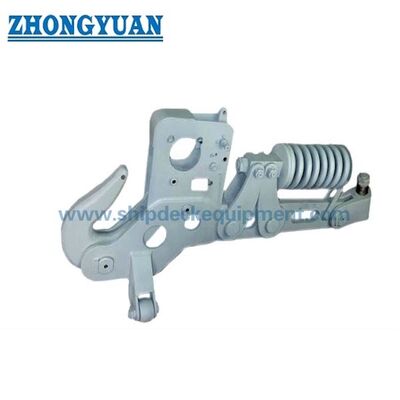
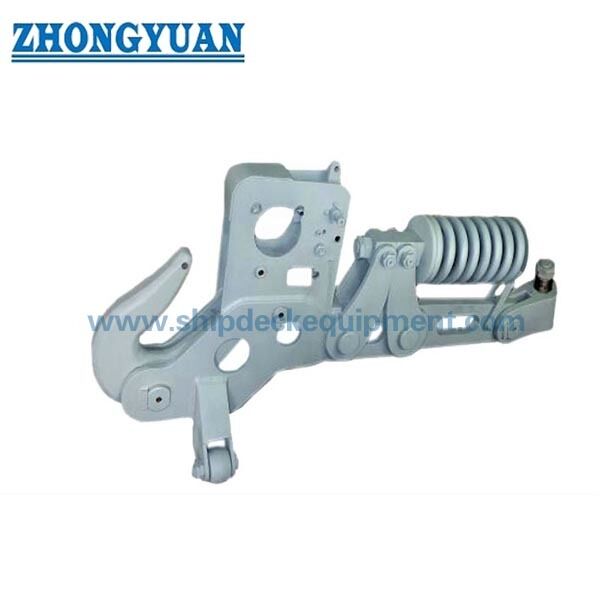
200-600 kN Pneumatic Quick Release Spring Towing Hook for Tugboats | CB 3064-1979
Product Details:
| Place of Origin: | China |
| Brand Name: | Zhongyuan Marine Equipmen |
| Certification: | CCS, NK, BV, ABS, DNV, LR, KR, IRS, RS, RINA, CRS, Makers Test Certificate |
| Model Number: | Standard or Customized |
Payment & Shipping Terms:
| Minimum Order Quantity: | 1 Unit |
|---|---|
| Price: | Based on quotation |
| Packaging Details: | Export standard pallet or customized packing |
| Delivery Time: | Based on project requirements |
| Payment Terms: | T/T, L/C |
| Supply Ability: | Customized production based on project requirements |
|
Detail Information |
|||
| SWL: | 200KN To 600KN | Material: | Mild Steel, C-Mn Steel |
|---|---|---|---|
| Usage: | Mooring And Towing | Standard: | CB*3064-79 |
| Type: | Spring Type | Test: | Prototype Test, Break Load Test, Safe Working Load Test, Operation Test |
| Operation System: | Pneumatic Control, Remote Control, Manual Release | Surface Treatment: | Sandblasting To S2.5 + One Layer Of Epoxy Shop Primer |
| Classification Certificates: | CCS, NK, BV, ABS, DNV, LR, KR, RINA, IRS, RS, Etc. | ||
| Highlight: | Pneumatic Spring Towing Hook,600KN Spring Towing Hook,600KN Ship Towing Equipment |
||
Product Description
200-600 kN Pneumatic Quick Release Spring Towing Hook for Tugboats | CB 3064-1979
Product Overview
The pneumatic quick release spring towing hook is a deck-mounted towing connection for tugboats, harbor tugs, workboats, and other vessels that require a controlled method of retaining and releasing a towing link or towline eye. The hook is arranged for pneumatic remote release and local manual release, allowing the crew to disconnect the towline from a safer operating position when an approved release command is required.
The series covers stated Safe Working Loads from 200 to 600 kN and follows the spring-type designation of CB*3064-79. Selection must consider the vessel bollard pull, towline MBL, towing geometry, dynamic loading, hook link dimensions, deck foundation, release-system arrangement, and the project-specific test basis. Release under load must be confirmed by the approved design and witnessed test procedure; it should not be assumed from the product name alone.
Quick Specifications
- Safe Working Load range: 200 / 300 / 400 / 600 kN → four ratings for matching different tug and workboat towing duties.
- Release arrangement: pneumatic remote control + local manual release → provides operational flexibility and a manual backup at the hook station.
- Air supply pressure: 0.6-0.8 MPa → the vessel pneumatic system and control components must be matched to the approved release circuit.
- Type: spring-type towing hook according to CB*3064-79 → exact spring construction and function must follow the approved GA and mechanism drawing.
- Material options: mild steel or C-Mn steel → exact grades, heat treatment, pin/bush material, and traceability are confirmed by the project specification.
- Surface preparation: abrasive blast cleaning to Sa 2½ + one coat epoxy shop primer → final coating system is completed according to the vessel paint specification.
- Testing options: prototype, break-load, SWL/proof-load, and operation tests → applicable test type, load value, hold time, and witness scope are agreed before production.
- Certificate scope: maker documentation or class inspection → available according to project requirement and subject to drawing approval and survey arrangement.
Main Technical Parameters
|
|||||||||||||||||||||||||||||||||||||||||||||||||||||||||||||||||
Selection & Inquiry Guide
Step 1: Confirm the required SWL: 200, 300, 400, or 600 kN. Selection should be based on the approved towing-load analysis and not on vessel bollard pull alone.
Step 2: Provide towline construction, diameter, MBL, towing link or eye dimensions, expected lead angles, tow-point height, and normal towing arrangement.
Step 3: Confirm pneumatic remote release, local manual release, required control station, air supply pressure, piping interface, indication/alarm requirement, and behavior after loss of air supply.
Step 4: Confirm exact steel grades, hook body and pin materials, heat treatment, NDE scope, corrosion protection, lubrication points, and spare parts requirement.
Step 5: Define the test basis: prototype or break-load test, production proof/SWL test, operation test, release-under-load test, hold time, acceptance criteria, and class witness points.
Step 6: Provide vessel type, installation position, deck foundation drawing, quantity, classification society, required certificates, destination, and delivery schedule.
Structure
Spring-type towing hook body | Hook and locking mechanism | Pneumatic release cylinder | Local manual release device | Towline link interface | Mounting foundation | Pins, bushes and lubrication points | Control and indication interfaces
Towing Release, Installation and Quality Advantages
- Pneumatic remote release allows the release command to be initiated from an approved control position, while the local manual device provides a separate operating method at the hook station.
- The hook rating is linked to the complete load path, including the towline link, hook body, pivot and locking parts, base structure, deck foundation, welds or bolts, and permitted towing directions.
- The spring-type designation is retained from the supplied standard reference. The actual spring assembly, travel, preload, and maintenance method must be verified from the mechanism drawing rather than inferred in website copy.
- Operation testing should verify locking, release, reset, manual operation, pneumatic actuation, control response, and indication functions before delivery and after installation.
- Abrasive blast cleaning and epoxy shop primer provide a controlled base for the final marine coating system; coating compatibility and dry-film thickness remain project-specific.
- Load testing and release testing must use an approved fixture and load direction. Permanent deformation, mechanism condition, release performance, and post-test inspection criteria should be defined in the ITP.
- The vessel designer or shipyard must verify local deck strength, foundation structure, fatigue-sensitive details, access for operation, and a clear towline escape path after release.
Custom Attributes
- SWL Range: 200-600 kN → select the model from the approved towing-load basis and vessel arrangement.
- Standard Reference: CB*3064-79 → applicability, revision status, and project acceptance must be confirmed before order.
- Release Mode: Pneumatic remote + manual local release → control philosophy and backup arrangement are defined by the vessel project.
- Air Pressure: 0.6-0.8 MPa → confirms the stated cylinder supply range, not the towing-load rating.
- Material: Mild steel / C-Mn steel → exact grades and component-specific material schedule remain to be confirmed.
- Testing: Prototype / break load / SWL / operation → routine and type-test scope must be separated in the purchase specification.
- Surface Treatment: Sa 2½ + epoxy shop primer → final topcoat, color, DFT, and preservation are order-specific.
- Customization: Control system, interface dimensions, coating, and certificate scope → subject to engineering review and approved drawings.
How It Works
Towline link or eye is placed on the hook → Locking mechanism is fully engaged and indicated → Towing load is transferred through the hook body and vessel foundation → Pneumatic or local manual release command operates the release mechanism → Retaining condition is disengaged and the towing connection clears the hook along the approved release path
Applications
Harbor tugboats | Coastal towing vessels | Inland towboats | Workboats | Rescue and service vessels | Ship-assist towing | Barge handling | Newbuilding and towing-equipment replacement projects
Certifications & Advantages
Material certificates, NDE records, load-test reports, operation-test records, and class inspection can be arranged according to project requirement. Classification approval and surveyor witnessing are not included by default and must be confirmed before quotation.
Certification: CCS, NK, BV, ABS, DNV, LR, KR, IRS, RS, RINA, CRS, Makers Test Certificate.
Drawing & Photos

FAQ
Q1: Can the towing hook release while carrying its full SWL?
A1: Only when the approved design, pneumatic system, release force, load direction, and witnessed test procedure confirm release at that load. The website should not make an unconditional full-SWL release claim without the applicable test record.
Q2: How should the 200, 300, 400, and 600 kN models be selected?
A2: Select from the required towing load, towline MBL, dynamic and shock factors, vessel bollard pull, towline lead angles, towing-link dimensions, hook geometry, foundation strength, and class requirements. Bollard pull alone is not a complete selection basis.
Q3: Which tests and certificates should be specified?
A3: Confirm whether the order requires a type/prototype or destructive break-load test, a production proof or SWL test, release-under-load testing, no-load operation testing, NDE, material traceability, control-system checks, and class witnessing. The exact load multipliers and acceptance criteria must be agreed before production.