


|
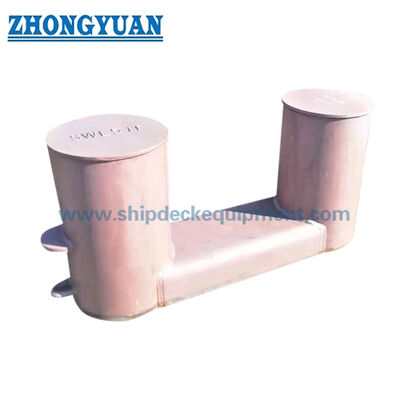
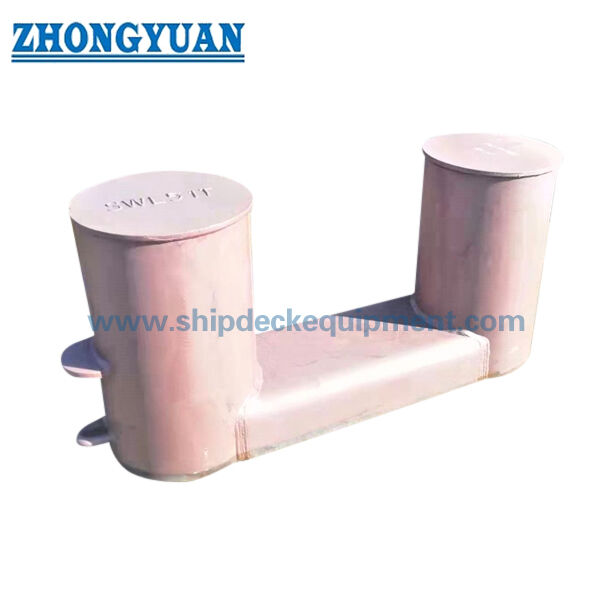
Welded Steel Double Bitt Mooring Bollard | ISO 13795 Type A with Compact Base Plate for Ship Mooring and Towing
Product Details:
| Place of Origin: | China |
| Brand Name: | Zhongyuan Marine Equipmen |
| Certification: | CCS, NK, BV, ABS, DNV, LR, KR, IRS, RS, RINA, CRS, Makers Test Certificate |
| Model Number: | Standard or Customized |
Payment & Shipping Terms:
| Minimum Order Quantity: | 1 Unit |
|---|---|
| Price: | Based on quotation |
| Packaging Details: | Export standard pallet or customized packing |
| Delivery Time: | Based on project requirements |
| Payment Terms: | T/T, L/C |
| Supply Ability: | Customized production based on project requirements |
|
Detail Information |
|||
| Technical Standard:: | ISO 13795:2020; | SWL Range:: | 98-1893 KN (Towing), 54 KN- 1401 KN (One Rope Use); 49-948 KN (Two Rope Use); |
|---|---|---|---|
| Weight:: | 29 To 1391 Kg; | Nominal Diameters:: | 150 To 600 Mm; |
| Surface Treatment:: | Sandblasting To S2.5 + One Layer Of Epoxy Shop Primer, Polished, Galvanized, Customized Surface Treatment Available. | Classification Certificates:: | CCS, NK, BV, ABS, DNV, LR, KR, IRS, RS, Etc. |
| Highlight: | Welded Double Bitt Bollard,Type A Double Bitt Bollard,ISO 13795 Ship Towing Equipment |
||
Product Description
Welded Steel Double Bitt Mooring Bollard | ISO 13795 Type A with Compact Base Plate for Ship Mooring and Towing
Product Overview
The ISO 13795 Type A welded steel double bitt bollard is a compact-base deck fitting used for ship mooring and towing arrangements. It is installed on a reinforced deck foundation and is selected together with the vessel mooring and towing plan, rope lead direction, one-rope / two-rope use, towing eye-splice arrangement, deck welding detail, and classification requirement.
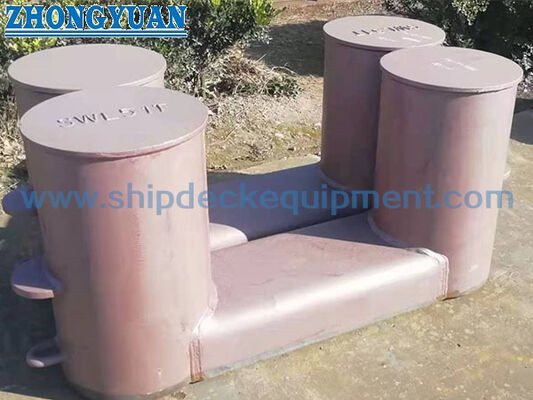
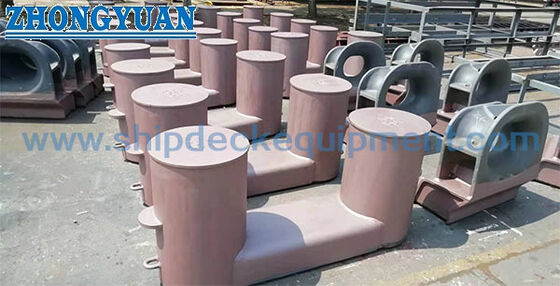
This page is prepared for Type A welded steel bollards with a compact base plate according to the supplied ISO 13795:2020 product data. The structure uses two welded steel posts, a compact base plate, fins for keeping the mooring or towing line as low as practicable, and an eye plate for tying a stopping-off rope or chain. The supplied table covers nominal sizes from 150 to 600, with A/B variants for several sizes. Final SWL marking, deck reinforcement, weld detail, and certificate scope should be confirmed according to the project drawing and class procedure.
Quick Specifications
- Product type: welded steel double bitt bollard → deck-mounted mooring and towing fitting for sea-going vessels.
- Standard and type: ISO 13795:2020 Type A → compact base plate welded steel bollard according to the supplied product data.
- Nominal size range: Dn 150 to Dn 600 → selection depends on SWL, deck space, rope arrangement, and vessel drawing.
- SWL range from supplied data: 54–1401 kN for one-rope mooring use, 49–948 kN for two-rope mooring use, and 98–1893 kN for towing use → final marking should follow actual loading condition and user-manufacturer agreement.
- Structure: two welded steel posts, compact base plate, rope-control fins, and stopping-off eye plate → suitable for controlled mooring and towing line handling.
- Material basis: weldable steel plate / steel tube with yield point not less than 235 N/mm² or equivalent → final grade and material certificate scope should be confirmed.
- Surface treatment: Sa 2.5 blasting + one layer epoxy shop primer, galvanized, polished, or customized finish → final coating follows vessel paint specification.
- Calculated weight range: 29 to 1391 kg from supplied data → useful for deck foundation planning, handling, packing, and freight estimate.
Main Technical Parameters
|
|
|||||||||||||||||||||||||||||||||||||||||||||||||||||||||||||||||||||||||||||||||||||||||||||||||||||||||||||||||||||||||||||||||||||||||||||||||||||||||||||||||||||||||||||||||||||||||||||||||||||||||||||||||||||||||||||||||||||||||||||||
Selection & Inquiry Guide
Step 1: Confirm ISO 13795 Type A welded steel bollard with compact base plate and the required nominal size from Dn 150 to Dn 600.
Step 2: Confirm whether the bollard is used for mooring, towing, or both; identify one-rope mooring use, two-rope mooring use, or towing eye-splice arrangement.
Step 3: Confirm required SWL, actual rope lead angle, rope type, rope diameter, bollard layout, and whether A/B variant selection is required for the nominal size.
Step 4: Confirm deck foundation, deck reinforcement, weld leg, installation space, and whether the fins and stopping-off eye plate match the shipyard arrangement.
Step 5: Confirm material grade, steel tube or plate-formed post route, surface treatment, NDT / inspection scope, certificate requirement, and class witness requirement before quotation.
Step 6: Provide quantity, vessel type, application position, GA drawing or deck arrangement drawing, delivery destination, required delivery time, and reference photos if available.
Structure
Double welded steel posts | Compact base plate | Rope-control fins | Stopping-off eye plate | Deck welding interface | Weldable steel plate / steel tube post | Smooth rope-contact edges | Shop primer or specified surface treatment
Mooring, Towing & Fabrication Advantages
- The double bitt arrangement provides a practical deck fitting for figure-of-eight mooring belay and towing eye-splice connection when the vessel drawing specifies ISO 13795 Type A.
- The compact base plate helps fit the bollard into ship deck mooring stations where available deck space and surrounding fittings must be considered together.
- Fins are used to keep the rope as low as practicable on the bollard, which helps reduce bending load applied to the bollard posts under the specified rope arrangement.
- The stopping-off eye plate provides a defined point for tying the stopping-off rope or chain, subject to the vessel’s approved operating procedure.
- A/B size variants affect wall thickness, welding leg length, SWL, and calculated weight; variant selection should follow the project load basis and vessel drawing.
- Welded steel construction requires controlled cutting, forming or pipe preparation, fit-up, welding, weld inspection, and dimensional checking around the base plate and post transitions.
- Deck foundation and welding details should be checked by the shipyard or design office because mooring and towing loads are transferred through the bollard posts, compact base plate, welds, and local deck structure.
- SWL marking should be agreed according to actual loading condition, rope arrangement, and the manufacturer-user agreement; it should not be replaced by MBL, proof load, or test load wording without approval.
Custom Attributes
- Standard: ISO 13795:2020 → use when the shipyard or owner specification requires welded steel bollards for sea-going vessels.
- Type: Type A compact base plate → suitable when the vessel drawing specifies the compact-base welded steel bollard configuration.
- Nominal Size: 150 / 200 / 250A / 250B / 300A / 300B / 350A / 350B / 400A / 400B / 450A / 450B / 500A / 500B / 550A / 550B / 600 → select by SWL, rope arrangement, and deck space.
- Mooring Use: one-rope and two-rope SWL values are listed separately → do not mix these with towing SWL or rope breaking load.
- Towing Use: towing-purpose SWL is subject to actual loading condition and final marking agreement → detailed row values should be confirmed from the official standard or project drawing.
- Material: high tensile steel or stainless steel option → exact plate / tube grade, yield strength, and certificate requirement should be confirmed before production.
- Surface Treatment: Sa 2.5 blasting + epoxy shop primer / galvanized / polished / customized → final finish follows corrosion environment and vessel painting specification.
- Certificate Requirement: available according to order scope → class certificate, maker certificate, material certificate, and witness inspection should be agreed before production.
How It Works
Mooring or towing line approaches the bollard → Rope is arranged in figure-of-eight belay or towing eye-splice connection → Fins help keep the line low on the post → Load is transferred through the welded posts, compact base plate, welds, and reinforced deck structure → SWL marking, inspection, and coating are completed according to project requirement
Applications
Sea-going vessels | Cargo ships | Bulk carriers | Tankers | Container vessels | Tugboats | Workboats | Ship mooring stations | Ship towing arrangements | Newbuilding and replacement projects
Certifications & Advantages
Certificates can be arranged according to project requirement, inspection scope, material traceability, and class society approval procedure.
Certification: CCS, NK, BV, ABS, DNV, LR, KR, IRS, RS, RINA, CRS, Makers Test Certificate.
Drawing & Photos

FAQ
Q1: Is ISO 13795 Type A bollard suitable for both mooring and towing?
A1: Yes, the supplied product data separates mooring-purpose and towing-purpose SWL values. The actual use should follow the vessel arrangement, rope connection method, deck foundation, and final SWL marking agreed for the project.
Q2: What is the difference between one-rope use, two-rope use, and towing use?
A2: One-rope and two-rope use refer to mooring-purpose figure-of-eight belay arrangements. Towing use refers to the towing eye-splice arrangement. These load cases should not be mixed, and the correct SWL should be selected according to the project drawing and operation condition.
Q3: What information is needed before quotation?
A3: Confirm ISO 13795 Type A, nominal size and A/B variant, mooring or towing load case, required SWL, material grade, surface treatment, quantity, certificate requirement, deck arrangement drawing, delivery destination, and required delivery time.