


|
150–350 mm Ship Cross Bitt Bollard | GB 10106-88 Type A/B for Ship Mooring
Product Details:
| Place of Origin: | China |
| Brand Name: | Zhongyuan Marine Equipmen |
| Certification: | CCS, NK, BV, ABS, DNV, LR, KR, IRS, RS, RINA, CRS, Makers Test Certificate |
| Model Number: | Standard or Customized |
| Document: | Marine Cross Bitt Bollard G...88.pdf |
Payment & Shipping Terms:
| Minimum Order Quantity: | 1 Unit |
|---|---|
| Price: | Based on quotation |
| Packaging Details: | Export standard pallet or customized packing |
| Delivery Time: | Based on project requirements |
| Payment Terms: | T/T, L/C |
| Supply Ability: | Customized production based on project requirements |
|
Detail Information |
|||
| Technical Standard: | GB 10106-88 & JIS F2804-76 | Nominal Diameters: | 150 To 350mm |
|---|---|---|---|
| Type: | Type A & Type B | Material: | Mild Steel; Stainless Steel |
| Weight: | 31 To 204kg | Surface Treatment: | Sandblasting To S2.5 + One Layer Of Epoxy Shop Primer, Polished Stainless Steel, Customized Surface Treatment Available. |
| Classification Certificates: | CCS, NK, BV, ABS, DNV-GL, LR, KR, RINA, IRS, RS, Etc. | ||
| Highlight: | Cruciform Bollards Ship Mooring Equipment,GB 10106 Ship Mooring Equipment |
||
Product Description
150–350 mm Ship Cross Bitt Bollard | GB 10106-88 Type A/B for Ship Mooring
Product Overview
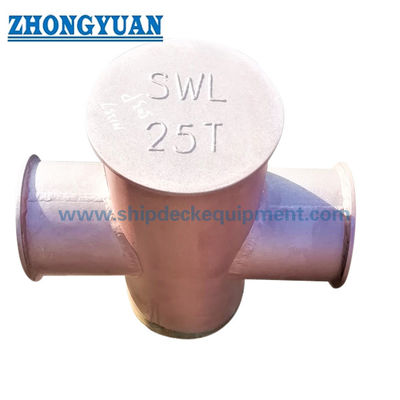
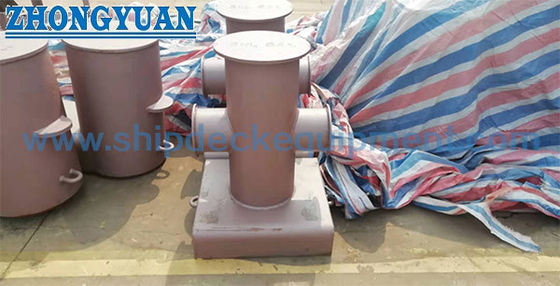
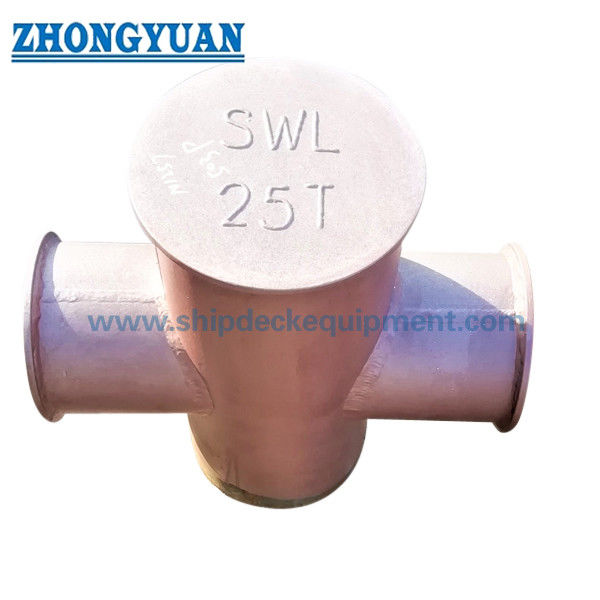
The GB 10106-88 ship cross bitt is a welded deck mooring fitting used to secure shipboard mooring lines. Its cruciform arrangement combines a vertical bitt with a transverse cross bar, providing practical rope wrapping and securing positions within a compact deck area.
The standard series covers nominal diameters from 150 to 350 mm and includes Type A and Type B installation arrangements. Type A is directly welded to the ship deck, while Type B is welded to a deck liner. The two types should therefore be selected according to the vessel structural drawing and shipyard installation arrangement rather than treated as different load grades. The supplied GB 10106-88 table also provides reference rope sizes and the maximum breaking load of the applicable wire rope; these rope values are not the SWL or breaking load of the cross bitt.
Quick Specifications
- Product type: Ship Cross Bitt / Cruciform Mooring Bollard → welded deck fitting for securing ship mooring lines.
- Standard and type: GB 10106-88 Type A / Type B → two installation arrangements within the same cross-bitt size series.
- Nominal diameter: 150–350 mm → five sizes for matching the vessel mooring arrangement, rope size, and installation drawing.
- Applicable wire-rope maximum breaking load: 117–686 kN → rope-selection reference from the supplied table; not bollard SWL.
- Applicable rope types: Steel wire rope / synthetic fiber rope / Malina rope → reference diameters vary with nominal bitt size.
- Installation: Type A direct deck weld / Type B deck-liner weld → select according to vessel structural details.
- Reference weight: 31–204 kg → varies with nominal size and Type A / Type B arrangement.
- Construction and finish: Welded steel structure with project-specific marine coating → final material, WPS, coating, and inspection scope to be confirmed.
Main Technical Parameters
Main selection data from the supplied GB 10106-88 table. Dimensions are in mm unless otherwise stated. The load column is the maximum breaking load of the applicable wire rope and must not be read as cross-bitt SWL.
|
Nominal |
Applicable Wire Rope |
Steel Wire |
Synthetic Fiber |
Malina Rope |
H |
Type A |
Type B |
|---|---|---|---|---|---|---|---|
| 150 | 117 (12) | 13 | 30 | 44 | 480 | 31 | 33 |
| 200 | 225 (26)* | 19.5 | 45 | 64 | 560 | 62 | 66 |
| 250 | 382 (39) | 26 | 56 | 80 | 640 | 98 | 105 |
| 300 | 549 (56) | 30 | 70 | 104 | 680 | 143 | 153 |
| 350 | 686 (70) | 34.5 | 77 | 120 | 720 | 192 | 204 |
Type A / Type B Installation Difference
|
Type |
Installation Arrangement |
Selection Basis |
|---|---|---|
| Type A | Directly welded to the ship deck | Use when the vessel structural drawing specifies a direct deck-welded interface. |
| Type B | Welded to a deck liner | Use when the vessel structural drawing specifies a liner between the cross bitt and deck structure. |
Type B should not automatically be described as a higher-load version. Deck plate thickness, liner arrangement, local reinforcement, weld size and welding procedure should follow the vessel structural drawing and project requirements.
Selection & Inquiry Guide
Step 1: Confirm GB 10106-88 and the required nominal diameter 150 / 200 / 250 / 300 / 350 mm according to the vessel mooring arrangement and project drawing.
Step 2: Confirm mooring rope type, rope diameter and rope MBL. Use the standard rope data as a selection reference only; do not convert the rope breaking-load value directly into bollard SWL.
Step 3: Confirm Type A or Type B according to the installation drawing: direct deck welding for Type A or deck-liner installation for Type B.
Step 4: Confirm material grade, fabrication requirement, WPS / welding requirement and surface-treatment system. Stainless steel or special material is subject to project confirmation.
Step 5: Confirm deck structure, liner arrangement where applicable, local reinforcement, weld detail and classification-society inspection requirement with the shipyard or vessel designer.
Step 6: Provide quantity, vessel type, installation position, replacement drawing or photo if available, delivery destination and required delivery time.
Structure
Vertical steel bitt | Transverse cross bar | Welded cruciform structure | Type A direct-deck interface or Type B deck-liner interface | Rope-contact surfaces | Specified marine coating
Fabrication, Installation & Engineering Advantages
- The cruciform arrangement provides multiple practical rope wrapping and securing positions around the vertical post and transverse cross bar.
- The 150–350 mm standard range supports selection by vessel drawing, rope diameter and the applicable rope load data stated in the standard table.
- Type A and Type B provide different installation interfaces while retaining the same basic cross-bitt mooring function.
- Fabrication accuracy of the vertical bitt, cross bar and deck interface is important for dimensional fit-up and shipyard welding.
- Rope-contact surfaces should be smooth and free from harmful sharp edges that could cause localized wear to steel wire or fiber mooring ropes.
- The deck plate, liner and local reinforcement remain part of the vessel structural design and should be checked independently from the rope-selection table.
- For replacement projects, existing foundation dimensions, deck thickness, liner arrangement, weld details and rope lead should be checked before production.
Custom Attributes
- Standard: GB 10106-88 → governing basis for the Type A / Type B dimensions and rope-selection data used on this page.
- Type: A / B → Type A is directly welded to the deck; Type B is welded to a deck liner.
- Nominal Diameter: 150 / 200 / 250 / 300 / 350 mm → select according to vessel drawing, rope data and installation arrangement.
- Applicable Rope: Steel wire / synthetic fiber / Malina rope → confirm rope diameter and MBL before quotation.
- Material: Project-specified steel → exact grade and any stainless-steel alternative should be confirmed before production.
- Installation: Welded → deck structure, liner, reinforcement and weld details follow the vessel structural design.
- Surface Treatment: Project-specific marine coating → blasting, primer and final coating system should follow vessel or owner specification.
- Certificate Requirement: According to project scope → material documentation, maker certificate and class inspection to be confirmed before order.
How It Works
Mooring line approaches the cross bitt → Rope is led around the vertical post and transverse cross bar → Required turns secure the mooring line → Mooring force is transferred through the welded cross-bitt structure → Load is introduced into the deck or deck-liner structure according to the vessel installation design
Applications
Cargo vessels | Tankers | Workboats | Tugboats | Barges | General ship deck mooring stations | Newbuilding projects | Replacement of legacy GB 10106-88 cross bitts
Certifications & Advantages
Certificates and inspection documentation can be arranged according to project requirement, material traceability, order scope, and classification-society approval procedure.
Certification: CCS, NK, BV, ABS, DNV, LR, KR, IRS, RS, RINA, CRS, Makers Test Certificate.
Drawing & Photos

FAQ
Q1: What is the difference between Type A and Type B cross bitts?
A1: Type A is designed for direct welding to the ship deck, while Type B is welded to a deck liner. The difference is primarily the installation arrangement. Type B should not automatically be considered a higher-load version.
Q2: Does the 117–686 kN value represent the SWL of the cross bitt?
A2: No. The GB 10106-88 table identifies these values as the maximum breaking load of the applicable wire rope. They are rope-selection reference values and must not be used directly as the bollard SWL, permissible load, or bollard breaking load.
Q3: How should the correct cross bitt size and type be selected?
A3: Confirm the vessel mooring arrangement, rope type, rope diameter and MBL first, then select the corresponding nominal bitt size and Type A or Type B installation arrangement. Deck structure, liner, local reinforcement and welding details should be checked against the vessel drawing before production.