


|
Detachable Anchor Chain Cable Clench for Chain Locker | JIS F 2025 Type A
Product Details:
| Place of Origin: | China |
| Brand Name: | Zhongyuan Marine Equipmen |
| Certification: | CCS, NK, BV, ABS, DNV, LR, KR, IRS, RS, RINA, CRS, Makers Test Certificate |
| Model Number: | Standard or Customized |
Payment & Shipping Terms:
| Minimum Order Quantity: | 1 Unit |
|---|---|
| Price: | Based on quotation |
| Packaging Details: | Export standard pallet or customized packing |
| Delivery Time: | Based on project requirements |
| Payment Terms: | T/T, L/C |
| Supply Ability: | Customized production based on project requirements |
|
Detail Information |
|||
| Technical Standard: | JIS F2025-1992 | Type: | Type A, Detachable Type |
|---|---|---|---|
| Nominal Chain Diameter: | 52mm To 120mm | Materials: | C-Mn Steel, Stainless Steel |
| Surface Treatment: | Sandblasting To S2.5 + One Layer Of Epoxy Shop Primer, Galvanized, Polished, Customized Surface Treatment Available. | Classification Certificates: | CCS, NK, BV, ABS, DNV, LR, KR, IRS, RS, Etc. |
| Highlight: | JIS F2025 plug type anchor releaser,Detachable plug type anchor releaser,JIS F2025-1992 Ship Mooring Equipment |
||
Product Description
Detachable Anchor Chain Cable Clench for Chain Locker | JIS F 2025 Type A
Product Overview
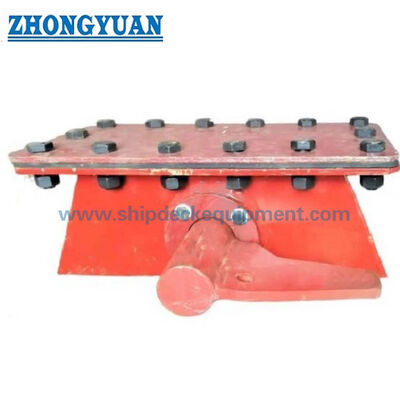
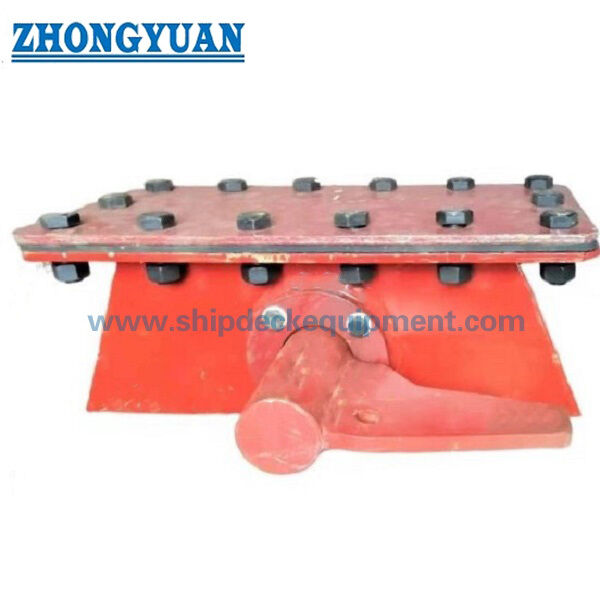
The JIS F 2025 Type A detachable cable clench is a chain-locker fitting used to secure the anchor-chain bitter end at the chain-locker bulkhead. Its detachable plug / cover and pin arrangement provides a controlled means of releasing the chain connection when an approved emergency-abandonment procedure requires the anchor chain to be let go. It is not a deck chain stopper, lifting fitting, towing component, or routine anchor-handling device.
The supplied dimensional data follows JIS F 2025:1992. JIS F 2025:2021 is the current active edition, so newbuilding and class-related orders should confirm the governing edition before quotation. Selection should be based on the nominal anchor-chain diameter, chain grade and project load basis, chain-locker bulkhead geometry, release access, welding interface, sealing requirement, coating system, and required inspection scope.
Quick Specifications
- Product function: Anchor-chain bitter-end securing in the chain locker → provides a defined connection at the chain-locker bulkhead and a detachable release arrangement.
- Standard and type: JIS F 2025 Type A detachable type → Type A is the detachable configuration; Type B is the fixed configuration.
- Standard edition: 1992 dimensions supplied; 2021 edition is current → confirm the contract, vessel drawing, and class requirement before production.
- Nominal size range: 52 to 120, including nominal size 73 → covers applicable anchor-chain diameters from 50–52 mm through 114–120 mm.
- Approximate mass: 40.5 to 274 kg → relevant to handling, bulkhead installation planning, packing, and freight estimation.
- Standard material basis: SS400 body with component-specific steel, brass, gasket, packing, and retaining materials → stainless steel or alternative materials require an approved project drawing.
- Installation: Welded to the chain-locker bulkhead → the standard permits the body to be matched to a curved mounting surface where required.
- Sealing and testing: Gasket and packing performance should support the specified sealing duty → any completed-assembly watertight test pressure and acceptance criteria must be confirmed by the project.
Main Technical Parameters
| Nominal No. | Applicable Anchor Chain Dia.(mm) | L1 | L3 | B2 | H1 | H2 | D1 | D2 | h1 | d1 |
Weight (kg) |
| 52 | 50-52 | 384 | 460 | 238 | 63 | 82 | 54 | 57 | 190 | 16 | 40.5 |
| 56 | 54-56 | 420 | 486 | 246 | 69 | 88 | 58 | 61 | 194 | 16 | 48.0 |
| 60 | 58-60 | 448 | 504 | 254 | 74 | 94 | 62 | 65 | 198 | 16 | 53.9 |
| 64 | 62-64 | 478 | 524 | 264 | 80 | 100 | 66 | 69 | 202 | 16 | 60.0 |
| 68 | 66-68 | 504 | 570 | 282 | 87 | 114 | 75 | 78 | 212 | 19 | 81.4 |
| 78 | 76-78 | 576 | 594 | 292 | 95 | 122 | 80 | 83 | 217 | 19 | 92.8 |
| 84 | 81-84 | 624 | 628 | 302 | 102 | 131 | 85 | 88 | 223 | 19 | 106 |
| 90 | 87-90 | 670 | 660 | 316 | 110 | 140 | 90 | 93 | 230 | 19 | 128 |
| 95 | 92-95 | 708 | 686 | 330 | 118 | 148 | 95 | 98 | 235 | 22 | 146 |
| 102 | 98-102 | 762 | 724 | 346 | 128 | 158 | 100 | 103 | 242 | 22 | 188 |
| 111 | 105-111 | 828 | 770 | 364 | 139 | 171 | 110 | 110 | 251 | 22 | 231 |
| 120 | 114-120 | 892 | 810 | 386 | 150 | 184 | 120 | 123 | 260 | 22 | 274 |
Selection & Inquiry Guide
Step 1: Confirm the governing standard edition, Type A detachable configuration, and designation such as JIS F 2025 A52.
Step 2: Confirm nominal anchor-chain diameter, chain grade, chain certificate data, and whether the order is for newbuilding or replacement of an existing cable clench.
Step 3: Provide the chain-locker arrangement, bulkhead thickness / curvature, welded installation interface, reinforcement detail, chain direction, and available operating access.
Step 4: Confirm the material schedule for the body, cover, pin, stopper, fasteners, gasket, packing, retaining parts, and any stainless steel or special-material requirement.
Step 5: Confirm surface treatment, sealing duty, any watertight function test, release / reset procedure, inspection points, and whether a cover handle is required.
Step 6: Confirm quantity, certificate and class scope, delivery destination, required delivery time, approved drawing, existing-product photos, and packing requirement.
Structure
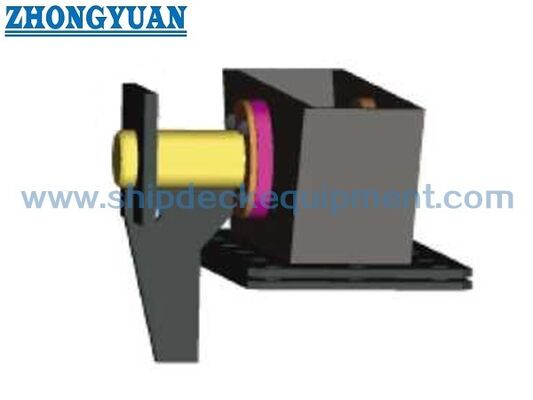
SS400 body | Detachable cover / plug | Pin and stopper assembly | Packing gland | Gasket and packing | Retaining pin and chainlet | Stud bolts and nuts | Welded chain-locker bulkhead interface | Optional cover handle
Chain-Locker Installation & Quality Advantages
- Type A is the detachable JIS configuration, allowing the bitter-end connection to be released under a controlled vessel procedure rather than remaining permanently fixed.
- The body geometry should be matched to the chain-locker bulkhead; where the mounting surface is curved, the standard allows the body to be adapted to the installation surface.
- Pin, stopper, cover, packing gland, stud-bolt, and retaining-part alignment should be checked together so the release stroke and reassembly condition are not affected by fabrication distortion.
- The component-based material schedule supports separate control of the structural body, removable parts, brass fasteners, gasket, packing, and retaining wire / chainlet items.
- Gasket and packing condition is important for the specified sealing duty. Material performance, replacement interval, test pressure, and acceptance criteria should follow the approved project specification.
- The welded bulkhead interface and surrounding ship structure must be checked by the shipyard or design office for load transfer, local reinforcement, access, corrosion protection, and inspection.
- The cable clench should be function-checked after fabrication and installation according to the agreed procedure; it should not be represented as an anchor windlass brake or deck chain stopper.
Custom Attributes
- Standard Basis: JIS F 2025:1992 supplied dimensions / JIS F 2025:2021 current edition → confirm which edition is contractually applicable.
- Type: Type A detachable → different from the Type B fixed configuration.
- Nominal Size: 52 / 56 / 60 / 64 / 68 / 73 / 78 / 84 / 90 / 95 / 102 / 111 / 120 → select by the applicable nominal anchor-chain diameter.
- Standard Designation: JIS F 2025 A + nominal number → example: JIS F 2025 A52.
- Standard Body Material: JIS G 3101 SS400 → other component materials follow the standard material schedule.
- Optional Material: Stainless steel or customized material → available only subject to approved drawings, corrosion compatibility, welding procedure, and project acceptance.
- Anchor Chain Grade: To be confirmed → the supplied information alternately states up to Grade 2 and Grade 2 / Grade 3, so no unsupported grade claim is made.
- Surface Treatment: Sa 2.5 blasting + epoxy shop primer, galvanized finish, or project coating → final system depends on material, welding sequence, and vessel coating specification.
- Certificate Requirement: Available according to order scope → maker certificate, material traceability, class inspection, and witness points must be confirmed before quotation.
How It Works
Anchor-chain bitter end is connected to the cable clench → The chain is secured at the chain-locker bulkhead during normal service → Retaining parts keep the detachable cover / pin arrangement in position → Under an approved emergency procedure, the retaining and detachable parts are released in a controlled sequence → The assembly is inspected, reset, and resealed after operation
Applications
Chain lockers | Anchor-chain bitter-end securing | Medium and large merchant vessels | Cargo ships | Tankers | Bulk carriers | Container vessels | Newbuilding projects | Replacement and retrofit projects
Certifications & Advantages
Certificates and inspection documents can be arranged according to project requirement, material traceability, agreed test scope, and classification society approval procedure. The listed societies are not automatically included with every order.
Certification: CCS, NK, BV, ABS, DNV, LR, KR, IRS, RS, RINA, CRS, Makers Test Certificate.
Drawing & Photos

FAQ
Q1: What is the difference between JIS F 2025 Type A and Type B?
A1: Type A is the detachable configuration and Type B is the fixed configuration. Type A is selected where the vessel arrangement requires a controlled method of releasing the anchor-chain bitter-end connection.
Q2: How should the correct nominal size be selected?
A2: Select the nominal number from the applicable anchor-chain diameter and confirm it against the vessel drawing, chain grade, chain-locker geometry, existing installation, release access, and approved standard edition. The table is a dimensional selection reference, not a declaration of SWL or breaking load.
Q3: Is watertight testing and Grade 3 chain compatibility included as standard?
A3: Not automatically. The current standard identifies sealing-related gasket and packing performance, but the completed-assembly watertight test method and acceptance criteria must be defined by the project. The supplied chain-grade statements conflict, so Grade 3 compatibility must be confirmed before it is stated in a quotation or datasheet.