


|
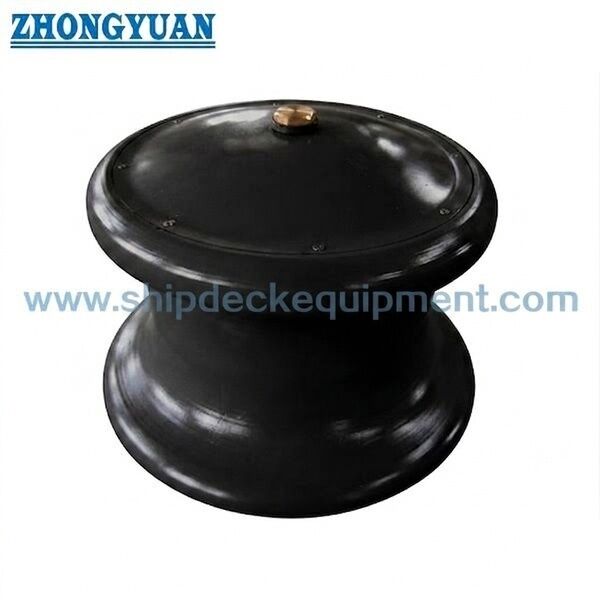
150–500 mm Steel Plate Mooring Roller with Dust Cover Compliant with ISO 13755:2020 Type C
Product Details:
| Place of Origin: | China |
| Brand Name: | Zhongyuan Marine Equipmen |
| Certification: | CCS, NK, BV, ABS, DNV, LR, KR, IRS, RS, RINA, CRS, Makers Test Certificate |
| Model Number: | Standard or Customized |
Payment & Shipping Terms:
| Minimum Order Quantity: | 1 Unit |
|---|---|
| Price: | Based on quotation |
| Packaging Details: | Export standard pallet or customized packing |
| Delivery Time: | Based on project requirements |
| Payment Terms: | T/T, L/C |
| Supply Ability: | Customized production based on project requirements |
|
Detail Information |
|||
| Technical Standard: | ISO 13755-2020 | Type: | Type C With Upper Dust Cover |
|---|---|---|---|
| Roller Diameters: | 150~500mm | Roller No.: | Single Roller |
| Roller Weight: | 21~253kg | Materials: | Casting Stainless Steel, Casting Steel |
| Surface Treatment: | Sandblasting To S2.5 + One Layer Of Epoxy Shop Primer, Polished Stainless Steel, Customized Surface Treatment Available. | Classification Certificates: | CCS, NK, BV, ABS, DNV, LR, KR, BKI, IRS, RS, Etc |
| Highlight: | 150–500 mm Steel Plate Mooring Roller,Dust Cover ISO 13755 Type C Roller,ISO 13755:2020 Fabricated Mooring Roller |
||
Product Description
150–500 mm Steel Plate Mooring Roller with Dust Cover | ISO 13755:2020 Type C
Product Overview
The ISO 13755:2020 Type C steel roller is a fabricated mooring roller made from steel plate, with the roller constructed from steel tube or formed plate and fitted with a dust cover. It is used within shipside roller fairlead and pedestal fairlead arrangements to guide mooring lines through a controlled change of direction while reducing sliding contact on the rope.
Type C is the fabricated alternative within the ISO 13755 steel-roller family. Unlike Type A and Type B cast-steel rollers, Type C uses steel-plate / tubular construction and its own dimensional arrangement. The standard reference SWL cases remain based on the applicable rope-deflection angle, while the fabricated construction has a lower reference calculated mass than the corresponding Type B sizes. Selection should therefore consider nominal size, rope diameter and D/d ratio, installation geometry, fabrication quality, weld inspection, foundation design and project approval requirements.
Quick Specifications
• Type: ISO 13755:2020 Type C, steel plate construction with dust cover → fabricated alternative to the Type A / B steel-casting rollers.
• Nominal size: Dn 150 / 200 / 250 / 300 / 350 / 400 / 450 / 500 mm → Dn is the standard roller outside-diameter designation.
• Reference SWL: 265–1,942 kN at θ = 90° and 186–1,373 kN at θ = 0° → actual onboard SWL depends on the approved foundation and under-deck reinforcement.
• Calculated mass: 21–253 kg/set → lower standard reference mass than Type B at the same listed nominal sizes; final installation design remains load-driven.
• Roller material basis: steel plate with yield point not less than 235 N/mm² → Type C roller is constructed from steel tube or formed plate.
• Axle / bush basis: weldable steel axle material with yield point not less than 350 N/mm² or equivalent; brass, bronze or equivalent bush.
• Fabrication inspection: welded and formed surfaces shall be free from visible flaws; rope-contact surfaces shall be smooth and free from harmful irregularities.
• Maintenance basis: external anti-corrosion finish and greased rotating parts → dust cover, weld condition, bush wear and free rotation remain inspection points.
Main Technical Parameters
Selected ISO 13755:2020 Type C dimensions and reference loads. Dimensions are in mm unless otherwise stated.
|
Dn |
D2 |
D3 |
D4 |
D5 |
D6 |
SWL θ=90° (kN) |
SWL θ=0° (kN) |
Mass (kg) |
|---|---|---|---|---|---|---|---|---|
| 150 | 230 | 220 | 121 | 95 | 110 | 265 | 186 | 21 |
| 200 | 300 | 280 | 162 | 118 | 140 | 441 | 314 | 37 |
| 250 | 370 | 340 | 186 | 136 | 160 | 579 | 412 | 56 |
| 300 | 430 | 400 | 209 | 149 | 180 | 726 | 510 | 86 |
| 350 | 490 | 455 | 236 | 172 | 195 | 1,040 | 736 | 127 |
| 400 | 560 | 520 | 254 | 184 | 207 | 1,246 | 883 | 174 |
| 450 | 620 | 580 | 269 | 199 | 225 | 1,599 | 1,128 | 215 |
| 500 | 680 | 640 | 293 | 217 | 240 | 1,942 | 1,373 | 253 |
Selection & Inquiry Guide
• Step 1: Confirm ISO 13755:2020 Type C and select nominal size Dn 150–500 according to the vessel mooring arrangement and required roller outside diameter.
• Step 2: Confirm mooring-line diameter, construction and allowable D/d ratio, plus rope lead direction and operating angle through the roller.
• Step 3: Confirm the applicable θ load case, required onboard SWL, shipside or pedestal fairlead arrangement, foundation geometry and under-deck reinforcement.
• Step 4: Confirm Type C steel-plate material requirement, axle and bush material, fabrication / welding inspection scope, dust-cover arrangement and material traceability.
• Step 5: Confirm coating system, dimensional inspection, weld visual / NDT requirement if specified, lubrication, marking and classification-society involvement.
• Step 6: Provide quantity, vessel type, installation position, drawing or reference photo, delivery destination and required delivery time.
Structure
Steel tube / formed plate roller | Fabricated steel-plate components | Axle | Brass / bronze bush | Dust cover | Grease path / lubrication point | Foundation or pedestal interface | Welded connection to ship structure
Fabrication, Rope Contact & Installation Advantages
• Type C uses steel-tube or formed-plate roller construction, giving a fabrication route that is structurally distinct from the cast-steel Type A / B arrangements.
• The standard minimum yield basis for the Type C steel plate is higher than the cast-roller minimum yield basis, but this should not be used to claim a higher SWL because the ISO reference SWL table governs the applicable load cases.
• Reference calculated mass is lower than Type B for the listed nominal sizes, which can reduce handling weight; foundation design must still be based on the approved operational loading.
• Weld quality and dimensional control are particularly important for Type C because the roller is fabricated rather than produced as one cast-steel roller body.
• Rope-contact surfaces shall remain smooth and free from weld spatter, sharp local edges or irregularities that could abrade the mooring line.
• D/d ratio should be reviewed against the actual mooring-line diameter and rope manufacturer's guidance to mitigate bend-related strength reduction.
• Foundation and welding connections shall transfer the roller loading into the hull without plastic deformation or cracking, so the fabricated roller cannot be selected independently from the supporting structure.
Custom Attributes
• Standard: ISO 13755:2020 → current ISO steel-roller standard for ship mooring and towing fittings.
• Type: Type C with dust cover → fabricated steel-plate / tubular roller construction.
• Nominal Size: Dn 150–500 mm → select with rope size, D/d ratio, line path and installation space.
• Reference SWL: Two standard load cases by θ angle → actual onboard marking remains subject to the approved foundation and under-deck reinforcement.
• Roller Material Basis: Steel plate, yield point ≥235 N/mm² → roller constructed from steel tube or formed plate in accordance with the Type C arrangement.
• Axle / Bush: Weldable steel axle material ≥350 N/mm² or equivalent | Brass / bronze / equivalent bush.
• Fabrication Quality: Visible weld / surface defects not permitted → rope-contact surface finishing and dimensional control are key acceptance points.
• Surface Protection: External anti-corrosion finish + lubrication of rotating parts → final coating follows vessel / shipyard specification.
• Certificate Requirement: Available according to order scope → maker, material, welding / inspection and class documentation to be confirmed before order.
How It Works
Mooring line approaches the fabricated roller → Rope bears on the smooth steel contact surface → Roller rotates around the axle and bush → Line direction changes with reduced sliding contact → Load transfers through the fabricated body and foundation / pedestal into the hull structure → Dust cover and lubrication support protection and free rotation
Applications
Shipside roller fairlead arrangements | Pedestal fairleads | Ship deck mooring stations | Mooring-line direction changes | Towing and mooring fitting systems | Fabricated-steel deck equipment projects | Newbuilding and replacement projects
Certifications & Advantages
Certificates can be arranged according to project requirement, material traceability, welding / inspection scope and classification-society approval procedure. Availability is subject to order scope and class acceptance.
Certification: CCS, NK, BV, ABS, DNV, LR, KR, IRS, RS, RINA, CRS, Makers Test Certificate.
Drawing & Photos
FAQ
Q1: What is the main difference between ISO 13755 Type C and Type B?
A1: Type B uses a steel-casting roller with an upper dust cover. Type C uses steel-plate construction with a dust cover, and the roller is constructed from steel tube or formed plate. Type C also has its own detailed dimensional arrangement.
Q2: Does the lighter Type C reference mass mean it has a lower SWL?
A2: No. Reference mass and SWL are different parameters. The ISO table provides the applicable SWL load cases by nominal size and rope-deflection angle. Foundation and under-deck reinforcement still determine the actual shipboard SWL.
Q3: What fabrication information should be confirmed for a Type C enquiry?
A3: Confirm nominal size, steel-plate material basis, fabrication drawing, welding / inspection requirement, axle and bush materials, rope size and D/d ratio, foundation or pedestal arrangement, coating, certificate scope and delivery requirement.
