


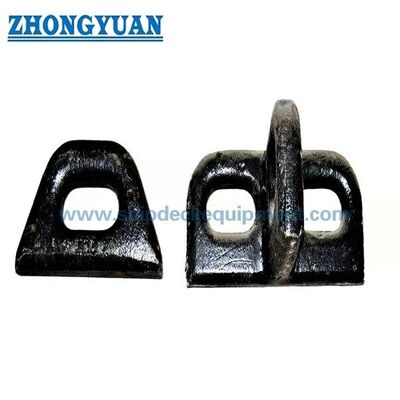
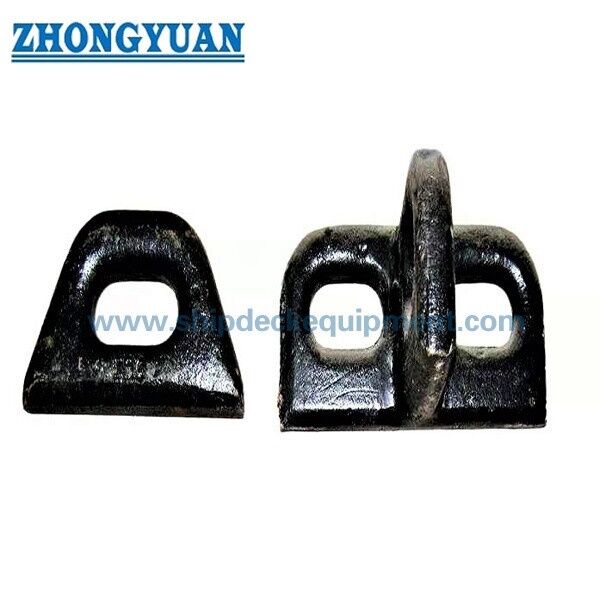
 |
ISO 8146 Forging Material Oval Eyeplate Lifting Eye Plate Ship Mooring Equipment
Product Details:
| Place of Origin: | China |
| Brand Name: | Zhongyuan Marine Equipmen |
| Certification: | CCS, NK, BV, ABS, DNV, LR, KR, IRS, RS, RINA, CRS, Makers Test Certificate |
| Model Number: | Standard or Customized |
Payment & Shipping Terms:
| Minimum Order Quantity: | 1 Unit |
|---|---|
| Price: | Based on quotation |
| Packaging Details: | Export standard pallet or customized packing |
| Delivery Time: | Based on project requirements |
| Payment Terms: | T/T, L/C |
| Supply Ability: | Customized production based on project requirements |
|
Detail Information |
|||
| Standard: | ISO 8146-1990 | Nominal Sizes: | 0.4-50mm |
|---|---|---|---|
| Type: | Type A, Type B | Permissible Load: | 4 To 500KN |
| Material: | Mild Steel, Stainless Steel C-Mn Steel Forging | Surface Treatment: | Sandblasting To S2.5 + One Layer Of Epoxy Shop Primer |
| Classification Certificates: | CCS, NK, BV, ABS, DNV, LR, KR, IRS, RS, Etc | ||
| Highlight: | SO 8146-1985 Oval Eye plate,Oval Eye plate,ISO 8146 Ship Mooring Equipment |
||
Product Description
Oval Eyeplate for Ship Deck Fixing | ISO 8146 Type A / Type B Forged Eye Plate
Product Overview
The ISO 8146 oval eyeplate is a welded shipboard eye plate used for fixing rope terminals, shackles, pulley blocks, lashing arrangements, and other approved ship structure connections. It is normally installed on ship decks or structural foundations where the load direction, weld size, base reinforcement, and inspection scope need to be checked together with the vessel drawing.
This page is prepared for a forged / steel oval eyeplate supplied according to the customer-provided ISO 8146 data. The supplied information lists Type A and Type B with nominal sizes from 0.4 to 50 and permissible loads from 4 kN to 500 kN. Online ISO reference information indicates that ISO 8146 lays down dimensions and materials for oval eyeplates primarily intended for ship deck mounting and as guy eyeplates on shipboard cargo-handling booms for cargo handling purposes; the exact ISO edition year should be confirmed before final release.
Quick Specifications
- Product type: Oval eyeplate / deck eye plate → used for approved ship structure fixing points such as rope terminals, shackles, and pulley blocks.
- Standard reference: ISO 8146 → supplied data states ISO 8146-1990; online ISO information shows ISO 8146:1985, so the project standard edition should be confirmed.
- Type range: Type A and Type B → type selection should follow the vessel drawing, mounting form, and load direction.
- Nominal size range: 0.4 to 50 → designation range corresponding to permissible load classes from 4 kN to 500 kN.
- Permissible load: 4 to 500 kN → use this term carefully and do not rewrite it as SWL, MBL, breaking load, or test load without project approval.
- Mounting data supplied: Type A welding s / g minimum values → weld detail and surrounding deck reinforcement must be confirmed by the shipyard or design office.
- Material options: mild steel, C-Mn steel forging, stainless steel, or project-specified material → final grade and certificate scope should be confirmed before quotation.
- Surface treatment: Sa 2.5 blasting + one layer epoxy shop primer as reference → final coating, galvanizing, or stainless steel finishing follows project requirement.
Main Technical Parameters
| Nominal size |
Permissible load kN |
a | b | C | d | e | f | h | I | r1 | r2 | Mounting of type A Welding s min. |
Mounting of type A Welding g min. |
| 0.4 | 4 | 22 | 15 | 42 | 10 | 15 | 8 | 32,5 | 65 | 17,5 | 3 | 6 | 4 |
| 0.6 | 6,3 | 28 | 19 | 52 | 12 | 19 | 8 | 40,5 | 0 | 21,5 | 4 | 6 | 4 |
| 1 | 10 | 35 | 22 | 67 | 16 | 25 | 8 | 52 | 95 | 27 | 5 | 6 | 4 |
| 1.6 | 16 | 42 | 24 | 82 | 20 | 33 | 8 | 65 | 120 | 32 | 5 | 7 | 4 |
| 2 | 20 | 50 | 27 | 100 | 25 | 35 | 12 | 73,5 | 132 | 38,5 | 5 | 9 | 6 |
| 2,5 | 25 | 55 | 29 | 105 | 25 | 39 | 12 | 78,5 | 140 | 39,5 | 6 | 9 | 6 |
| 3 | 31,5 | 66 | 33 | 126 | 30 | 42 | 12 | 88,5 | 180 | 46,5 | 7 | 10 | 6 |
| 4 | 40 | 77 | 36 | 147 | 35 | 48 | 15 | 101 | 210 | 53 | 7 | 12 | 7 |
| 5 | 50 | 87 | 41 | 167 | 40 | 57 | 18 | 117,5 | 225 | 60,5 | 8 | 14 | 9 |
| 6 | 63 | 91 | 45 | 171 | 40 | 66 | 18 | 128,5 | 240 | 62,5 | 8 | 14 | 9 |
| 8 | 80 | 101 | 51 | 201 | 50 | 73 | 20 | 148,5 | 270 | 75,5 | 10 | 17 | 10 |
| 10 | 100 | 117 | 56 | 217 | 50 | 80 | 22 | 158 | 300 | 78 | 10 | 17 | 11 |
| 12 | 125 | 128 | 61 | 248 | 60 | 87 | 24 | 177,5 | 335 | 90,5 | 12 | 20 | 12 |
| 16 | 160 | 145 | 67 | 265 | 60 | 95 | 26 | 188,5 | 370 | 93,5 | 12 | 20 | 13 |
| 20 | 200 | 157 | 73 | 297 | 70 | 105 | 28 | 211,5 | 420 | 106,5 | 14 | 25 | 14 |
| 25 | 250 | 170 | 80 | 331 | 80 | 120 | 32 | 240 | 470 | 120 | 16 | 30 | 16 |
| 32 | 315 | 194 | 88 | 374 | 90 | 130 | 36 | 264 | 530 | 134 | 18 | 30 | 18 |
| 40 | 400 | 220 | 98 | 420 | 100 | 145 | 40 | 294 | 570 | 149 | 20 | 35 | 20 |
| 50 | 500 | 240 | 108 | 460 | 110 | 155 | 45 | 319 | 630 | 164 | 22 | 35 | 22 |
Selection & Inquiry Guide
Step 1: Confirm ISO 8146 oval eyeplate type: Type A or Type B according to vessel drawing and mounting arrangement.
Step 2: Confirm nominal size and permissible load class from 0.4 / 0.6 / 1 / 1.6 / 2 / 2.5 / 3 / 4 / 5 / 6 / 8 / 10 / 12 / 16 / 20 / 25 / 32 / 40 / 50.
Step 3: Confirm load direction, connection part, and application: rope terminal, shackle, pulley block, lashing point, deck fixing point, or approved cargo-handling / guy eyeplate use.
Step 4: Confirm deck or structural foundation, weld length, weld size, local reinforcement, and whether the item is used for newbuilding or replacement.
Step 5: Confirm material grade, forging requirement, surface treatment, coating system, quantity, certificate scope, and class witness inspection requirement.
Step 6: Provide installation drawing, load calculation or approval note if available, delivery destination, required delivery time, and reference photos.
Structure
Forged / steel oval eyeplate body | Oval eye opening | Welded mounting base | Smooth shackle-contact radius | Load direction reference area | Type A / Type B mounting configuration | Shop primer or specified surface treatment
Forging, Welding & Engineering Advantages
- The oval eye shape provides a defined connection point for shackles, rope terminals, and pulley blocks where the vessel drawing specifies ISO 8146 dimensions.
- Forged or steel material options should be selected according to permissible load, material certificate requirement, corrosion environment, and class inspection scope.
- The eye opening and contact radius should be dressed and inspected to reduce sharp local contact that may damage shackles, pins, rope terminations, or connected fittings.
- Type A welding dimensions s and g are listed in the supplied table, but actual weld detail and local deck reinforcement should be confirmed by the shipyard or design office.
- Load direction is critical for eyeplate use. The product should not be used outside the approved pull direction, angle range, deck support, or inspection scope.
- Finished surfaces should be inspected for visible cracks and flaking after forging, machining, grinding, and surface preparation.
- Permissible load is kept separate from SWL, MBL, breaking load, proof load, and test load to avoid incorrect engineering interpretation.
Custom Attributes
- Standard: ISO 8146 → use when the shipyard, owner, or drawing specifies ISO oval eyeplate dimensions.
- Type: Type A / Type B → select according to mounting form and vessel drawing; Type A welding values are supplied in the current table.
- Nominal Size: 0.4 to 50 → selected by permissible load class and installation space.
- Permissible Load: 4 to 500 kN → load class from supplied data; not automatically SWL, MBL, proof load, or breaking load.
- Material: Mild steel / C-Mn steel forging / stainless steel → final material grade and certificate requirement should be confirmed before quotation.
- Surface Treatment: Sa 2.5 blasting + epoxy shop primer → final coating follows vessel painting specification or customer requirement.
- Inspection Focus: Eye opening, forged body, weld preparation, visible cracks / flaking, and dimensional control → important for shipyard acceptance.
- Certificate Requirement: Available according to order scope → class inspection and certificate level should be confirmed before quotation.
How It Works
Ship structure or deck foundation is prepared → Oval eyeplate is welded according to approved drawing → Shackle / rope terminal / pulley block is connected through the eye opening → Permissible load is applied in the approved direction → Welds, material traceability, coating, and inspection are checked according to project requirement
Applications
Ship deck fixing points | Rope terminal connections | Shackle connection points | Pulley block fixing | Lashing arrangements | Guy eyeplates on shipboard cargo-handling booms when approved | Newbuilding and replacement projects | Shipyard repair and retrofit
Certifications & Advantages
Certificates can be arranged according to project requirement, inspection scope, material traceability, and class society approval procedure.
Certification: CCS, NK, BV, ABS, DNV, LR, KR, IRS, RS, RINA, CRS, Makers Test Certificate.
Drawing & Photos

FAQ
Q1: Can this ISO 8146 oval eyeplate be used as a lifting eye plate?
A1: It should not be treated as a general lifting eye plate without approval. ISO online information states that oval eyeplates are intended for ship deck mounting and as guy eyeplates on shipboard cargo-handling booms for cargo handling purposes. Actual lifting or cargo-handling use must follow the vessel design, load direction, weld detail, deck reinforcement, and class approval requirement.
Q2: Is permissible load the same as SWL, MBL, breaking load, or test load?
A2: No. The supplied table uses permissible load. It should not be rewritten as SWL, MBL, breaking load, proof load, or test load unless the project drawing or approval document clearly defines the load relationship.
Q3: What information is needed before quotation?
A3: Confirm ISO edition, Type A or Type B, nominal size, permissible load, material grade, surface treatment, quantity, certificate requirement, installation drawing, load direction, delivery destination, and required delivery time.