


|
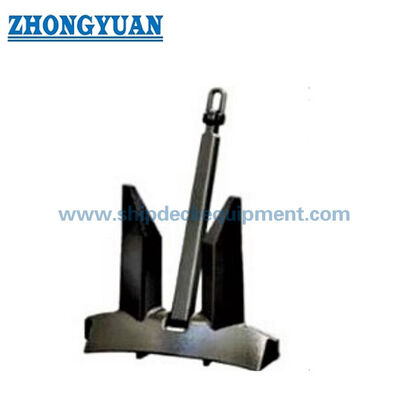
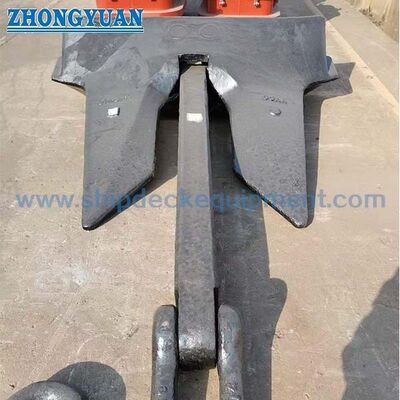
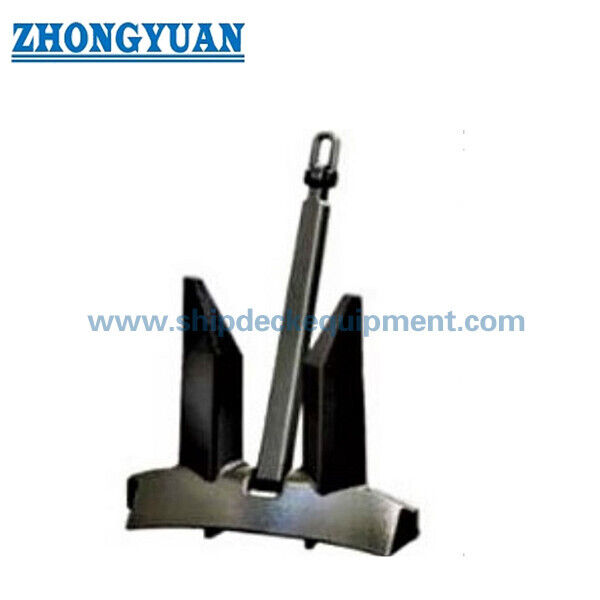
AC-14 Stockless High Holding Power Anchor | Cast Steel Bower Anchor for Ships
Product Details:
| Place of Origin: | China |
| Brand Name: | Zhongyuan Marine Equipmen |
| Certification: | CCS, NK, BV, ABS, DNV, LR, KR, IRS, RS, RINA, CRS, Makers Test Certificate |
| Model Number: | Standard or Customized |
Payment & Shipping Terms:
| Minimum Order Quantity: | 1 Unit |
|---|---|
| Price: | Based on quotation |
| Packaging Details: | Export standard pallet or customized packing |
| Delivery Time: | Based on project requirements |
| Payment Terms: | T/T, L/C |
| Supply Ability: | Customized production based on project requirements |
|
Detail Information |
|||
| Type: | AC-14 HHP Anchor | Material: | Casting Steel |
|---|---|---|---|
| Nominal Weight: | 175kg To 30000kg | Surface Treatment: | Black Bitumen Paint, Anti-rusting Paint Or Customized |
| Classification Certificates: | CCS, NK, BV, ABS, DNV-GL, LR, KR, IRS, RS, RINA, Etc | ||
| Highlight: | HHP Anchor And Anchor Chain,AC 14 anchor,HHP Anchor AC 14 |
||
Product Description
AC-14 Stockless High Holding Power Anchor | Cast Steel Bower Anchor for Ships
Product Overview
The AC-14 is a stockless high holding power (HHP) anchor intended for ship anchoring arrangements where the approved anchor design, nominal mass, anchor chain cable, hawse pipe, windlass, and securing arrangement are selected as one coordinated system. Its broad crown, long flukes, and longitudinal reinforcing ribs are characteristic of the AC-14 form and are intended to support seabed penetration and stable load transfer without a stock.
For procurement, the nominal anchor mass should not be selected from vessel type alone. It should be confirmed from the vessel Equipment Number, the applicable classification rules, the approved anchoring equipment table, and the ship-specific arrangement drawing. Material grade, heat treatment, non-destructive examination, proof load testing, marking, coating, certificate scope, and chain connection details should be agreed before production.
Quick Specifications
- Product type: AC-14 stockless HHP anchor → designed for use as part of a class-approved ship anchoring system.
- Nominal mass in supplied dimension table: 75 kg to 30,000 kg → covers small reference sizes through large bower-anchor sizes; project selection remains subject to class approval.
- Construction: Cast steel anchor body with shank, crown, flukes, pins, and anchor shackle arrangement → exact component material and assembly details to follow the approved drawing.
- HHP classification basis: Holding power is at least twice that of an ordinary stockless anchor of the same mass when demonstrated by approved full-scale tests → HHP status is design- and approval-specific.
- Mass advantage: Class rules may permit an approved HHP bower anchor to be 75% of the ordinary stockless anchor mass → this is not an automatic reduction for every project.
- Surface treatment: Black bituminous paint, anti-corrosion paint, or project-specified coating → final system should suit storage, transport, installation, and vessel coating requirements.
- Inspection focus: Material traceability, dimensional inspection, casting quality, NDE, proof load test, free movement, and marking → scope depends on class and order requirements.
- Certificate options: CCS, NK, BV, ABS, DNV, LR, KR, IRS, RS, RINA, CRS, or maker documentation → available according to project requirement and subject to approval scope.
Main Technical Parameters
| NOMINAL WEIGHT |
DIMENSIONS (MM) | ||||||||
| (KG) | A | B | C | D | E | F | G | J | |
| 75 | 550 | 326 | 350 | 606 | 188 | 185 | 115 | 24 | |
| 495 | 1025 | 610 | 650 | 1135 | 350 | 348 | 235 | 50 | |
| 1080 | 1350 | 805 | 855 | 1495 | 461 | 455 | 280 | 62 | |
| 2100 | 1686 | 1005 | 1070 | 1865 | 575 | 570 | 380 | 82 | |
| 3040 | 1896 | 1130 | 1204 | 2100 | 646 | 640 | 410 | 90 | |
| 4840 | 2225 | 1330 | 1410 | 2465 | 760 | 755 | 480 | 110 | |
| 5175 | 2275 | 1358 | 1443 | 2520 | 777 | 770 | 480 | 110 | |
| 6000 | 2390 | 1426 | 1515 | 2646 | 816 | 810 | 500 | 110 | |
| 7875 | 2610 | 1558 | 1655 | 2890 | 891 | 884 | 600 | 130 | |
| 8775 | 2707 | 1614 | 1715 | 2996 | 924 | 916 | 630 | 135 | |
| 9675 | 2805 | 1674 | 1778 | 3104 | 957 | 948 | 640 | 140 | |
| 10125 | 2850 | 1700 | 1806 | 3152 | 972 | 960 | 640 | 140 | |
| 11025 | 2930 | 1750 | 1859 | 3247 | 1001 | 990 | 660 | 145 | |
| 12075 | 3010 | 1800 | 1906 | 3343 | 1027 | 1020 | 700 | 155 | |
| 13350 | 3132 | 1870 | 1986 | 3470 | 1069 | 1060 | 700 | 155 | |
| 14100 | 3178 | 1896 | 2015 | 3520 | 1084 | 1076 | 730 | 160 | |
| 15400 | 3272 | 1954 | 2075 | 3626 | 1117 | 1108 | 770 | 170 | |
| 16900 | 3350 | 2000 | 2126 | 3720 | 1144 | 1144 | 770 | 170 | |
| 17800 | 3440 | 2050 | 2180 | 3806 | 1173 | 1162 | 800 | 180 | |
| 18800 | 3500 | 2088 | 2220 | 3875 | 1193 | 1185 | 800 | 180 | |
| 20000 | 3573 | 2132 | 2265 | 3956 | 1220 | 1210 | 820 | 185 | |
| 25000 | 4100 | 2437 | 2600 | 4577 | 1399 | 1375 | 880 | 200 | |
| 30000 | 4358 | 2888 | 2765 | 4663 | 1484 | 1380 | 940 | 210 | |
Selection & Inquiry Guide
Step 1: Confirm the vessel Equipment Number, required bower-anchor mass, HHP acceptance, service notation, and applicable classification society rule.
Step 2: Confirm AC-14 type, nominal mass, approved drawing or standard, dimensional reference A–J, and whether the order is for newbuilding or replacement.
Step 3: Confirm the matching anchor chain cable grade and diameter, anchor shackle / joining arrangement, hawse pipe geometry, windlass compatibility, and onboard securing arrangement.
Step 4: Confirm cast steel grade, heat treatment, material traceability, NDE method and extent, dimensional tolerances, proof load test, and survey witness requirements.
Step 5: Confirm surface treatment, final color or coating system, marking, packing, quantity, delivery destination, and required delivery time.
Step 6: Provide the vessel anchoring arrangement, class-approved equipment table, anchor pocket / hawse pipe drawing, existing anchor measurements, and photos when available.
Structure
Anchor shackle | Cast steel shank | Trunnion / pin connection | Broad crown | Twin long flukes | Longitudinal reinforcing ribs | Bills / palms | Stockless rotating head arrangement | Protective coating
Holding Power, Casting & Quality Advantages
- The stockless configuration allows the anchor head to rotate relative to the shank so that the flukes can orient toward the seabed during deployment and recover into the hawse arrangement without a transverse stock.
- The broad crown and long fluke geometry increase the soil-engaging area compared with an ordinary stockless form; actual holding performance remains dependent on approved HHP testing and seabed conditions.
- HHP designation is not based on appearance alone. The anchor design should have approved full-scale holding-power evidence, and the project should confirm that the selected approval covers the required mass range.
- Cast steel components should be produced from approved material with traceability and heat treatment as required. Casting repairs, when permitted, should follow approved procedures and surveyor acceptance.
- Critical inspection points include fluke and crown surfaces, shank and pin interfaces, anchor shackle connection, dimensional conformity, free rotation of the head, marking, and post-proof-test examination.
- Proof load testing, NDE, mechanical testing, and certificate content should be defined in the inspection and test plan rather than assumed from a general certificate list.
- For replacement projects, dimensional fit with the existing hawse pipe, anchor pocket, stopper, chain cable, and windlass lead is as important as matching nominal mass.
Custom Attributes
- Anchor Type: AC-14 stockless HHP anchor → confirm the approved design and mass range for the selected class.
- Nominal Mass: 75–30,000 kg in supplied table → final mass follows the vessel anchoring equipment requirement.
- Material: Cast steel → exact grade, heat treatment condition, and component material schedule to be confirmed.
- Holding Power Category: HHP → class acceptance requires proven holding-power performance for the design.
- Chain Connection: Anchor shackle / project-specific connection → pin diameter, opening, and compatibility require drawing confirmation.
- Proof Load Test: According to applicable class rules → test load, fixture, witness, and acceptance criteria to be confirmed before quotation.
- NDE & Inspection: According to approved ITP → method, coverage, acceptance criteria, and survey hold points depend on project scope.
- Surface Treatment: Bituminous black paint / anti-corrosion coating / customized → coating specification and preparation grade to be confirmed.
- Marking & Traceability: According to class and order requirement → nominal mass, identification, heat / traceability references, and certificate linkage as applicable.
How It Works
Anchor is released through the hawse pipe → Stockless head rotates and flukes orient toward the seabed → Chain pull develops a low lead angle → Flukes penetrate and mobilize soil resistance → Chain catenary and anchor holding resistance restrain the vessel → Windlass recovers the anchor into the hawse or anchor pocket
Applications
Bower anchoring systems | Container ships | Bulk carriers | Tankers | General cargo ships | Ro-Ro and vehicle carriers | Newbuilding projects | Anchor replacement and retrofit projects
Certifications & Advantages
Material certificates, maker documentation, inspection records, proof load test records, and class certificates can be arranged according to project requirement, approved design status, survey scope, and classification society procedure.
Certification: CCS, NK, BV, ABS, DNV, LR, KR, IRS, RS, RINA, CRS, Makers Test Certificate.
Drawing & Photos

FAQ
Q1: How is the correct AC-14 anchor mass selected?
A1: The selection should be based on the vessel Equipment Number and the class-approved anchoring equipment requirement, then checked against the AC-14 approval range, chain cable, hawse pipe, windlass, and securing arrangement. The dimensional table alone is not a complete selection basis.
Q2: Is every AC-14 anchor automatically 25% lighter than an ordinary stockless anchor?
A2: No. Classification rules may permit a proven and approved HHP bower anchor to have a mass equal to 75% of the ordinary stockless requirement. The reduction applies only when the anchor design and project arrangement are accepted by the relevant classification society.
Q3: What should be confirmed for class certification and testing?
A3: Confirm the class society, approved drawing or type approval status, material grade, heat treatment, NDE, mechanical tests, proof load test, dimensional inspection, free-rotation check, marking, survey hold points, and final certificate list before quotation.