


|
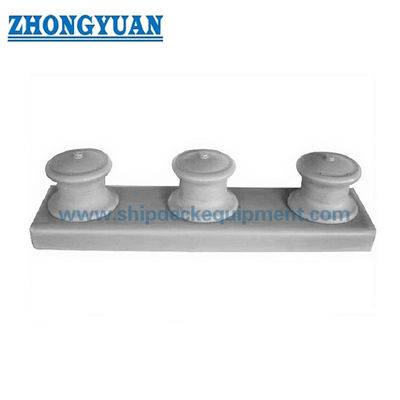
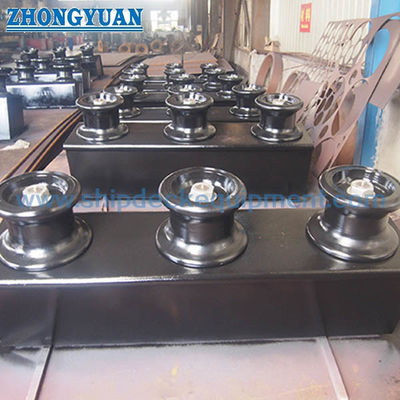
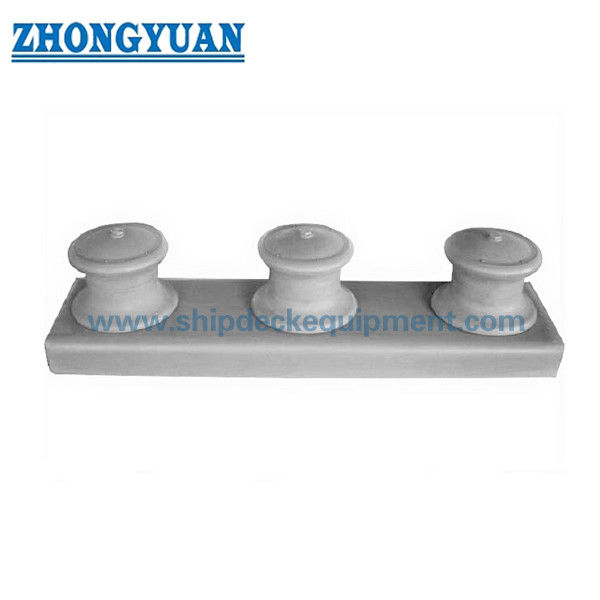
150–450 mm Open-Type 3-Roller Shipside Fairlead | JIS F 2014-1987 Type CF/CS for Ship Mooring
Product Details:
| Place of Origin: | China |
| Brand Name: | Zhongyuan Marine Equipmen |
| Certification: | CCS, NK, BV, ABS, DNV, LR, KR, IRS, RS, RINA, CRS, Makers Test Certificate |
| Model Number: | Standard or Customized |
Payment & Shipping Terms:
| Minimum Order Quantity: | 1 Unit |
|---|---|
| Price: | Based on quotation |
| Packaging Details: | Export standard pallet or customized packing |
| Delivery Time: | Based on project requirements |
| Payment Terms: | T/T, L/C |
| Supply Ability: | Customized production based on project requirements |
|
Detail Information |
|||
| Technical Standard: | JIS F 2014-1987 | Type: | CF&CS OPEN TYPE |
|---|---|---|---|
| Roller Diameters: | 150~450mm | Roller No.: | 3 Rollers |
| Roller Weight: | 43.6~415kg | Materials: | Mild Steel, C-Mn Steel, Stainless Steel, Casting Steel, Nodular Cast Iron |
| Surface Treatment: | Sandblasting To S2.5 + One Layer Of Epoxy Shop Primer, Galvanized, Polished, Customized Surface Treatment Available. | Classification Certificates: | CCS, NK, BV, ABS, DNV, LR, KR, IRS, RS, RINA |
| Highlight: | Open Type 3 Rollers Shipside Fairlead |
||
Product Description
150–450 mm Open-Type 3-Roller Shipside Fairlead | JIS F 2014-1987 Type CF/CS for Ship Mooring
Product Overview
The JIS F 2014-1987 Type CF/CS shipside fairlead is an open-type three-roller mooring fairlead used to guide mooring lines at ship-side, bow, stern, and deck-edge lead positions. The open arrangement allows the line to be introduced from above without a closed retaining frame, while three roller contact positions provide a defined lead path where the vessel arrangement requires the JIS three-roller configuration.
Under the original JIS classification, Type CF uses three cast-iron rollers and Type CS uses three steel-plate fabricated rollers. The standard range is 150–400 mm for Type CF and 150–450 mm for Type CS. Cast steel rollers can be discussed as a current project-specific supply alternative when required, but they should not be described as the original JIS CF roller material. Final roller material, mounting dimensions, coating, inspection scope, and class requirements should be confirmed against the vessel drawing and purchase specification.
Quick Specifications
- Product type: Open-type three-roller shipside fairlead → guides mooring lines through a three-roller lead arrangement at the ship side or deck edge.
- Standard: JIS F 2014-1987 → active JIS fairlead standard for mooring applications; Type CF/CS is the open three-roller family.
- Nominal diameter range: CF 150–400 mm / CS 150–450 mm → Type CS alone includes the 450 mm standard size.
- Original roller materials: CF = cast iron FC20 / CS = steel plate SS41 → material designations follow the 1987 standard and should not be silently replaced by modern equivalents.
- Main dimensions: D, L, l and l1 → L, l and l1 may be adjusted according to mounting location as permitted by the standard.
- Operation requirement: Rotating parts are required to operate smoothly → roller rotation and surface condition should be checked during inspection.
- Current cast steel option: Available subject to project requirement → treat as a project-specific alternative, not as the original CF material definition.
- Installation focus: Pedestal / base geometry, ship-side line, rope lead angle and surrounding deck structure → confirm vessel arrangement before fabrication.
Main Technical Parameters
Main dimensions for the JIS F 2014-1987 open-type three-roller CF/CS fairlead. Dimensions are in mm. The type availability column reflects the original standard range.
|
Nominal Dia. |
Standard Type |
D |
L |
l |
l1 |
|---|---|---|---|---|---|
| 150 | CF / CS | 150 | 1160 | 420 | 160 |
| 200 | CF / CS | 200 | 1460 | 530 | 200 |
| 250 | CF / CS | 250 | 1740 | 640 | 230 |
| 300 | CF / CS | 300 | 2020 | 750 | 260 |
| 350 | CF / CS | 350 | 2300 | 860 | 290 |
| 400 | CF / CS | 400 | 2580 | 970 | 320 |
| 450 | CS only | 450 | 2880 | 1080 | 360 |
Note: JIS F 2014-1987 permits dimensions L, l, l1 and l2 to be increased or decreased as appropriate to the installation location. Final mounting dimensions should therefore be confirmed against the vessel arrangement drawing before production.
Selection & Inquiry Guide
Step 1: Confirm JIS F 2014-1987 open-type three-roller configuration and select Type CF or Type CS according to the required standard roller construction.
Step 2: Select nominal diameter from 150–400 mm for CF or 150–450 mm for CS, then confirm rope type, rope diameter, rope lead direction and vessel mooring arrangement.
Step 3: Confirm roller material. For original-standard supply, CF uses cast iron and CS uses steel-plate fabricated rollers. If cast steel rollers are requested, state the material grade and approval basis separately.
Step 4: Confirm installation geometry: ship-side line, pedestal / base arrangement, available space, adjustable L / l / l1 dimensions, deck structure and any local reinforcement required by the vessel design.
Step 5: Confirm surface treatment, lubrication / maintenance access, material certificates, class inspection or witness requirement before quotation.
Step 6: Provide quantity, vessel type, installation position, GA or foundation drawing, reference photo, delivery destination and required delivery time.
Structure
Open three-roller arrangement | Roller body | Shaft | Bush | Pedestal / base | Cover / fastening components | Lubrication points | Ship-side or deck-edge mounting interface
Roller, Installation & Quality Advantages
- The open arrangement allows the mooring line to be introduced from above, which is useful where the deck layout requires flexible line entry rather than a closed retaining structure.
- Three roller positions provide multiple rope-contact surfaces for changing the mooring-line lead through the fairlead arrangement; actual rope direction should follow the vessel mooring plan.
- Type CF and Type CS use different original-standard roller constructions, allowing the project to retain the specified JIS material form instead of treating all open three-roller fairleads as identical.
- JIS F 2014 permits key longitudinal dimensions to be adjusted for the mounting location, which helps the fairlead arrangement follow the local ship-side geometry without changing the basic standard roller type.
- Roller surfaces, bushes, shafts and lubrication points should be maintained so the rotating parts remain smooth in operation and do not develop sharp rope-contact conditions.
- The standard inspection basis includes visual inspection and operation inspection; additional material traceability, dimensional inspection or class witnessing can be arranged when specified by the project.
- Where a cast steel roller is requested as a modern supply alternative, material grade, detailed roller construction and approval scope should be confirmed separately rather than represented as original Type CF material.
Custom Attributes
- Standard: JIS F 2014-1987 → active JIS fairlead standard for mooring use.
- Type CF: Open type, three cast-iron rollers → original standard roller material is FC20 cast iron.
- Type CS: Open type, three steel-plate fabricated rollers → original standard roller material is SS41 steel plate.
- Nominal Diameter: CF 150–400 mm / CS 150–450 mm → 450 mm is standard for CS only.
- Installation: Shipside / deck-edge pedestal arrangement → confirm local hull and deck geometry before production.
- Adjustable Main Dimensions: L / l / l1 → standard permits adjustment according to installation location.
- Cast Steel Roller Option: Project-specific alternative → material grade and approval basis to be confirmed; not original CF designation.
- Certificate Requirement: According to order scope → maker documentation, material certificates and class inspection should be agreed before quotation.
How It Works
Mooring line enters the open fairlead → Line contacts the required rollers as the lead direction changes → Rollers rotate to guide the line and reduce sliding contact → Reaction is transferred through the shafts and pedestal / base into the ship structure → Roller condition and lubrication are checked during maintenance
Applications
Ship-side mooring stations | Bow and stern rope lead positions | Cargo vessels | Tankers | Bulk carriers | Barges | Workboats | Newbuilding projects | Replacement of JIS F 2014 CF/CS fairleads
Certifications & Advantages
Inspection and certification can be arranged according to project requirement, material traceability, order scope and classification-society approval procedure. Certificate availability should be confirmed before quotation and is not implied as standard supply.
Certification: CCS, NK, BV, ABS, DNV, LR, KR, IRS, RS, RINA, CRS, Makers Test Certificate.
Drawing & Photos

FAQ
Q1: What is the difference between JIS F 2014 Type CF and Type CS?
A1: Both are open-type three-roller fairleads. Type CF uses three cast-iron rollers under the original standard, while Type CS uses three steel-plate fabricated rollers. CF is standard from 150 to 400 mm; CS extends to 450 mm.
Q2: Can cast steel rollers be supplied instead of the original CF cast-iron rollers?
A2: Yes, cast steel rollers can be discussed as a project-specific supply alternative when required. The material grade, detailed construction and approval basis should be agreed separately, because cast steel is not the original Type CF roller material defined by JIS F 2014-1987.
Q3: Do the JIS main dimensions have to remain fixed for every installation?
A3: Not all of them. JIS F 2014-1987 allows L, l, l1 and l2 to be adjusted according to the mounting location. The final arrangement should therefore be checked against the vessel GA, ship-side geometry, pedestal interface and rope lead before production.