


|
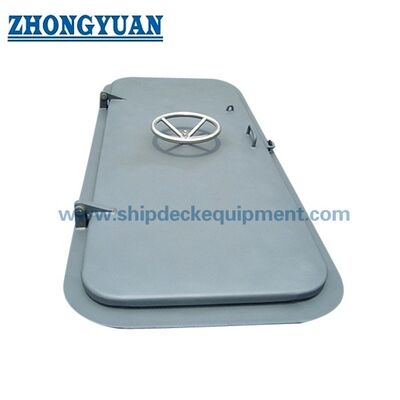
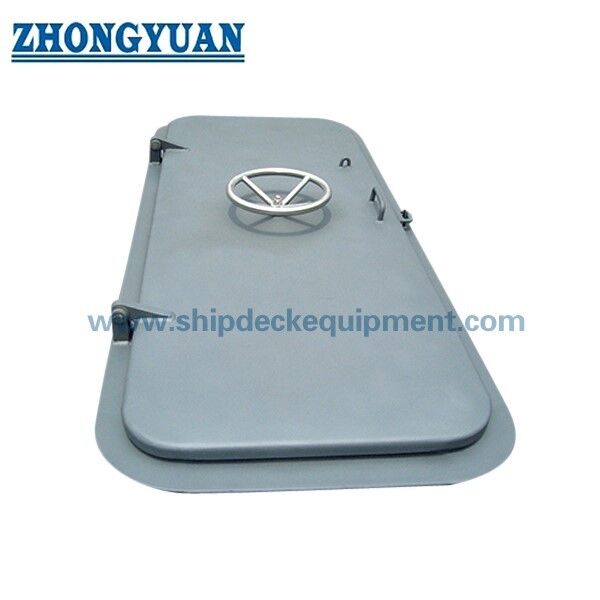
Quick-Action Handwheel Marine Watertight Steel Door | Hinged Bulkhead Door
Product Details:
| Place of Origin: | China |
| Brand Name: | Zhongyuan Marine Equipmen |
| Certification: | CCS, NK, BV, ABS, DNV, LR, KR, IRS, RS, RINA, CRS, Makers Test Certificate |
| Model Number: | Standard or Customized |
Payment & Shipping Terms:
| Minimum Order Quantity: | 1 Unit |
|---|---|
| Price: | Based on quotation |
| Packaging Details: | Export standard pallet or customized packing |
| Delivery Time: | Based on project requirements |
| Payment Terms: | T/T, L/C |
| Supply Ability: | Customized production based on project requirements |
|
Detail Information |
|||
| Standard: | CB 672, GB 10840,CB/T 3007 CB 3041,ISO Standard | Material: | Mild Steel, Stainless Steel, Aluminium |
|---|---|---|---|
| Test: | Fire Approval Test, Gas Tightness Test, Hydraulic Pressure Test, Hose Test, Air Test, Chalk Test, As Applicable | Dimension: | Customized, As Client’s Drawing, As Standard |
| Application Type: | Watertight, Weathertight, Gastight, Sound Proof, Fire Proof ( C To A60 Class), As Applicable | Leaf Type: | Single Leaf, Double Leaf, Single Skin, Double Skin |
| Application Location: | Accommodation, Cargo Hold, Bulkhead, Boundary | Open Type: | Sliding, Hinged, Hand Wheel Quick Operate, Lever Operate, Dog Handle, Etc |
| Power Resource: | Pneumatic, Electric, Hydraulic, Manual | Closing Device: | Anti-Piracy |
| Classification Certificates: | Type Approval, EC MED Type Approval, CCS, NK, BV, ABS, DNV, LR, KR, IRS, RS, Etc | ||
| Highlight: | marine watertight door,ISO marine watertight door,quick closing Watertight Door |
||
Product Description
Quick-Action Handwheel Marine Watertight Steel Door | Hinged Bulkhead Door
Product Overview
The quick-action handwheel marine watertight steel door is a manually operated hinged closure for access openings in approved watertight bulkheads. In a typical arrangement, rotation of a central handwheel drives a mechanical linkage and several securing dogs around the door leaf, pulling the leaf toward the frame and compressing the perimeter gasket. This allows faster and more consistent closure than tightening separate dogs one by one, while retaining a fully mechanical local operating arrangement.
This page covers a hinged pressure-resistant watertight door, not an external weathertight deckhouse door and not a hydraulic sliding watertight door. The correct design basis must be selected according to the vessel subdivision arrangement, design water head, door location, required operating category and class-approved drawing. GB/T 33572-2017 and ISO 17940:2015 are relevant references for manual hinged watertight doors; the legacy standards listed in the supplied data apply to different door constructions and should only be used when the project specification expressly requires them.
Quick Specifications
- Door type: single-leaf hinged watertight steel door with quick-action handwheel → the central operating mechanism can actuate multiple securing points in one closing sequence.
- Reference clear openings: 600 × 1600 to 1200 × 2100 mm → selection should consider personnel passage, equipment access, escape-route width and available door-swing space.
- Watertight duty: design head and pressure direction to be confirmed → door size alone does not establish pressure capacity; structural scantlings and dog loading must match the approved water head.
- Primary material basis: fabricated mild steel → stainless-steel or aluminium alternatives require separate grade, corrosion, welding, strength and approval review.
- Sealing arrangement: continuous gasket with linked adjustable dogs → reliable performance depends on frame flatness, hinge alignment and uniform gasket compression.
- Installation: welded into a watertight bulkhead with local reinforcement to approved drawing → the surrounding structure and weld sequence are part of the watertight system.
- Inspection: dimensional, operating, gasket-contact and pressure / leakage testing as applicable → the test head, test medium, acceptance criteria and witness scope must be agreed before manufacture.
- Certification: maker documentation, material traceability, type approval or individual class certification according to project requirement → certificate availability is subject to the exact model and approval route.
Main Technical Parameters
|
No. |
Clear Opening |
Bulkhead Cut-out |
Overall Frame |
Engineering Note |
|---|---|---|---|---|
| 1 | 600 × 1600 | 700 × 1700 | 800 × 1800 | User-supplied reference |
| 2 | 800 × 1800 | 900 × 1900 | 1000 × 2000 | User-supplied reference |
| 3 | 1000 × 2000 | 1100 × 2100 | 1200 × 2200 | User-supplied reference |
| 4 | 1200 × 2000 | 1200 × 2100 | 1400 × 2200 | Cut-out width requires confirmation |
| 5 | 1200 × 2100 | 1300 × 2200 | 1400 × 2300 | User-supplied reference |
Selection & Inquiry Guide
Step 1: Confirm the governing standard and approved design basis. State whether the door is required to GB/T 33572-2017, ISO 17940:2015, CB 672, CB 3041, a class standard, or a project-specific drawing. Do not use ISO 6042 as the watertight-door basis because it covers weathertight single-leaf steel doors.
Step 2: Provide the required design water head or differential pressure, the possible pressure side, the door position relative to the bulkhead / freeboard deck and damage waterplane, and whether the door is permanently closed, normally closed or intended for use at sea.
Step 3: Select the clear opening and confirm bulkhead cut-out, overall frame, sill or threshold, hinge side, opening direction, handwheel side, swing clearance, escape-route requirement and any equipment-passage restriction.
Step 4: Confirm the mechanical package: handwheel operation from one or both sides, linkage arrangement, number and adjustment of securing dogs, hinge design, hold-open device, gasket material and replacement method, lubrication points and required open / closed indication.
Step 5: Confirm material and protection: steel grades for frame and leaf, materials for spindle / dogs / pins / fasteners, marine coating system, stainless-steel option, galvanic-isolation requirement and any separately certified fire, gastight or acoustic function.
Step 6: Provide quantity, vessel type, exact installation location, classification society, flag requirement, approved drawing or reference photo, test and witness scope, document package, delivery destination and required delivery time.
Structure
Welded steel frame | Hinged reinforced door leaf | Central handwheel | Mechanical spindle and linkage | Adjustable perimeter dogs | Continuous replaceable gasket | Hinges and pins | Hold-open device where required | Watertight bulkhead welding interface | Surface protection
Watertight Design, Installation and Quality Advantages
- The central handwheel arrangement can bring several linked securing dogs into engagement during one operating sequence. The exact mechanism, transmission ratio, dog quantity and closing torque must follow the approved door design.
- Watertight performance is created by the complete sealing line, not by the handwheel alone. Frame flatness, leaf stiffness, hinge-axis alignment, dog adjustment and gasket compression must be controlled together during fabrication and installation.
- Structural selection is based on the applicable design head and the most unfavourable pressure condition. The frame, leaf, stiffeners, hinges, dogs and welded bulkhead boundary should therefore be reviewed as one load path rather than selected only by clear-opening size.
- The bulkhead cut-out and surrounding reinforcement should match the approved drawing. Controlled welding sequence and distortion checks are important because frame deformation can cause uneven gasket contact and high handwheel operating force.
- A hinged quick-action watertight door is not automatically acceptable at every watertight boundary. Permitted door type, frequency of use, notices, local or bridge indication, alarm and remote-closing requirements depend on vessel type, location and statutory / class rules.
- Routine maintenance should allow inspection of gasket condition, dog contact, hinge wear, spindle and linkage movement, corrosion protection and operating effort. Replaceable wear parts and accessible lubrication points should be confirmed on the production drawing.
- Pressure testing verifies the door assembly against the approved head, while chalk-contact, air or hose methods can help identify local sealing defects where accepted. A low-pressure leak check should not be represented as a structural pressure test unless the attending authority approves the method.
- Watertight, weathertight, gastight, acoustic and fire integrity are separate performance claims. A fire rating such as A-0 or A-60 requires a separately tested and certified complete assembly, including leaf construction, insulation, frame, hardware and installation details.
- An anti-piracy or security locking option must not obstruct required emergency operation, escape, access from both sides or class-approved door procedures. The exact security arrangement is subject to vessel-specific review.
Custom Attributes
- Product Type: Quick-action handwheel hinged watertight door → intended for approved watertight bulkhead access, not for general external weather protection.
- Recommended Standard Basis: GB/T 33572-2017 or ISO 17940:2015 → final applicability depends on design head, door location and project specification.
- Legacy Standard Options: CB 672-1976 or CB 3041-1978 when explicitly specified → drawing compatibility and current project acceptance must be confirmed.
- Operation: Manual central handwheel with linked securing dogs → actual linkage, handwheel sides and closing torque are to be confirmed.
- Reference Clear Sizes: 600 × 1600 / 800 × 1800 / 1000 × 2000 / 1200 × 2000 / 1200 × 2100 mm → dimensions remain subject to approved drawing.
- Design Head: To be confirmed → provide water head, differential pressure and pressure direction before structural selection.
- Material: Mild steel as the primary page basis → stainless-steel and aluminium configurations require separate approved material and structural details.
- Surface Treatment: Project-specific marine coating system → blast-cleaning grade, primer, intermediate coats, finish colour and total DFT are to be confirmed.
- Testing: Functional, gasket-contact, leakage and pressure tests as applicable → procedure, test head, duration, acceptance and witness scope follow the approved specification.
- Certification: Available according to project requirement → type approval, product certificate, inspection certificate and maker documentation are not assumed to be supplied together by default.
How It Works
Operator rotates the handwheel → Mechanical spindle and linkage move the perimeter dogs → Door leaf is pulled uniformly toward the frame → Continuous gasket is compressed around the opening → Watertight closure is checked and secured → Reverse rotation releases the dogs for opening
Applications
Internal watertight subdivision bulkheads | Machinery-space access where approved | Steering-gear compartment access where approved | Cargo and service-space boundaries | Workboats and cargo vessels | Passenger and special-purpose vessels subject to approved arrangement | Newbuilding and replacement projects
Certifications & Advantages
Certificates and inspection documents can be arranged according to the exact door design, design head, material traceability, approved test procedure, flag requirement, class approval route and agreed witness scope. A valid type-approval or product certificate must cover the specific model, size, pressure rating and optional performance claimed.
Certification: CCS, NK, BV, ABS, DNV, LR, KR, IRS, RS, RINA, CRS, Makers Test Certificate.
Drawing & Photos

FAQ
Q1: What is the difference between this watertight door and a weathertight deckhouse door?
A1: A watertight door is designed to maintain a watertight subdivision boundary under an approved design head and may be subject to damage-stability, operating, indication and testing requirements. A weathertight door is intended to prevent water penetration from weather exposure and is not automatically suitable for a pressure-retaining watertight bulkhead.
Q2: How should the pressure rating and door size be selected?
A2: First confirm the door location, governing standard, design water head, pressure direction and approved operating category. The clear opening is then selected for access needs, while the leaf, frame, stiffeners, hinges, dogs, gasket and bulkhead reinforcement are designed or verified for that pressure condition.
Q3: Which tests and certificates should be confirmed before ordering?
A3: Confirm dimensional and functional inspection, gasket-contact verification, pressure and leakage testing, coating inspection, material certificates, maker documentation and any class witness or product certification. The exact test head, test method, acceptance criteria and certificate route must be agreed before production.