


 |
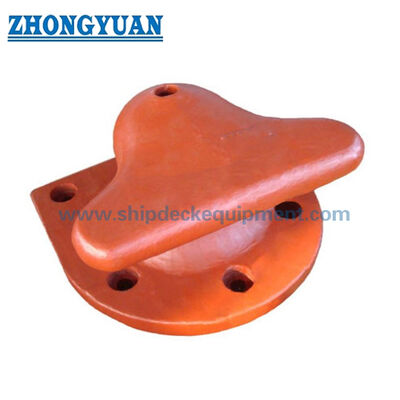
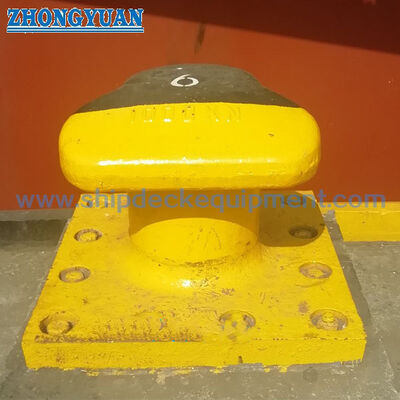
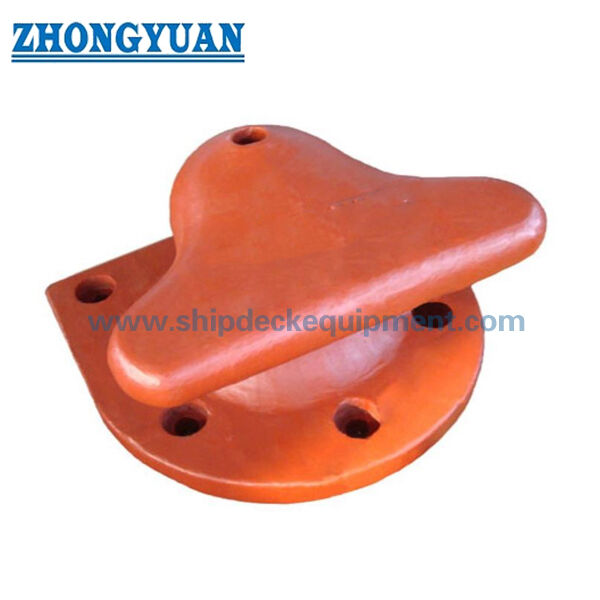
10–200T T-Head Dock Bollard for Wharf Mooring | Cast Steel or SG Iron with Anchor Bolts
Product Details:
| Place of Origin: | China |
| Brand Name: | Zhongyuan Marine Equipmen |
| Certification: | Third party inspection certificate, Pull load test certificate |
| Model Number: | Standard or Customized |
Payment & Shipping Terms:
| Minimum Order Quantity: | 1 Unit |
|---|---|
| Price: | Based on quotation |
| Packaging Details: | Export standard pallet or customized packing |
| Delivery Time: | Based on project requirements |
| Payment Terms: | T/T, L/C |
| Supply Ability: | Customized production based on project requirements |
|
Detail Information |
|||
| Bollard Capacity: | 10 To 200 Tons | Recommended Line Angle: | 0°to 50° |
|---|---|---|---|
| Allowable Line Angle: | 160° | Material Type: | Casting Stainless Steel; Cast C-Mn Steel, Cast Iron, Cast SG Iron |
| Bolts Quantity: | 4 To 7 | Surface Treatment: | Sandblasting To S2.5 + One Layer Of Epoxy Shop Primer, Polished Stainless Steel, Customized Surface Treatment Available. |
| Classification Certificates: | Third Party Inspection Certificate, Pull Load Test Certificate | ||
| Highlight: | 200T tee head bollard,CCS tee head bollard,shipyards t head bollard |
||
Product Description
10–200T T-Head Dock Bollard for Wharf Mooring | Cast Steel or SG Iron with Anchor Bolts
Product Overview
The 10–200 tonne T-head dock bollard is a shore-based mooring bollard for wharves, jetties, shipyards, repair docks, marine terminals, and other quay structures. Its T-head profile is selected where mooring lines may approach from wider vertical and horizontal lead angles than single-bitt or kidney-shaped bollards. The bollard is fixed to the concrete or steel foundation by anchorage bolts, so the bollard body, bolt arrangement, foundation design, line angle, and installation tolerance should be checked together before ordering.
This product can be supplied in cast steel, cast C-Mn steel, cast stainless steel, cast iron, or cast SG iron according to project requirement. For dock bollards, casting quality is directly related to mooring safety. Wooden pattern casting is normally used to improve mould accuracy, casting repeatability, and casting soundness, while the head radius, neck transition, and base transition should be dressed smoothly to reduce stress concentration and protect the mooring line contact area. UT, MT, third-party inspection, and FEA calculation can be arranged according to the confirmed project scope.
Quick Specifications
- Nominal bollard capacity: 10 to 200 tonnes → covers small berths, shipyard docks, repair quays, and larger wharf mooring positions.
- Bollard type: T-head / tee-head dock bollard → suitable for wider rope lead angles than many single-bitt or kidney-shaped arrangements.
- Vertical line angle: 0° to 50° recommended; -10° to 70° maximum range supplied → final acceptance depends on berth design and project calculation.
- Horizontal allowable line angle: 160° → useful where mooring lines approach the bollard from a broad quay-side direction.
- Material options: cast steel, cast C-Mn steel, cast stainless steel, cast iron, and cast SG iron → selected according to load, corrosion, wear, and project specification.
- Anchorage bolts: 4 to 8 bolts according to capacity → hot-dip galvanized carbon steel anchorage bolts can be supplied to improve corrosion resistance and bolted foundation reliability.
- Casting process focus: wooden pattern casting, controlled moulding, smooth radius transition, and casting soundness control → important for reducing harmful porosity, slag inclusion, and local stress concentration.
- Surface treatment: Sa 2.5 blasting + one layer epoxy shop primer as reference; polished stainless steel, galvanized, or customized finish available according to project requirement.
Main Technical Parameter
| Capacity (tonnes) |
A | B | C | D | E | F | G | H | I | J | K | L | M | N | Bolt Number |
| 10 | 47 | 199 | 305 | 381 | 330 | 44 | - | - | 243 | 103 | - | - | 292 | 189 | 4 |
| 15 | 52 | 219 | 335 | 419 | 363 | 49 | - | - | 267 | 114 | - | - | 321 | 208 | 4 |
| 20 | 54 | 240 | 351 | 438 | 380 | 51 | - | 232 | 329 | 0 | 152 | - | 336 | 217 | 5 |
| 30 | 57 | 250 | 366 | 457 | 396 | 53 | - | 242 | 343 | 0 | 159 | - | 351 | 226 | 5 |
| 50 | 70 | 308 | 451 | 564 | 489 | 66 | - | 296 | 423 | 0 | 196 | - | 432 | 279 | 5 |
| 75 | 80 | 354 | 518 | 648 | 561 | 76 | - | 298 | 463 | 105 | 241 | - | 497 | 321 | 6 |
| 100 | 80 | 413 | 610 | 762 | 660 | 89 | 305 | 406 | 572 | 0 | 195 | 291 | 584 | 377 | 7 |
| 125 | 87 | 458 | 671 | 838 | 726 | 98 | 335 | 546 | 629 | 0 | 215 | 320 | 643 | 415 | 7 |
| 150 | 87 | 492 | 719 | 899 | 779 | 105 | 360 | 586 | 674 | 0 | 231 | 343 | 689 | 445 | 7 |
| 200 | 97 | 521 | 762 | 952 | 826 | 111 | 349 | 559 | 694 | 119 | 299 | 365 | 730 | 472 | 8 |
Selection & Inquiry Guide
Step 1: Confirm the required bollard capacity, berth type, mooring line arrangement, vessel size range, and whether the bollard is for a new quay or replacement project.
Step 2: Confirm line lead angles, foundation drawing, bolt layout, installation space, and whether FEA calculation is required by the owner, consultant, or port authority.
Step 3: Confirm material requirement: cast steel, cast C-Mn steel, cast stainless steel, cast iron, or cast SG iron. SG iron can be considered where wear resistance and project specification make it suitable.
Step 4: Confirm anchorage bolt requirement, including bolt quantity, hot-dip galvanizing, carbon steel grade, embedment design, nuts, washers, and template requirement according to civil design.
Step 5: Confirm inspection and certificate scope before quotation: material certificate, UT, MT, dimensional inspection, third-party inspection, or class / authority review if required.
Step 6: Provide quantity, delivery destination, required delivery time, coating requirement, drawing or photo if available, and any packing or installation template requirement.
Structure
T-head cast bollard body | Smooth mooring line contact radius | Rounded head and neck transition | Cast base with anchorage bolt holes | Hot-dip galvanized carbon steel anchorage bolts | Concrete / wharf foundation interface | Project coating or polished finish
Casting, Anchorage & Mooring Safety Advantages
- The T-head geometry is suitable for dock applications where the mooring line may approach from wider line angles than a single-bitt bollard, provided the project load and foundation are verified.
- Wooden pattern casting supports stable mould geometry and repeatable casting shape, which is important for bollard head profile, base footprint, bolt-hole layout, and overall dimensional control.
- Casting quality is a critical safety point for dock bollards. Production control should focus on reducing harmful porosity, slag inclusion, shrinkage, and other indications that may affect mooring performance or inspection acceptance.
- Smooth radius transitions at the head, neck, and base help reduce local stress concentration and avoid sharp contact points on the mooring line.
- UT and MT inspection can be arranged according to customer requirement, inspection plan, and agreed acceptance criteria. These inspections should be confirmed before production.
- Hot-dip galvanized carbon steel anchorage bolts provide corrosion protection for the bolted foundation connection; bolt grade, embedment, tightening method, and civil foundation design should follow the project drawing.
- FEA calculation can be provided according to project requirement to review stress distribution under the confirmed capacity, line angle, bolt arrangement, and foundation boundary condition.
Custom Attributes
- Product Name: T-head dock bollard → shore-based mooring bollard for wharf, dock, quay, and shipyard mooring use.
- Capacity Range: 10 to 200 tonnes → select by berth mooring load, vessel size range, rope arrangement, and port design requirement.
- Material: Cast steel / cast C-Mn steel / cast stainless steel / cast iron / cast SG iron → choose according to strength, wear, corrosion, cost, and specification requirement.
- SG Iron Option: Cast SG iron → often considered where ductility, casting quality, and wear performance are required by project specification.
- Casting Method: Wooden pattern casting → used to improve mould accuracy, casting repeatability, and finished bollard geometry.
- Anchorage Method: Anchorage bolt fixed → transfers bollard load into the wharf or dock foundation through the bolt group and base plate area.
- Anchor Bolt Finish: Hot-dip galvanized carbon steel → improves corrosion resistance for outdoor marine terminal installation.
- NDT Requirement: UT / MT available upon request → inspection method, area, standard, and acceptance level should be confirmed before production.
- FEA Review: Available according to customer requirement → useful for checking stress concentration at the head, neck, base, and anchorage zone.
How It Works
Mooring line is led around the T-head bollard → Smooth cast radius supports line contact and direction change → Mooring force transfers through the bollard head and base → Anchorage bolts transfer the load into the wharf foundation → Inspection, tightening, and coating are completed according to the project installation procedure
Applications
Commercial ports | Container terminals | Bulk cargo berths | Shipyards | Repair docks | Dry docks | Ferry terminals | Jetties | Quays | Marine terminals | Wharf replacement projects
Certifications & Advantages
Inspection and certificates can be arranged according to project requirement, inspection scope, material traceability, and third-party approval procedure.
Certification: Third party inspection certificate, Pull load test certificate.
Drawing & Photos

FAQ
Q1: Is the bollard capacity the same as SWL?
A1: The supplied data uses bollard capacity in tonnes. The final design load, safety factor, line angle, anchor bolt force, and foundation verification should be confirmed by the berth design or project specification. SWL wording should only be used when it is clearly defined in the approved project documents.
Q2: Why is casting quality important for a dock bollard?
A2: A dock bollard carries mooring loads through the cast body and anchorage system. Harmful casting defects near the head, neck, base, or bolt area may affect safety and inspection acceptance. Wooden pattern casting, smooth transition dressing, and optional UT / MT inspection help control these risks.
Q3: What information is needed for quotation?
A3: Please confirm bollard capacity, material, surface treatment, line angle, anchor bolt requirement, quantity, certificate / inspection scope, foundation or installation drawing, delivery destination, and required delivery time.