


|
Marine Chain and Wire Rope Guide Roller | Towing and Mooring Applications
Product Details:
| Place of Origin: | China |
| Brand Name: | Zhongyuan Marine Equipmen |
| Certification: | CCS, NK, BV, ABS, DNV, LR, KR, IRS, RS, RINA, CRS, Makers Test Certificate |
| Model Number: | Standard or Customized |
Payment & Shipping Terms:
| Minimum Order Quantity: | 1 Unit |
|---|---|
| Price: | Based on quotation |
| Packaging Details: | Export standard pallet or customized packing |
| Delivery Time: | Based on project requirements |
| Payment Terms: | T/T, L/C |
| Supply Ability: | Customized production based on project requirements |
|
Detail Information |
|||
| Diameters: | 20mm~76mm | Material: | Cast Steel, C-Mn Steel, Alloy Steel, Mild Steel |
|---|---|---|---|
| Type: | Vertical, Inclined Stand, Horizontal | Surface Treatment: | Sandblasting To S2.5 + 3 Layers Of Epoxy Paint, Galvanized |
| Classification Certificates: | CCS, NK, BV, ABS, DNV, LR, KR, RINA, IRS, RS, Etc | ||
| Highlight: | steel marine pulley,CCS marine pulley,76mm ship pulley |
||
Product Description
Marine Chain and Wire Rope Guide Roller | Towing and Mooring Applications
Product Overview
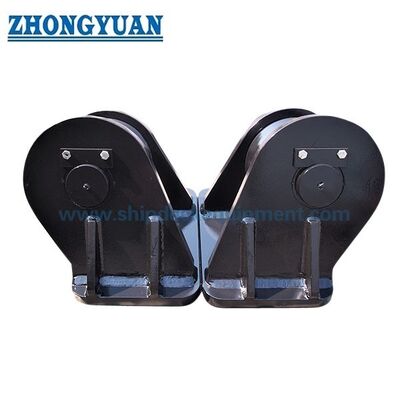
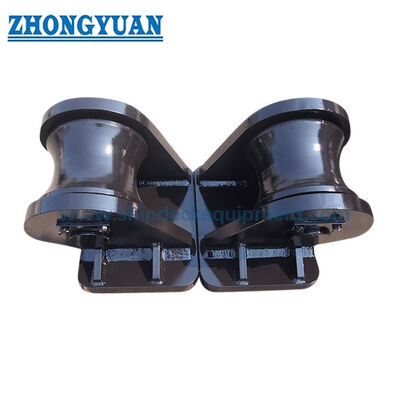
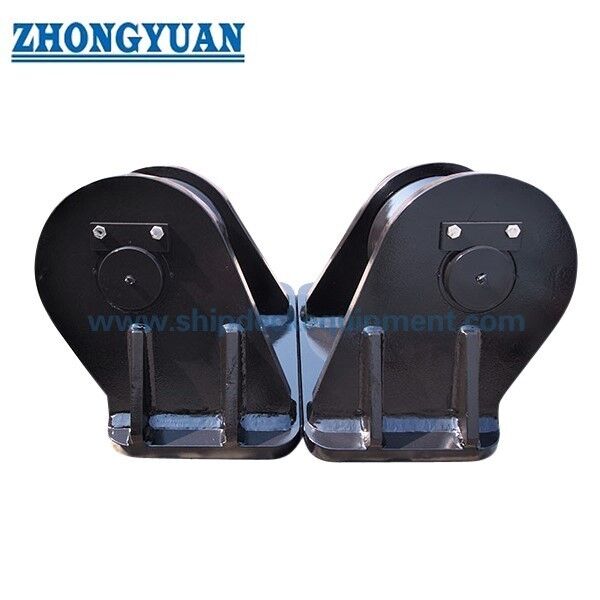
The marine guide roller is a rotating line-guidance component used to route towing rope, steel wire rope, chain, or another project-approved line through a controlled path on engineering vessels, ferries, special-purpose ships, docks, and deck machinery systems. Depending on the installation drawing, the roller may be arranged vertically, horizontally, or on an inclined stand.
The supplied dimensional table covers roller diameters from 65 to 203 mm, roller widths from 76 to 152 mm, shaft bores from 25.4 to 38.1 mm, and maximum recommended wire-rope diameters from 8 to 20 mm where stated. For towing, chain handling, or lifting-line guidance, the complete roller assembly, shaft, bushes or bearings, supports, retaining parts, welds or bolts, and local foundation must be verified against the actual line tension, load direction, dynamic effects, duty cycle, and required safety factor before use.
Quick Specifications
- Product type: Marine guide roller → rotating contact component for controlled towing rope, steel wire rope, or chain routing.
- Primary service: Towing-line / winch-line / chain guidance → guides the line between shipboard machinery, deck routing points, and the working direction.
- Optional lifting-line service: Subject to verified design load and project approval → the roller is not an independent lifting appliance or lifting accessory.
- Installation arrangements: Vertical / inclined stand / horizontal → orientation should follow the actual incoming and outgoing line directions.
- Supplied roller range: 65–203 mm diameter and 76–152 mm width → reference dimensions for initial roller and installation-space selection.
- Recommended wire-rope range in supplied table: 8–20 mm where stated → the separate declared 20–76 mm range requires confirmation before publication.
- Bore and wear arrangement: 25.4–38.1 mm bore with bronze bushes in most listed sizes → bush alloy, lubrication, shaft fit, and replacement method should be confirmed.
- Load and certification basis: No SWL, towing load, or lifting capacity is provided → allowable load and certificate scope must be established from the complete project design.
Main Technica
| DIAMETER | WIDTH | BORE (WITH BRONZE BUSHES FITTED). |
MAX. RECOMMENDEDWIRE ROPE DIAMETER. |
| 2.5/8″ 65mm | 3.1/2″ 90mm | 1.1/16″ 27.0 mm (NO BUSH) | |
| 4″ 102mm | 3″ 76mm | 1″ 25.4 mm | 8 mm |
| 4″ 102mm | 4″ 102mm | 1″ 25.4 mm | 10 mm |
| 5″ 127mm | 4″ 102mm | 1.1/4″ 32.0 mm | 12 mm |
| 6″ 152mm | 5″ 127mm | 1.1/4″ 32.0 mm | 14 mm |
| 6″ 152mm | 5″ 127mm | 1.1/2″ 38.1 mm | 14 mm |
| 7″ 178mm | 5″ 127mm | 1.1/4″ 32.0 mm | 16 mm |
| 7″ 178mm | 5″ 127mm | 1.1/2″ 38.1 mm | 16 mm |
| 7″ 178mm | 6″ 152mm | 1.1/2″ 38.1 mm | 16 mm |
| 8″ 203mm | 5″ 127mm | 1.1/2″ 38.1 mm | 20 mm |
Selection & Inquiry Guide
Step 1: Confirm the actual service: towing rope guidance, towing wire-rope routing, chain guidance, winch-to-deck line routing, or line guidance within a lifting or handling system.
Step 2: Confirm the line type and construction: steel wire rope, fibre rope, or chain. Chain service requires the link size, pitch, contact orientation, and wear criteria to be checked against the roller profile.
Step 3: Confirm vertical, horizontal, or inclined installation, together with the incoming and outgoing line directions, maximum lead angle, fleet angle, and available mounting space.
Step 4: Select the roller diameter, width, bore, bush or bearing arrangement, and contact profile from the project drawing. For wire rope, confirm the minimum bend requirement with the rope manufacturer.
Step 5: Provide maximum towing-line tension, winch pull, chain load, or lifting-line load as applicable, including dynamic or impact allowance, duty cycle, load direction, and required safety factor.
Step 6: Confirm roller, shaft, support, and bush materials; surface hardening or replaceable wear surface; lubrication method; coating system; and corrosion environment.
Step 7: Confirm quantity, certificate and inspection scope, vessel or equipment type, installation drawing or photo, delivery destination, and required delivery time.
Structure
Roller body | Rope or chain contact surface to approved profile | Shaft / axle | Bronze bush or specified bearing | Side support or stand | Vertical, inclined, or horizontal mounting arrangement | Welded or bolted interface | Project coating system
Towing, Chain Guidance & Installation Advantages
- The rotating roller changes the towing rope, wire rope, or chain path with less sliding contact than a fixed sharp edge, helping reduce local abrasion when the roller remains free to turn.
- Vertical, horizontal, and inclined arrangements allow the roller axis to be matched to the actual line route instead of forcing the line through an unsuitable direction change.
- Roller diameter and contact profile should match the line construction and bend requirement. A roller suitable for wire rope is not automatically suitable for chain, and chain guidance may require a dedicated contact profile and wear assessment.
- A replaceable bronze bush can simplify wear-part maintenance, but bronze alone does not prove self-lubricating operation. Bush alloy, lubrication grooves, grease supply, allowable clearance, and shaft finish should be confirmed.
- Rope-contact surfaces should be smooth and free from burrs, sharp edges, weld spatter, and coating defects. Chain-contact surfaces should be checked for point loading, link interference, local wear, and replaceable wear provisions where required.
- For towing or lifting-line service, the complete load path through the roller, shaft, supports, welds or bolts, and local foundation should be verified for the real line direction and dynamic operating condition.
- Inspection access should allow checking of roller rotation, bush or bearing clearance, shaft retention, corrosion, fastener security, and rope- or chain-contact wear during service.
Custom Attributes
- Product Type: Marine guide roller → a rotating line-routing component, not a powered winch, towing machine, or independent lifting device.
- Primary Use: Towing rope / steel wire rope / chain guidance → selected according to the actual line path, contact profile, and operating load.
- Configuration: Vertical / inclined stand / horizontal → choose according to deck arrangement and incoming or outgoing line direction.
- Reference Roller Diameter: 65–203 mm → range shown in the supplied dimension table.
- Reference Wire Rope Diameter: 8–20 mm where stated → larger declared rope sizes require a separate confirmed design table.
- Chain Compatibility: Subject to confirmation → chain size, pitch, link orientation, contact pressure, and wear allowance must match the roller design.
- Bushing: Bronze bush for most listed sizes → exact alloy, lubrication, shaft clearance, and replacement method to be confirmed.
- Material: Cast steel / C-Mn steel / alloy steel / mild steel → final grade, heat treatment, and surface hardness depend on the load and wear requirement.
- Lifting-Line Application: Project-specific only → allowable load, dynamic factor, safety factor, test requirement, and approval scope must be confirmed before use.
- Certificate Requirement: Available according to order scope → material traceability, maker inspection, load verification, and class witnessing should be agreed before quotation.
How It Works
Towing rope, wire rope, or chain approaches the guide roller → The line contacts the approved roller surface → Roller turns as the line moves → The line is redirected through the required route → Reaction load passes through the shaft and supports to the verified foundation
Applications
Engineering vessels | Tug and towing systems | Towing winch line routing | Salvage and special-purpose vessels | Ferry deck machinery | Steel wire-rope handling systems | Chain guidance positions | Shipboard lifting or handling systems subject to approved load design | Dockside handling equipment
Certifications & Advantages
Certificates can be arranged according to project requirement, material traceability, inspection scope, load verification, and classification-society approval procedure.
Certification: CCS, NK, BV, ABS, DNV, LR, KR, IRS, RS, RINA, CRS, Makers Test Certificate.
Drawing & Photos

FAQ
Q1: How should the correct marine guide roller be selected?
A1: Confirm the line type, diameter or chain size, construction, incoming and outgoing directions, lead angle, maximum tension, dynamic allowance, roller orientation, contact profile, mounting structure, and maintenance access. The supplied table is suitable for preliminary dimensional selection only.
Q2: Can the same roller be used for steel wire rope, fibre rope, and chain?
A2: Not automatically. Wire rope requires an acceptable bend relationship and smooth contact surface. Fibre rope may require different surface and groove conditions, while chain guidance needs compatible link geometry, contact orientation, and wear resistance.
Q3: Can this marine guide roller be used in a lifting system?
A3: It may be used only as an engineered line-guidance component within a verified lifting or handling system. The roller, shaft, bushes or bearings, supports, retaining parts, welds or bolts, foundation, design load, dynamic factor, safety factor, test requirement, and approval scope must all be confirmed. It should not be marketed as an independent lifting accessory without that verification.