


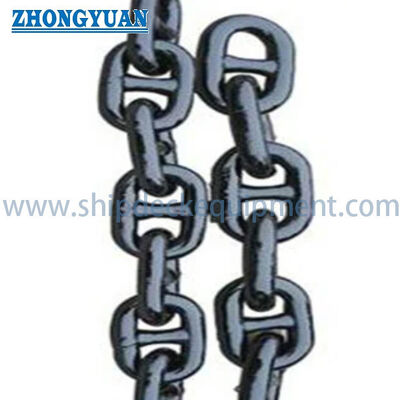
|
Welded Fishing Chain for Trawling and Aquaculture | Short, Medium & Long Link
Product Details:
| Place of Origin: | China |
| Brand Name: | Zhongyuan Marine Equipmen |
| Certification: | CCS, NK, BV, ABS, DNV, LR, KR, IRS, RS, RINA, CRS, Makers Test Certificate |
| Model Number: | Standard or Customized |
Payment & Shipping Terms:
| Minimum Order Quantity: | 1 Unit |
|---|---|
| Price: | Based on quotation |
| Packaging Details: | Export standard pallet or customized packing |
| Delivery Time: | Based on project requirements |
| Payment Terms: | T/T, L/C |
| Supply Ability: | Customized production based on project requirements |
|
Detail Information |
|||
| Type: | Fishing Chain | Material: | Carbon Steel Or Stainless Steel |
|---|---|---|---|
| Surface Treatment: | Electroplating Etc | Structure: | Flash Butt Welded Chain |
| Feature: | Heat Resistant | Color: | Solid Color |
| Standard: | ISO9001, CE, BV | ||
| Highlight: | Heat Resistant Welding Fishing Chain,High Temperature Resistant Fishing Chain,Iso9001 Certification Fishing Chain |
||
Product Description
Welded Fishing Chain for Trawling and Aquaculture | Short, Medium & Long Link
Product Overview
Welded fishing chain is a round-link steel chain used as a structural and wearing component in commercial fishing gear, trawl-net arrangements, chain matrices, ground-contact assemblies, fishing-net weighting systems, and selected aquaculture equipment. It is supplied in short-link, medium-link, and long-link configurations so the buyer can balance strength, mass per metre, internal link clearance, attachment space, and the way the chain interacts with nets, shackles, swivels, ropes, and other fishing-gear components.
This product should be selected from the actual fishing-gear arrangement rather than from chain diameter alone. Required information includes link type, nominal diameter, pitch, inside width, outside width, total length, end fittings, minimum breaking load, material grade, heat-treatment condition, surface finish, wear environment, and inspection documents. The stated minimum breaking load is a chain breaking-force value; it is not a working load limit, safe working load, or lifting capacity.
Product Configurations
- Short Link (SL): compact pitch and higher mass per metre → useful where a dense chain profile, controlled movement, and limited internal clearance are preferred.
- Medium / Mid Link (ML): intermediate pitch and weight → balances chain flexibility, component clearance, mass, and attachment convenience.
- Long Link (LL): longer pitch and lower mass per metre for the same diameter → provides more internal space for shackles, swivels, connectors, netting, or other fishing-gear attachments.
- Standard lengths and end arrangements: supplied in cut lengths, coils, bundles, assemblies, or project-specific sections → end links and accessories must be confirmed before production.
- Material options: high-tensile alloy steel, carbon steel, or stainless steel can be discussed → the published breaking-load table cannot be applied across different material grades without separate verification.
- Surface finish: self-colour, painted, electro-galvanized, hot-dip galvanized, or project-specific coating → finish selection depends on seawater exposure, abrasion, required service life, and dimensional tolerance.
Key Selection Data
- Nominal Diameter: 7–28 mm in the supplied range → controls link cross-section, chain mass, connector compatibility, and potential breaking force.
- Link Pitch: 21–150 mm depending on type and diameter → affects flexibility, internal clearance, contact behaviour, and the number of links per metre.
- Inside Width: 10–44 mm in the supplied table → must accommodate shackles, swivels, rope, net fittings, and adjacent links without binding.
- Outside Width: 25.5–103 mm in the supplied table → affects space, clearance through guides, packing density, and interaction with the fishing-gear arrangement.
- Unit Weight: 0.82–14.41 kg/m → supports total gear-weight calculation, handling planning, freight estimation, and seabed-contact design.
- Minimum Breaking Load: 60–980 kN in the supplied table → a destructive-test reference and not an allowable operating load.
- Material Grade: To be confirmed → breaking force depends on steel grade, weld quality, heat treatment, link geometry, and test method.
- Intended Duty: Fishing gear / trawling / aquaculture → lifting, personnel handling, vessel towing, and ship mooring require separate standards and certification.
Main Technical Parameters
| ype | Nominal Diameter | Pitch(mm) | Width (mm) | Weight |
Breaking Load Min. KN |
|
| Inside Min. | Outside Max. | kg/m | ||||
| Short Link Chain | 7 | 21 | 10 | 25.5 | 1.05 | 6o |
| 10 | 30 | 14 | 36 | 2.2 | 125 | |
| 13 | 39 | 18.1 | 47.1 | 3.8 | 214 | |
| 16 | 48 | 22.4 | 57.4 | 5.63 | 320 | |
| 19 | 57 | 27.8 | 68.8 | 7.81 | 450 | |
| 20 | 60 | 29 | 72 | 8.52 | 600 | |
| Mid Link Chain | 10 | 40 | 15 | 37 | 1.9 | 125 |
| 13 | 52 | 19.5 | 48.5 | 3.31 | 214 | |
| 14 | 50 | 18.5 | 49.5 | 4 | 250 | |
| 16 | 64 | 24 | 59 | 4.97 | 320 | |
| 19 | 76 | 28.5 | 69.5 | 6.92 | 450 | |
| 22 | 86 | 27 | 74 | 9.5 | 610 | |
| 26 | 92 | 32 | 86 | 13.7 | 850 | |
| Long Link Chain | 7 | 45 | 10 | 25.5 | 0.82 | 60 |
| 9 | 53 | 15 | 35 | 1.36 | 100 | |
| 11 | 63 | 18 | 43 | 2.16 | 152 | |
| 13 | 80 | 22 | 51 | 2.93 | 214 | |
| 16 | 100 | 26 | 61 | 4.34 | 320 | |
| 19 | 100 | 27 | 68 | 6.31 | 450 | |
| 22 | 120 | 37 | 84 | 8.74 | 610 | |
| 28 | 150 | 44 | 103 | 14.41 | 980 | |
How to Select Short, Medium or Long Link
- Choose short link where compact geometry, higher chain mass per metre, reduced internal movement, and close interaction with the net or ground-contact assembly are priorities.
- Choose medium link where the application needs a practical balance between chain mass, flexibility, internal clearance, and compatibility with fittings.
- Choose long link where lower mass per metre and larger attachment space are important, especially when shackles, swivels, connectors, netting, or replaceable components must pass through the link.
- Check connector bearing and articulation. A connector that fits through the link may still bind, apply side loading, or create a small contact radius that reduces assembly performance.
- Confirm the complete load path. Chain strength alone does not establish the capacity of end links, shackles, swivels, net fittings, welded attachments, or the complete fishing-gear assembly.
Material, Welding & Heat Treatment
Fishing chain is normally produced from round steel bar formed into links and closed by a controlled welding process such as flash-butt welding. For high-tensile chain, the manufacturing route may include weld-flash removal, heat treatment, calibration, dimensional checking, and mechanical testing. The material grade and heat-treatment condition must be tied to the required minimum breaking load.
- High-tensile alloy steel: normally preferred where the specified diameter-to-strength relationship requires a heat-treated chain grade.
- Carbon steel: suitable for general fishing or net applications only when its grade, weldability, heat treatment, and verified breaking load meet the project requirement.
- Stainless steel: selected for corrosion resistance in certain environments; grade, weld condition, strength, galling risk, and price must be confirmed separately.
- A material substitution does not automatically preserve the tabled breaking load. Carbon steel, alloy steel, and stainless steel require their own mechanical-property and test basis.
- The original claim of “heat resistant” should not be used as a general product feature. High-temperature service requires a specified material, operating-temperature range, strength-retention data, and application review.
Surface Finish & Corrosion Protection
- Hot-dip galvanizing: provides a thicker zinc coating for marine corrosion protection, but coating thickness, link fit, weld area, and mechanical-property effects must be controlled.
- Electro-galvanizing: provides a thinner and more uniform zinc finish, normally with lower long-term corrosion allowance than hot-dip galvanizing.
- Painted or coated finish: supports identification and initial corrosion protection; abrasion at seabed-contact and link-bearing areas should be expected.
- Self-colour / black finish: suitable where coating is not required or where the chain will receive a project-specific treatment after assembly.
- Stainless-steel finish: pickling, passivation, polishing, or other finishing can be specified according to grade and service environment.
- No surface treatment eliminates wear. Inspection intervals should consider corrosion loss, link-to-link wear, weld condition, deformation, cracks, and coating damage.
Quality Control & Testing
- Raw-material verification → confirm steel grade, heat number, chemical composition, and mechanical-property documentation.
- Dimensional inspection → check nominal diameter, pitch, inside width, outside width, link shape, and length tolerance.
- Weld inspection → examine weld location, flash removal, alignment, surface indications, and link geometry.
- Heat-treatment control → record furnace cycle, batch identification, hardness, and mechanical test results when high-tensile grades are specified.
- Mechanical testing → proof-load, tensile, and minimum breaking-load testing can be arranged by batch or sample according to the agreed specification.
- Traceability and marking → identify type, size, grade, batch, length, finish, and test-document reference where required.
- Final documentation → maker’s test certificate, material certificate, dimensional report, coating report, and third-party witness records are available according to order scope.
Fishing & Aquaculture Applications
Bottom trawl gear | Beam-trawl tickler chains | Chain matrices | Groundrope and footrope assemblies | Trawl-net weighting | Fishing-net connections | Replaceable wear sections | Aquaculture net and cage equipment | Project-specific fishing-gear assemblies
FAO fishing-gear references describe chain use in beam-trawl tickler arrangements and chain matrices, where the chain interacts directly with the seabed and fishing net. Final chain type and size should therefore be selected by the fishing-gear designer according to towing speed, seabed condition, gear mass, wear, target species, vessel power, and local fishing regulations.
Selection & Inquiry Guide
Step 1: Provide the application: trawl chain, tickler chain, chain matrix, groundrope, net weight, aquaculture equipment, or another fishing-gear arrangement.
Step 2: Confirm link type, nominal diameter, pitch, inside width, outside width, required length, number of sections, and total quantity.
Step 3: State the required minimum breaking load, design load, safety factor or selection rule, expected cyclic loading, seabed contact, abrasion, and corrosion environment.
Step 4: Confirm material grade, heat-treatment condition, surface finish, colour, dimensional tolerance, and whether accessories must pass through or articulate inside the links.
Step 5: Provide end arrangements and accessories: enlarged end links, shackles, swivels, connectors, rings, welded fittings, identification tags, or assembled net sections.
Step 6: Confirm testing, certificate, third-party witness, packing method, destination, delivery time, and reference drawing or sample if available.
Packaging & Delivery
• Cut lengths or assemblies should be tagged by type, diameter, length, batch, and quantity to reduce mixing during installation.
• Packaging options include plywood cases, wooden cases, woven or Nylon bags, steel drums, bundles, and pallets according to chain size, coating, destination, and handling method.
• Galvanized or coated chains should be packed to limit impact damage, water retention, and coating abrasion during storage and sea transport.
• Heavy chain sections require confirmed package weight, lifting points, forklift access, and safe unloading arrangements.
Certifications & Documentation
ISO 9001 certification, when valid, applies to the supplier’s quality management system and is not a product-strength standard. CE marking is applicable only where the chain falls within specific EU legislation and the required conformity assessment has been completed. BV or another third-party inspection body may witness testing or issue documents only within the agreed inspection scope.
Classification / third-party inspection: CCS, NK, BV, ABS, DNV, LR, KR, IRS, RS, RINA, CRS, and Maker’s Test Certificate may be arranged according to project requirement, product specification, test scope, and acceptance by the purchaser.
Drawing & Photos

FAQ
Q1: Is the minimum breaking load the chain’s safe working load?
A1: No. Minimum breaking load is the force at which a test sample is required to withstand or fail under a defined tensile test. It is not a WLL or SWL. The allowable design load must be established by the fishing-gear designer using the required safety factor, fatigue, wear, corrosion, dynamic loading, and complete assembly capacity.
Q2: Which link type is best for fishing gear?
A2: Short link gives a compact and heavier chain profile, medium link provides a balance of mass and clearance, and long link offers lower mass per metre and more attachment space. The correct choice depends on the net arrangement, connectors, ground contact, required weight, flexibility, and wear pattern.
Q3: Can this fishing chain be used for lifting, ship towing, or mooring?
A3: Not on the basis of this table alone. Lifting, towing, and mooring chains require their own design standard, grade, proof testing, marking, certificates, and application approval. A fishing-chain breaking-load value must not be converted directly into a lifting WLL, towing SWL, or mooring capacity.