


|
Cast Steel Recessed Bitt | Side-Shell Ship Towing Fitting to ISO 13799
Product Details:
| Place of Origin: | China |
| Brand Name: | Zhongyuan Marine Equipmen |
| Certification: | CCS, NK, BV, ABS, DNV, LR, KR, IRS, RS, RINA, CRS, Makers Test Certificate |
| Model Number: | Standard or Customized |
Payment & Shipping Terms:
| Minimum Order Quantity: | 1 Unit |
|---|---|
| Price: | Based on quotation |
| Packaging Details: | Export standard pallet or customized packing |
| Delivery Time: | Based on project requirements |
| Payment Terms: | T/T, L/C |
| Supply Ability: | Customized production based on project requirements |
|
Detail Information |
|||
| Standard: | ISO 13799:2020; IMO Circular MSC/Circ.1175, Guidance On Shipboard Towing And Mooring Equipment | Nominal Sizes: | 850mm & 920mm |
|---|---|---|---|
| Type: | Type 100, Type 150, Type 180 For Nominal Sizes: 920mm | Safe Working Load/Capacity: | 75 To 180T |
| Face Angle Of Cable: | -16~+30° | Material: | C-Mn Steel Casting; Stainless Steel Casting |
| Surface Treatment: | Sandblasting To S2.5 + 3 Layers Of Epoxy Paint, Galvanized | Classification Certificates: | CCS, NK, BV, ABS, DNV, LR, KR, RINA, IRS, RS, Etc |
| Highlight: | 75t Ship Towing Equipment,casting type 75t Recessed bitts,75t Recessed bitts |
||
Product Description
Cast Steel Recessed Bitt | Side-Shell Ship Towing Fitting to ISO 13799
Product Overview
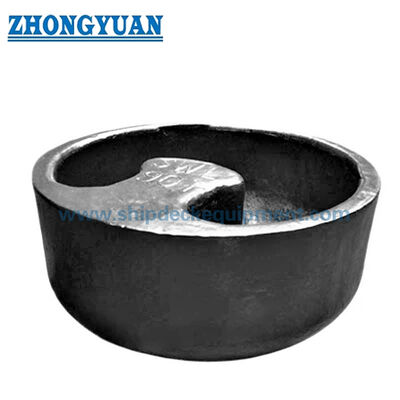
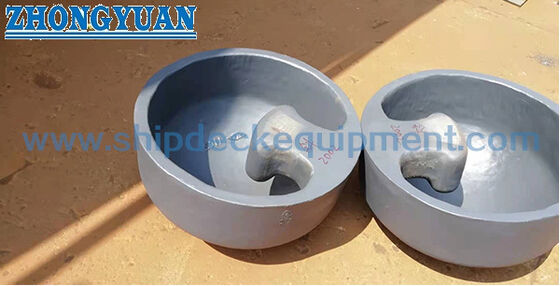
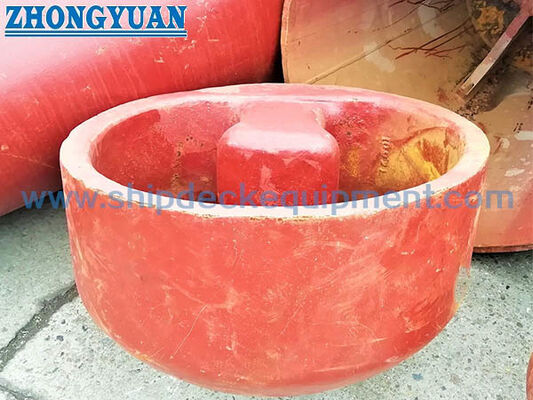
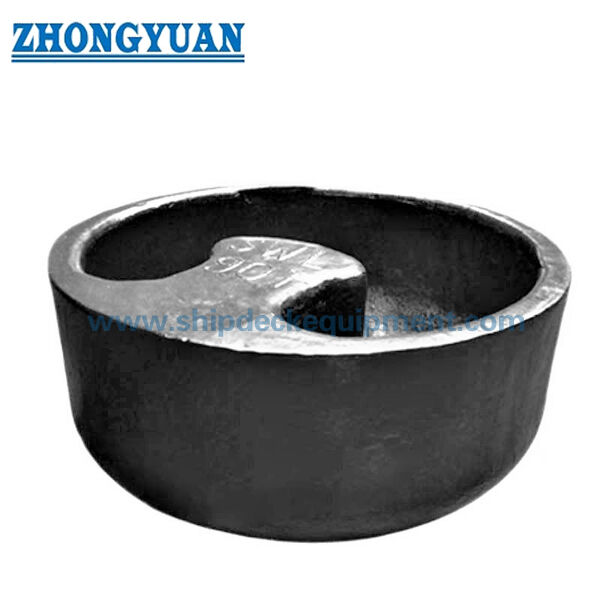
The ISO 13799 cast steel recessed bitt is a ship towing fitting installed within a prepared opening in the vessel side shell. It provides an accessible towing-line attachment point where the mooring or working deck is too high for convenient tug-line connection. The recessed arrangement limits external projection while keeping the towing connection close to the ship side.
The supplied range covers nominal sizes 850 and 920 with six load classes from 75 t to 180 t. Within each nominal size, the main geometry and calculated weight remain the same while the type designation, minimum material yield strength, and standard SWL change. Final selection must therefore confirm the required towing load, approved rope lead angle, side-shell cut-out, local hull reinforcement, welding details, material traceability, coating system, and classification inspection scope.
Quick Specifications
- Product type: Cast steel recessed towing bitt → side-shell towing-line attachment for vessels with high working or mooring decks.
- Standard: ISO 13799:2020 → reference for recessed-bitt classification, dimensions, material strength levels, and standard SWL values.
- Nominal sizes: 850 and 920 → selected according to the side-shell arrangement, approved drawing, and required towing load.
- Standard SWL range: 736-1,766 kN / 75-180 t → the actual onboard SWL is also limited by the shell foundation, welding, and supporting structure.
- Type and material relationship: Type 75 / 110 / 135 and Type 100 / 150 / 180 → higher load classes require the stated higher minimum yield strength.
- Calculated weight: 770 kg for size 850 and 826 kg for size 920 → important for handling, temporary support, installation planning, and freight.
- Rope lead angle: -16° to +30° as supplied → the reference axis and permitted load direction must be confirmed from the approved standard or vessel drawing.
- Material and finish: C-Mn cast steel as the normal basis → stainless cast steel or low-temperature special steel requires separate material, welding, and class confirmation.
Main Technical Parameters
| Nominal size Dn |
D1 | d1 | b1 | b2 | R1 | R2 | R3 | R4 | R5 | R6 | R7 | R8 |
| 850 | 850 | 750 | 200 | 280 | 450 | 500 | 250 | 65 | 115 | 50 | 55 | 250 |
| 920 | 920 | 812 | 216 | 300 | 490 | 544 | 270 | 70 | 124 | 55 | 60 | 270 |
| Nominal size Dn |
R9 | R10 | t1 | f1 | f2 | f3 | f4 | f5 | h1 | h2 | h3 | |
| 850 | 180 | 30 | 50 | 500 | 250 | 180 | 248,7 | 263,4 | 400 | 190 | 110 | |
| 920 | 195 | 30 | 54 | 544 | 270 | 195 | 274,3 | 290,4 | 430 | 205 | 110 | |
| Nominal size Dn |
Type | Material (minimum yield strength) |
SWL | Calculated weight kg |
|
| kN | t | ||||
| 850 | Type 75 | 235 N/mm2 | 736 | 75 | 770 |
| Type 110 | 350 N/mm2 | 1079 | 110 | 770 | |
| Type 135 | 430 N/mm2 | 1324 | 135 | 770 | |
| 920 | Type 100 | 235 N/mm2 | 981 | 100 | 826 |
| Type 150 | 350 N/mm2 | 1472 | 150 | 826 | |
| Type 180 | 430 N/mm2 | 1766 | 180 | 826 | |
Selection & Inquiry Guide
Step 1: Confirm ISO 13799:2020, nominal size 850 or 920, and the required type / SWL according to the vessel towing arrangement.
Step 2: Confirm the design towing load, intended tug-line direction, and the approved rope lead-angle envelope. Provide the towing and mooring arrangement drawing if available.
Step 3: Provide side-shell cut-out dimensions, shell plate thickness, nearby frames, local reinforcement, internal access, and installation position.
Step 4: Confirm the required cast steel grade, minimum yield strength, impact-toughness requirement, design temperature, and whether low-temperature or ice-class service applies.
Step 5: Confirm welding procedure, NDT scope, surface treatment, SWL marking, material certificate, class inspection, and witness-test requirement before quotation.
Step 6: Provide quantity, newbuilding or replacement status, delivery destination, required delivery time, and reference photos or an approved GA drawing.
Structure
Cast steel recessed body | Side-shell insert arrangement | Integral towing attachment profile | Rounded rope-contact surfaces | Shell welding interface | Local hull reinforcement | SWL marking area | Protective coating or specified stainless finish
Casting, Installation & Engineering Advantages
- The recessed side-shell arrangement gives tug crews a practical towing connection point where the vessel deck is too high for direct line handling from the deck edge.
- For each nominal size, the external geometry remains consistent across several load classes, while the required minimum yield strength changes with the SWL. Material substitution is therefore not acceptable without full traceability and approval.
- The cast body can provide continuous radiused rope-contact geometry, but casting soundness, dimensional control, weld-adjacent surface condition, and final dressing remain important inspection points.
- Towing load is transferred from the recessed bitt into the shell opening and surrounding hull structure. Local framing, insert plate arrangement, weld detail, and access for inspection should be engineered by the vessel design office and accepted by class.
- The towing line should remain within the approved directional envelope. Side pull or vertical lead outside the approved angle can change the load path and must not be assumed acceptable.
- Low-temperature or ice-class service requires confirmed material toughness, heat treatment, welding consumables, WPS / PQR, and NDT acceptance criteria; higher yield strength alone is not sufficient.
- FEA review, casting inspection, material traceability, and class witnessing can be arranged according to project requirement rather than treated as default deliverables.
Custom Attributes
- Standard: ISO 13799:2020 → used when the vessel drawing or towing arrangement specifies ISO recessed bitts.
- Nominal Size: 850 / 920 → defines the principal recessed-body geometry and side-shell interface.
- Type / Load Class: 75 / 110 / 135 / 100 / 150 / 180 → select by required standard SWL and material strength level.
- SWL: 736-1,766 kN → standard fitting rating; actual onboard marking remains subject to the approved hull foundation and towing plan.
- Material: C-Mn cast steel → stainless cast steel or special low-temperature steel is subject to material and class confirmation.
- Installation: Inserted and welded into the ship side shell → shell opening, reinforcement, fit-up, weld sequence, and distortion control require project drawings.
- Rope Lead Angle: -16° to +30° as supplied → reference direction and sign convention to be confirmed from the approved drawing.
- Surface Treatment: Sa 2.5 blasting + epoxy shop primer as a carbon-steel reference → final coating follows the vessel paint specification; stainless finish is project-specific.
- Certificate Scope: Available according to order requirement → maker certificate, material certificate, class certificate, NDT report, and witness inspection should be defined before quotation.
How It Works
Tug towing eye or towing line approaches the side-shell recess → Line engages the integral recessed bitt within the approved lead direction → Towing force is transferred through the cast body and welded shell interface → Local frames and reinforcement distribute the load into the hull structure → Connection and release follow the vessel towing procedure
Applications
High-freeboard commercial ships | Tankers | Bulk carriers | Cargo vessels | Large work vessels | Harbour towing | Berthing and shifting assistance | Side-shell tug connection points | Newbuilding and replacement projects
Certifications & Advantages
Certificates and inspection can be arranged according to project requirement, casting material traceability, NDT scope, approved welding procedure, and classification society approval process.
Certification: CCS, NK, BV, ABS, DNV, LR, KR, IRS, RS, RINA, CRS, Makers Test Certificate.
Drawing & Photos

FAQ
Q1: How should the correct ISO 13799 type be selected?
A1: Select the nominal size and type from the required towing load and vessel side-shell arrangement. The type number corresponds to the standard SWL in tonnes, but the actual onboard SWL must also be checked against the shell foundation, local reinforcement, welding, and approved towing plan.
Q2: Does the -16° to +30° face angle apply in every towing direction?
A2: No. The stated range must be read together with the standard or approved drawing because the reference axis and positive / negative direction affect the permissible load path. The vessel arrangement should not use the bitt outside the approved directional envelope.
Q3: Can stainless steel or special ice-class steel be supplied?
A3: Alternative materials can be discussed, but the exact grade, minimum yield strength, low-temperature toughness, casting procedure, welding qualification, NDT scope, and class approval must be confirmed before quotation. They should not be treated as direct substitutes for the standard C-Mn cast steel.