


|
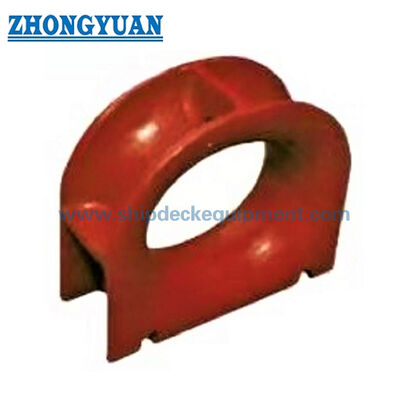
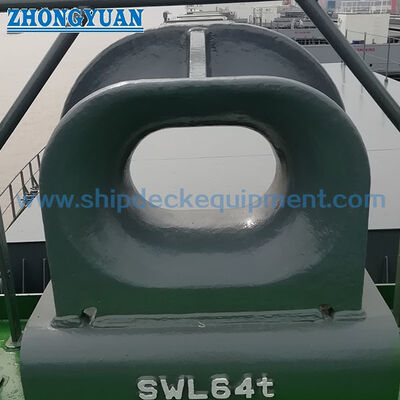
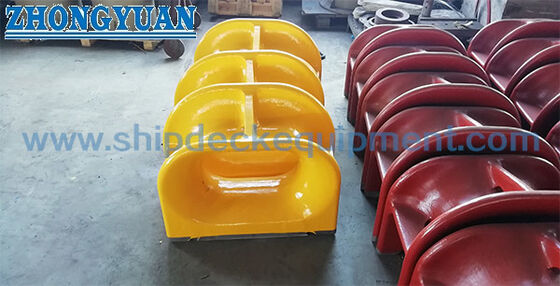
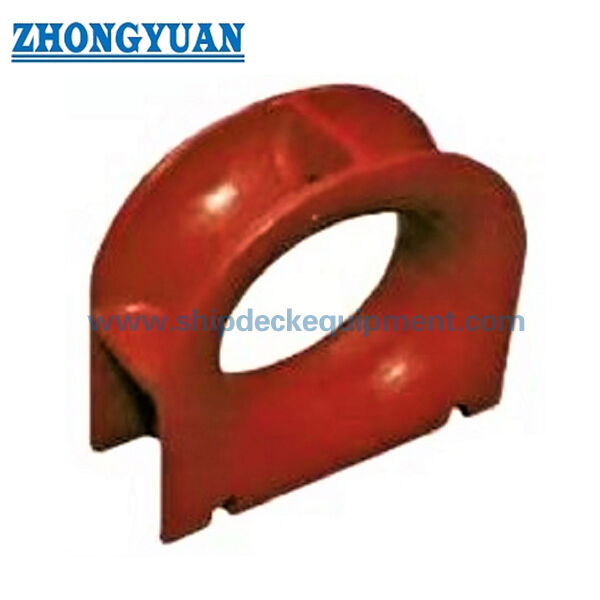
Deck Mounted Cast Steel Mooring Chock | ISO 13713 Type A for Ship Mooring and Towing
Product Details:
| Place of Origin: | China |
| Brand Name: | Zhongyuan Marine Equipmen |
| Certification: | CCS, NK, BV, ABS, DNV, LR, KR, IRS, RS, RINA, CRS, Makers Test Certificate |
| Model Number: | Standard or Customized |
Payment & Shipping Terms:
| Minimum Order Quantity: | 1 Unit |
|---|---|
| Price: | Based on quotation |
| Packaging Details: | Export standard pallet or customized packing |
| Delivery Time: | Based on project requirements |
| Payment Terms: | T/T, L/C |
| Supply Ability: | Customized production based on project requirements |
|
Detail Information |
|||
| Standard: | ISO 13713-2020 | Type: | A; Deck Mounted |
|---|---|---|---|
| SWL Range: | 36-140T | Materials: | Casting C-Mn Steel, Casting Stainless Steel, Also Can Supply Special Steel For Icebreaker |
| Weight: | 73 To 396kg | Surface Treatment: | Sandblasting To S2.5 + One Layer Of Epoxy Shop Primer, Polished Stainless Steel, Customized Surface Treatment Available. |
| Classification Certificates: | CCS, NK, BV, ABS, DNV, LR, KR, RINA, IRS | ||
| Highlight: | Deck Mounted Mooring Chock,Ship Towing Equipment Mooring Chock,ISO 13713 Mooring Chock |
||
Product Description
Deck Mounted Cast Steel Mooring Chock | ISO 13713 Type A for Ship Mooring and Towing
Product Overview
The ISO 13713 Type A deck mounted mooring chock is a cast steel rope guide installed at the ship side to lead mooring or towing lines between inboard and outboard positions. It can be welded directly to the upper deck or installed on a project-designed seating connected to the main deck, subject to the approved deck arrangement, reinforcement, and welding details.
Type A covers seven supplied nominal sizes from 250 x 200 to 500 x 250B, with reference SWL values from 353 to 1,373 kN and calculated mass from 73 to 396 kg. Selection should consider the actual line load, rope type and diameter, rope manufacturer's minimum bend-radius guidance, lead direction, local deck strength, and the agreed SWL marking. The fitting is commonly selected for synthetic-fibre mooring lines; wire-rope service should be checked separately against the vessel design and the applicable closed-chock requirement.
Quick Specifications
- Product type: ISO 13713 Type A deck mounted cast steel mooring chock → welded ship-side rope guide for mooring and approved towing arrangements.
- Standard: ISO 13713:2020, Edition 2 → the current published ISO edition covers types, nominal sizes, dimensions, materials, construction, manufacturing, and marking requirements for mooring chocks.
- Nominal size range: 250 x 200 to 500 x 250B → seven size options for matching rope passage, deck footprint, and project load requirement.
- Reference SWL range: 353 to 1,373 kN, approximately 36 to 140 t in the supplied table → values are for reference and the final marked SWL depends on the agreed loading condition.
- Calculated weight: 73 to 396 kg → useful for handling, transport planning, installation preparation, and deck seating review.
- Installation form: direct deck welding or welding on a designed seating → local reinforcement, weld detail, and load transfer path must be confirmed by the shipyard or design office.
- Material options: cast C-Mn steel as the main supply basis → cast stainless steel or special low-temperature steel can be discussed when specified and approved.
- Surface treatment: Sa 2.5 blasting plus one epoxy shop-primer coat as a reference supply finish → final coating or stainless-steel polishing follows the project specification.
Main Technical Parameters
| Nominal size L x H |
I1 | I2 | I3 | B | H1 | H2 | R | R1 | R2 |
| 250 X 200 | 100 | 250 | 444 | 160 | 377 | 80 | 100 | 197 | 80 |
| 300 X 250 | 110 | 300 | 536 | 200 | 468 | 100 | 125 | 243 | 100 |
| 350 X 250 | 125 | 350 | 608 | 220 | 489 | 110 | 125 | 254 | 110 |
| 400 X 250 | 135 | 400 | 682 | 240 | 511 | 120 | 125 | 266 | 120 |
| 450 X 250 | 150 | 450 | 760 | 260 | 535 | 130 | 125 | 280 | 130 |
| 500 x 250A | 175 | 500 | 832 | 280 | 556 | 140 | 125 | 291 | 140 |
| 500 x 250B | 175 | 500 | 840 | 280 | 560 | 140 | 125 | 295 | 140 |
| Nominal size L x H |
R3 | R4 | Rs | T | T1 | Welding leg length a z1 |
SWL b kN |
SWL b ton |
Calculated weight c kg |
| 250 X 200 | 46 | 20 | 15 | 34 | 18 | 8,5 | 353 | 36 | 73 |
| 300 X 250 | 64 | 25 | 20 | 36 | 20 | 9 | 491 | 50 | 121 |
| 350 X 250 | 72 | 30 | 20 | 38 | 20 | 9,5 | 589 | 60 | 151 |
| 400 X 250 | 78 | 30 | 20 | 42 | 23 | 10,5 | 736 | 75 | 200 |
| 450 X 250 | 80 | 30 | 20 | 50 | 28 | 12,5 | 981 | 100 | 280 |
| 500 x 250A | 88 | 30 | 20 | 52 | 30 | 13 | 1128 | 115 | 338 |
| 500x 250B | 80 | 30 | 20 | 60 | 36 | 15 | 1373 | 140 | 396 |
| a The welding method may be changed based on the same welding volume/strength . b The SWLs shown are for reference only. The "SWL" which is marked on the fitting may be adjusted depending on the actual loading cond1t10ns of mooring rope under the agreement between the user and the manufacturer. C The calculated weight (mass) is for reference only. |
|||||||||
Selection & Inquiry Guide
Step 1: Confirm ISO 13713:2020 Type A, nominal size, and reference SWL according to the approved mooring or towing arrangement.
Step 2: Provide rope type, diameter, MBL, construction, rope manufacturer's bend-radius guidance, and the actual horizontal and vertical lead directions.
Step 3: Confirm whether the chock is welded directly to the upper deck or installed on a seating, together with deck thickness, reinforcement, weld detail, and available installation space.
Step 4: Confirm material requirement: cast C-Mn steel, stainless steel, or project-specific low-temperature / ice-class steel with the required toughness and test temperature.
Step 5: Confirm surface treatment: shop primer, vessel coating system, special corrosion protection, or polished stainless-steel rope-contact surfaces when specified.
Step 6: Confirm certificate and inspection scope before quotation: maker certificate, material certificate, class certificate, NDT, witness inspection, marking, and traceability requirements.
Step 7: Provide quantity, vessel type, installation position, drawing or reference photo, delivery destination, and required delivery time.
Structure
Cast steel chock body | Smooth rope-contact radii | Deck-welded base interface | Reinforced opening section | Weld connection area | SWL marking area | Protective coating or specified finish
Casting, Welding & Mooring Engineering Advantages
- The cast body provides a continuous rope-contact profile and transfers line reaction through the chock body and welded base into the supporting deck structure.
- Rope-contact surfaces should be dressed and smoothed so that local roughness, sharp edges, or harmful irregularities do not abrade the mooring or towing line.
- Seven nominal sizes allow the opening, deck footprint, reference SWL, and calculated mass to be matched to the approved vessel arrangement rather than selected by load alone.
- The supplied SWL values are reference values. The final marked SWL should reflect the actual loading condition and agreement between the user and manufacturer; rope MBL must not be treated as the chock SWL.
- Direct deck installation and seating-mounted installation are both possible, but local deck reinforcement, weld geometry, and force direction remain project-specific design responsibilities.
- An alternative welding method may be considered only when equivalent weld volume and strength are demonstrated and accepted under the approved project procedure.
- Dimensional inspection, rope-contact surface inspection, material traceability, and NDT can be arranged according to the order scope and classification requirement.
- For ice-class or low-temperature service, the steel grade, impact toughness, design temperature, repair-welding procedure, and class acceptance must be confirmed before production.
Custom Attributes
- Standard: ISO 13713:2020 → current published Edition 2 for ship mooring and towing fittings - mooring chocks.
- Type: Type A → deck mounted configuration for welding directly to the upper deck or to an approved deck seating.
- Nominal Size: 250 x 200 / 300 x 250 / 350 x 250 / 400 x 250 / 450 x 250 / 500 x 250A / 500 x 250B → select according to the approved opening, footprint, and load requirement.
- Reference SWL: 353 to 1,373 kN → preliminary selection basis; final marking is subject to actual loading conditions and agreement.
- Rope Application: Synthetic-fibre mooring or towing line as the primary selection basis → rope bend-radius reduction and manufacturer guidance should be checked.
- Material: Cast C-Mn steel → stainless steel or special low-temperature steel is available only when defined by the project specification.
- Installation: Deck welded or seating mounted → deck reinforcement, load direction, and weld detail must be verified before production.
- Surface Treatment: Sa 2.5 blasting plus epoxy shop primer as reference → final coating system follows the vessel painting specification.
- Certificate Requirement: Available according to order scope → class approval, material certification, NDT, and witness inspection are not assumed as default supply.
How It Works
Mooring or towing line approaches the ship-side chock → Line passes through the selected Type A rope opening → Smooth cast radii guide the line and control local contact → Reaction force is transferred through the cast body and welded interface into the reinforced deck structure → Final marking, inspection, and coating are completed according to the approved project scope
Applications
Ocean-going vessels | Cargo ships | Tankers | Bulk carriers | Container vessels | Ship-side deck mooring stations | Approved towing-line lead positions | Newbuilding and replacement projects
Certifications & Advantages
Certificates can be arranged according to project requirement, inspection scope, material traceability, and class society approval procedure.
Certification: CCS, NK, BV, ABS, DNV, LR, KR, IRS, RS, RINA, CRS, Makers Test Certificate.
Drawing & Photos

FAQ
Q1: How should the correct Type A size and SWL be selected?
A1: Select the nominal size from the actual mooring or towing load, rope type and MBL, lead angle, opening requirement, deck layout, reinforcement, and approved vessel drawing. The standard-table SWL is a reference value; the final marked SWL may be adjusted according to the actual loading condition by agreement.
Q2: Is ISO 13713 Type A suitable for wire rope?
A2: Type A is commonly selected for nylon and other synthetic-fibre lines, and the rope manufacturer's minimum bend-radius guidance should be checked. Wire-rope service requires a separate engineering review; where the vessel specification calls for a closed chock, ISO 13729 or another approved project standard should be used.
Q3: What installation information is required before quotation?
A3: Confirm nominal size, load basis, rope data, direct-deck or seating installation, deck reinforcement, weld details, material grade, coating system, certificate scope, quantity, vessel type, destination, and delivery schedule. An approved arrangement drawing is strongly recommended.