


|
Single Roller Fairlead with Dust Cover for Ship Mooring | CB/T 3861 Type A Cast Steel Roller
Product Details:
| Place of Origin: | China |
| Brand Name: | Zhongyuan Marine Equipmen |
| Certification: | CCS, NK, BV, ABS, DNV, LR, KR, IRS, RS, RINA, CRS, Makers Test Certificate |
| Model Number: | Standard or Customized |
Payment & Shipping Terms:
| Minimum Order Quantity: | 1 Unit |
|---|---|
| Price: | Based on quotation |
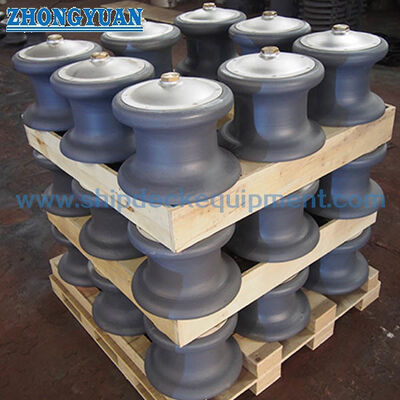
| Packaging Details: | Export standard pallet or customized packing |
| Delivery Time: | Based on project requirements |
| Payment Terms: | T/T, L/C |
| Supply Ability: | Customized production based on project requirements |
|
Detail Information |
|||
| Technical Standard: | CB/T 3861-2011 | Type: | CB/T 3861-2011 Form A |
|---|---|---|---|
| Roller Diameters: | 100~450mm | Roller No.: | Single Roller |
| Roller Weight: | 9.9~462kg | Materials: | Mild Steel, C-Mn Steel, Stainless Steel, Casting Steel, Nodular Cast Iron |
| Surface Treatment: | Sandblasting To S2.5 + One Layer Of Epoxy Shop Primer, Polished Stainless Steel, Customized Surface Treatment Available. | Classification Certificates: | CCS, NK, BV, ABS, DNV, LR, KR, BKI, IRS, RS, Etc |
| Highlight: | single roller fairlead CB/T 3861-2011,CB/T 3861-2011 marine roller fairlead,CCS CB/T 3861-2011 marine roller fairlead |
||
Product Description
Single Roller Fairlead with Dust Cover for Ship Mooring | CB/T 3861 Type A Cast Steel Roller
Product Overview
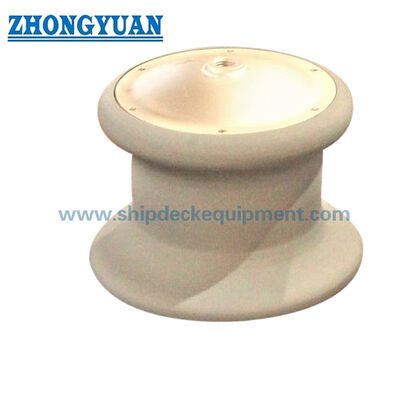
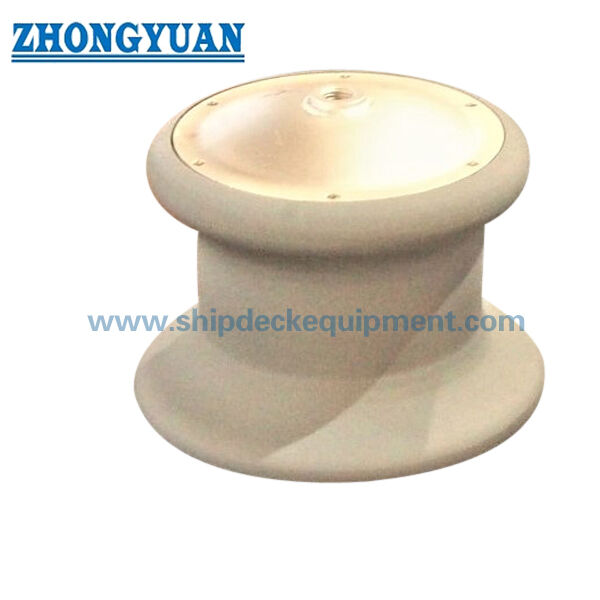
The CB/T 3861-2011 Type A single roller fairlead with dust cover is a ship mooring rope guide using one vertical roller without a base. It is used to guide fiber rope or steel wire rope at deck or bulwark mooring positions where the rope lead angle needs controlled redirection with reduced sliding contact. Two or three single rollers can also be arranged as one group when the mooring layout requires rope guidance from different directions.
This page focuses on the cast steel roller, shaft and copper-bush running quality, lubrication condition, and the protective function of the top dust cover. The fairlead should be selected according to roller diameter, SWL, rope type, rope diameter, installation position, rope lead direction, vessel structure, surface treatment, and certificate requirement. It is a mooring rope guide and should not be treated as a lifting appliance.
Quick Specifications
- Standard and type: CB/T 3861-2011 Form A / Type A → single roller fairlead with dust cover for ship mooring rope guidance.
- Roller diameter range: 100–450 mm → covers small to large mooring rope guidance positions according to vessel arrangement.
- SWL range: 54–617 kN → supplied fairlead working load basis for product selection; it should not be mixed with rope breaking load.
- Reference rope range: fiber rope 28–80 mm and 6×37 steel wire rope 12.0–44.0 mm → helps match rope diameter with roller size.
- Roller arrangement: single roller without base → two or three rollers can be used as a group when the rope path needs multi-angle guidance.
- Running components: cast steel roller, strong shaft, copper bush, and lubrication interface → support flexible rotation and reduce rope friction.
- Dust cover: top protective cover over the roller assembly → helps reduce direct exposure of the upper shaft and bush area to salt spray, dirt, and corrosion.
- Surface treatment: Sa 2.5 blasting + epoxy shop primer, galvanized, polished, or customized finish → final coating to follow project requirement.
Main Technical Parameters
Main webpage selection data for CB/T 3861-2011 Type A single roller fairlead with dust cover. Dimensions are in mm unless otherwise stated.
| Roller Dia. |
SWL KN |
Fiber Rope Dia. |
SWR Dia. 6x37(1770Mpa) | D1 | D2 | H | H | d | S | K | K1 |
Weight kg |
|
| 100 | 54 | 28 | 12. 0 | 160 | 45 | 128 | 114 | 50 |
3 |
5 | 9.9 | ||
| 150 | 127 | 32 | 16. 0 | 240 | 65 | 2l1 | 170 | 75 | g | 7 | 33.8 | ||
| 200 | 191 | 40 | 20.0 | 310 | 85 | 251 | 209 | 95 |
10 |
8 |
68. 0 | ||
| 250 | 274 | 45 | 24.0 | 380 | 95 | 298 | 249 | 110 |
4 |
114 | |||
| 300 | 323 | 50 | 28.0 | 440 | 115 | 321 | 270 | 125 |
13 |
10 |
168 | ||
| 350 | 431 | 55 | 34. 0 | 500 | 130 | 346 | 293 | 145 | 248 | ||||
| 400 | 559 | 65 | 40.0 | 560 | 145 | 375 | 316 | 160 |
5 |
14 |
12 |
355 | |
| 450 | 617 | 80 | 44.0 | 620 | 160 | 391 | 330 | 175 | 462 | ||||
Selection & Inquiry Guide
Step 1: Confirm CB/T 3861-2011 Form A / Type A and the required roller diameter from 100 to 450 mm according to the vessel mooring arrangement.
Step 2: Confirm rope type, fiber rope diameter or 6×37 steel wire rope diameter, and the project load basis. Do not treat rope breaking load as fairlead SWL without design review.
Step 3: Confirm whether the project needs a single roller, two-roller group, or three-roller group, including rope lead direction, installation position, and available space.
Step 4: Confirm material requirement for roller, shaft, dust cover, and copper bush. Final material grade and traceability should follow the order specification.
Step 5: Confirm surface treatment: Sa 2.5 blasting + epoxy shop primer, galvanized finish, polished stainless steel surface, or other specified coating system.
Step 6: Confirm certificate scope before quotation: maker certificate, material certificate, class certificate, witness inspection, or other project-specific inspection requirement.
Step 7: Provide quantity, vessel type, installation drawing or reference photo, delivery destination, and required delivery time.
Structure
Top dust cover | Cast steel roller | Vertical shaft | Copper bush | Lubrication interface | Smooth rope-contact radius | Single roller without base | Project-specific mounting arrangement
Casting, Shaft & Lubrication Advantages
- Cast steel roller construction focuses on controlled casting quality, dimensional accuracy, and a smooth rope-contact surface for mooring rope guidance.
- The roller should rotate freely around the shaft and copper bush. Flexible rotation reduces sliding friction at the rope-contact area and helps limit rope surface wear during mooring operations.
- Shaft strength, bush clearance, and shaft-bush fit are important for stable rotation under changing rope lead angles. Final shaft and bush details should be confirmed by project drawing or standard requirement.
- A specified copper-alloy bush can be supplied according to the order requirement, helping maintain stable bearing contact and practical maintenance access when lubrication is properly applied.
- The top dust cover helps reduce direct salt spray, rainwater, dust, and deck contamination entering the upper running area, which supports better corrosion resistance and longer maintenance intervals.
- Lubrication condition should be maintained during service. Proper greasing helps prevent roller seizure and reduces the risk of rope damage caused by a non-rotating roller.
- Single-roller design without a base allows shipyards or designers to combine two or three units in one arrangement when the mooring rope path requires guidance from several directions.
Custom Attributes
- Standard: CB/T 3861-2011 → used when the vessel drawing or shipyard specification requires CB/T 3861 Type A roller fairlead dimensions.
- Type: Form A / Type A → single roller fairlead with top dust cover and no base.
- Roller No.: Single roller → can be used alone or combined with two or three rollers according to rope lead direction.
- Roller Diameter: 100 / 150 / 200 / 250 / 300 / 350 / 400 / 450 mm → select according to rope diameter, SWL, and installation space.
- SWL: 54–617 kN → supplied working load value for fairlead selection; rope MBL, test load, and project safety factor should be treated separately.
- Materials: Mild steel, C-Mn steel, stainless steel, cast steel, or nodular cast iron → final material grades for roller, shaft, bush, and cover to be confirmed before production.
- Copper Bush: Available according to project specification → material grade, groove design, and lubrication details should be confirmed if required for inspection.
- Dust Cover: Top cover for roller assembly → helps protect the upper shaft and bush area from marine environmental exposure.
- Surface Treatment: Sa 2.5 blasting + one layer epoxy shop primer, galvanized, polished, or customized treatment → final finish follows vessel painting or corrosion protection requirement.
- Customization: Available → non-standard material, coating, inspection, or drawing adaptation should be reviewed against project and class requirements.
How It Works
Mooring rope approaches the fairlead → Rope contacts the smooth rotating roller → Roller turns around the shaft and copper bush → Lubrication reduces shaft-bush friction → Dust cover protects the upper running area → Rope direction is guided with reduced rope surface wear
Applications
Ship mooring stations | Deck rope guidance | Bulwark rope lead arrangements | Tugboats | Workboats | Cargo vessels | Tankers | Bulk carriers | Newbuilding projects | Repair and replacement projects
Certifications & Advantages
Certificates can be arranged according to project requirement, inspection scope, material traceability, and class society approval procedure.
Certification: CCS, NK, BV, ABS, DNV, LR, KR, IRS, RS, RINA, CRS, Makers Test Certificate.
Drawing & Photos

FAQ
Q1: How should the correct roller diameter be selected?
A1: Select the roller diameter according to rope type, rope diameter, SWL requirement, rope lead direction, installation space, and the vessel mooring arrangement drawing. For grouped arrangements, the relative position of each roller should also be confirmed.
Q2: Why are the shaft, copper bush, and lubrication important?
A2: These parts affect whether the roller rotates freely under rope contact. A well-matched shaft and copper bush with proper lubrication can reduce sliding friction, help protect the mooring rope surface, and lower the risk of roller seizure during operation.
Q3: Can class certificates be supplied with this fairlead?
A3: Class certificates or witness inspection can be arranged according to the order scope and project requirement. The required class society, material traceability, inspection items, and certificate type should be confirmed before quotation.