


|
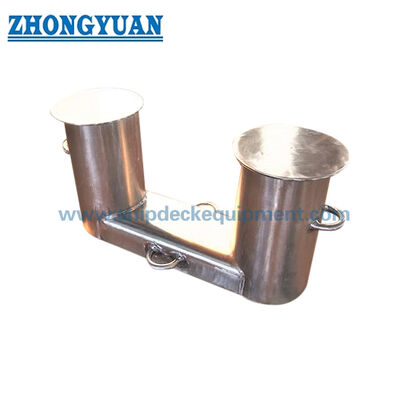
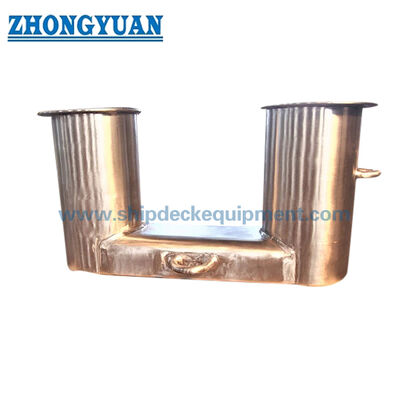
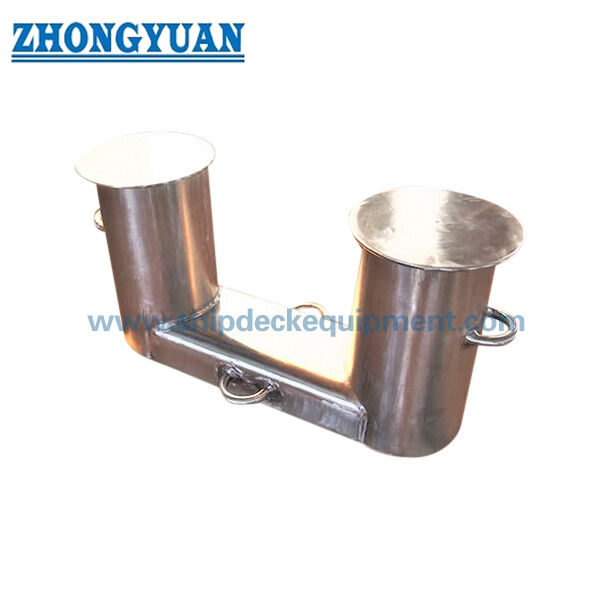
Stainless Steel Double-Bitt Bollard for Shipboard Mooring & Towing | DIN 82607:1995
Product Details:
| Place of Origin: | China |
| Brand Name: | Zhongyuan Marine Equipmen |
| Certification: | CCS, NK, BV, ABS, DNV, LR, KR, IRS, RS, RINA, CRS, Makers Test Certificate |
| Model Number: | Standard or Customized |
Payment & Shipping Terms:
| Minimum Order Quantity: | 1 Unit |
|---|---|
| Price: | Based on quotation |
| Packaging Details: | Export standard pallet or customized packing |
| Delivery Time: | Based on project requirements |
| Payment Terms: | T/T, L/C |
| Supply Ability: | Customized production based on project requirements |
|
Detail Information |
|||
| Technic Standard:: | DIN82607:1995-01 | Type:: | DIN-1, DIN-2, DIN-3, DIN-5, DIN-8, DIN-12, DIN-20, DIN-32; |
|---|---|---|---|
| Materials:: | Mild Steel, C-Mn Steel, Stainless Steel, Also Can Supply Special Steel For Icebreaker. | Nominal Diameters:: | 140 To 560 Mm; |
| Weight:: | 21 To 770kg; | Surface Treatment:: | Sandblasting To S2.5 + One Layer Of Epoxy Shop Primer, Mirror Or Satin Polished, Polished, Galvanized, |
| SWL Range:: | 10-320KN; | Classification Certificates:: | CCS, NK, BV, ABS, DNV, LR, KR, IRS, |
| Highlight: | Double Bitt Stainless Steel Bollard,DIN 82607 Stainless Steel Bollard |
||
Product Description
Stainless Steel Double-Bitt Bollard for Shipboard Mooring & Towing | DIN 82607:1995
Product Overview
The DIN 82607 double bitt bollard is a shipboard mooring and towing fitting installed on a welded deck foundation for belaying and controlling wire rope, fibre rope, or synthetic mooring lines. Its twin-post arrangement provides two working bitts for rope turns and line separation while transferring the applied rope force through the base connection into the reinforced deck structure. This page focuses on stainless steel supply for projects requiring corrosion resistance or a polished surface; carbon steel and C-Mn steel versions can also be discussed according to the vessel specification.
DIN Media lists DIN 82607:1995-01 as the current edition under the official English title “Double bollards”. The supplied model series covers maximum towing loads from 10 kN to 320 kN and bitt tube outside diameters from approximately 139.7 mm to 559 mm. Final selection must consider the vessel mooring or towing plan, line direction, deck foundation, under-deck reinforcement, welding procedure, material grade, surface finish, inspection scope, and the load terminology required by the project.
Quick Specifications
- Standard status: DIN 82607:1995-01, Double bollards → listed as current by DIN Media and replacing DIN 82607:1992-10.
- Product type: Shipboard double bitt bollard → used for mooring and towing line handling on the vessel, not as a quayside bollard.
- Model range: DN-1 / DN-2 / DN-3 / DN-5 / DN-8 / DN-12 / DN-20 / DN-32 → model prefix and designation should be confirmed against the official standard or approved drawing.
- Maximum towing load: 10–320 kN in the supplied table → this term should not be automatically replaced by SWL without project confirmation.
- Bitt tube size: d1 approximately 139.7–559 mm with model-dependent wall thickness → affects rope-contact geometry, fabrication weight, and deck arrangement.
- Material options: mild steel, C-Mn steel, or stainless steel → exact plate and tube grades, weldability, and material certificates are to be confirmed.
- Surface finish: Sa 2.5 blasting plus epoxy shop primer for coated steel; satin, mirror-polished, or project-specified finish for stainless steel.
- Approximate weight: 18–649 kg in the supplied row data → final quotation weight is to be confirmed because the separate 21–770 kg summary does not match the table.
Main Technical Parameters
| Type |
Max. Towing Load KN |
d1 ×s1 | b | d2 | d3 | e±10 | h1 | h2 | h3 | h4 | h5 | r | s2 | s3 | u | a1 | a2 |
Weight (kg) ≈ |
| DN-1 | 10 | 139.7×6.3 | 130 | 160 | - | 430 | 370 | 105 | 25 | - | 55 | 40 | 5 | 18 | - | 3.5 | 4 | 18 |
| DN-2 | 20 | 219,1x 8 | 180 | 240 | - | 570 | 475 | 115 | 35 | - | 60 | 50 | 6 | - | 27 | |||
| DN-3 | 32 | 273 x10 | 250 | 300 | - | 700 | 570 | 135 | 45 | - | 75 | 60 | 8 | 25 | - | 4 | 50 | |
| DN-5 | 50 | 323.9x10 | 300 | 355 | 150 | 880 | 670 | 150 | 60 | 85 | 85 | 70 | 70 | 85 | ||||
| DN-8 | 80 | 355.6 x 14,2 | 330 | 390 | 170 | 1050 | 780 | 175 | 75 | 105 | 105 | 80 | 10 | 80 | 5 | 156 | ||
| DN-12 | 120 | 457 x16 | 420 | 490 | 210 | 1200 | 860 | 195 | 90 | 130 | 120 | 90 | 16 | 35 | 90 | 6 | 259 | |
| DN-30 | 200 | 508 x17,5 | 470 | 545 | 235 | 1350 | 970 | 230 | 115 | 155 | 150 | 100 | 100 | 7 | 376 | |||
| DN-32 | 320 | 559 x20 | 530 | 600 | 255 | 1400 | 1 000 | 270 | 145 | 180 | 110 | 110 | 649 |
Selection & Inquiry Guide
Step 1: Confirm DIN 82607:1995-01 and the required model or maximum towing load according to the vessel mooring / towing arrangement.
Step 2: Confirm rope type, rope diameter, expected line direction, wrap arrangement, and whether the project uses maximum towing load, design load, or SWL terminology.
Step 3: Provide the deck layout, foundation drawing, under-deck reinforcement, welding interface, and available installation space for engineering review.
Step 4: Confirm the exact material requirement: stainless steel grade and product form, or the required mild steel / C-Mn steel grade.
Step 5: Confirm surface finish, coating or polishing requirement, material traceability, WPS / PQR, NDT, classification society, and witness inspection scope.
Step 6: Provide quantity, vessel type, installation position, delivery destination, required delivery time, and project drawing or reference photo if available.
Structure
Twin tubular bitts | Welded steel post and plate assembly | Smooth rope-contact surfaces | Line-retaining geometry | Deck welding interface | Under-deck foundation connection | Polished stainless steel or specified coated finish
Fabrication, Installation & Engineering Advantages
- Twin-post geometry provides two working bitts for rope turns and line separation; the actual belaying arrangement should follow the vessel mooring or towing plan.
- The supplied dimensions indicate a fabricated tubular and welded plate construction. The product should not be described as a cast steel bollard unless a project-specific drawing explicitly changes the construction.
- Rope-contact edges and transitions should be dressed and smoothed to reduce sharp local contact with wire rope, manila / sisal rope, or synthetic line.
- The deck base and under-deck foundation must transfer the specified rope load and load direction into the ship structure without relying on the bollard body alone.
- For stainless steel construction, weld procedure, heat input, distortion control, surface finishing, and any pickling / passivation requirement should be confirmed before production.
- Material traceability, dimensional inspection, weld inspection, NDT, and class witnessing can be arranged according to the order scope and approved inspection plan.
- The DN-1 to DN-32 range supports model selection by required towing load, tube size, deck space, and handling weight rather than by appearance alone.
Custom Attributes
- Standard: DIN 82607:1995-01 → current DIN double bollard standard record for project and drawing reference.
- Product Form: Double bitt / double bollard → twin-post shipboard arrangement for mooring and towing lines.
- Load Range: 10–320 kN maximum towing load → use the terminology stated in the approved project document; do not assume SWL equivalence.
- Construction: Tubular posts with welded steel components → fabrication and welding details must follow the approved drawing.
- Material: Stainless steel, mild steel, or C-Mn steel → exact grade, thickness, weld consumable, and certificate level are to be confirmed.
- Installation: Deck welded foundation → deck plate, seat, weld detail, and under-deck reinforcement require vessel-side approval.
- Surface Treatment: Polished stainless steel or Sa 2.5 plus epoxy primer for coated steel → final system follows the vessel coating specification.
- Certificate Requirement: Available according to project scope → class certificate, material certificate, maker certificate, NDT, and witness points must be agreed before quotation.
How It Works
Mooring or towing line approaches the station → Line is turned and belayed around the twin bitts → Twin-post geometry controls the rope position and permits multiple turns → Applied force passes through the welded base and foundation → Reinforced deck structure carries the design load
Applications
Ocean-going merchant vessels | Workboats | Tugboats subject to project load review | Shipboard mooring stations | Shipboard towing stations | Newbuilding projects | Replacement and retrofit projects
Certifications & Advantages
Certificates can be arranged according to project requirement, material traceability, inspection scope, approved drawings, and classification society procedure.
Certification: CCS, NK, BV, ABS, DNV, LR, KR, IRS, RS, RINA, CRS, Makers Test Certificate.
Drawing & Photos

FAQ
Q1: Is the DIN 82607 double bitt bollard a cast steel product?
A1: The supplied dimension table uses tubular post sizes and welded component dimensions, which indicates a fabricated steel construction. It should not be marketed as a casting unless a project-specific approved drawing clearly specifies cast construction.
Q2: Is the maximum towing load the same as SWL?
A2: Not automatically. The supplied table uses maximum towing load. The approved project should define whether this value is used as design load, maximum rope pull, or another load basis. The deck foundation, welds, under-deck reinforcement, and load direction must be verified together with the bollard.
Q3: What information is required before quotation?
A3: Confirm the DIN model or required towing load, rope arrangement, material grade, surface finish, quantity, class requirement, deck and reinforcement drawing, installation position, delivery destination, and required delivery time.