


|
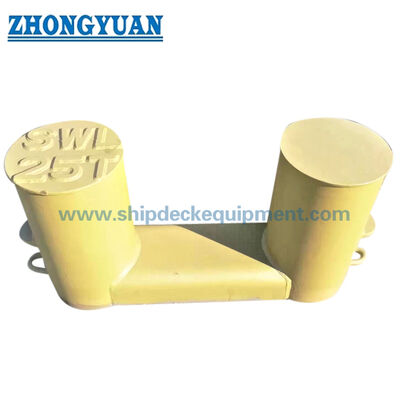
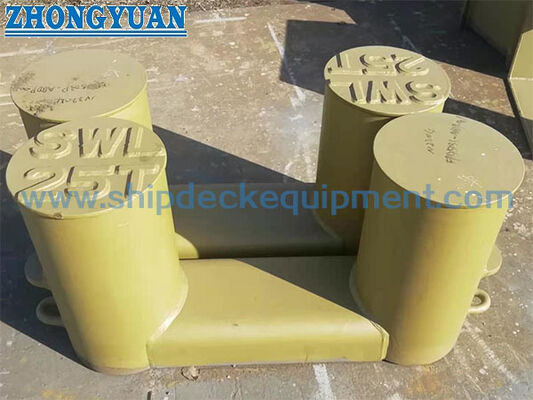
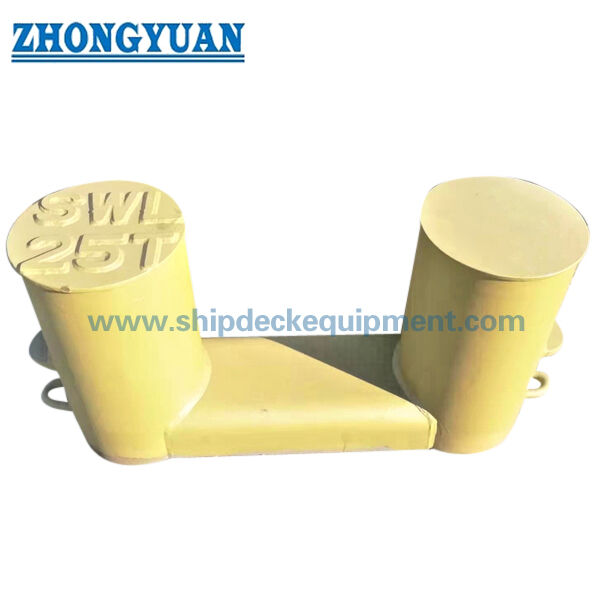
Welded Steel Double-Bitt Bollard for Ship Mooring & Towing | NS 2584-1977
Product Details:
| Place of Origin: | China |
| Brand Name: | Zhongyuan Marine Equipmen |
| Certification: | CCS, NK, BV, ABS, DNV, LR, KR, IRS, RS, RINA, CRS, Makers Test Certificate |
| Model Number: | Standard or Customized |
Payment & Shipping Terms:
| Minimum Order Quantity: | 1 Unit |
|---|---|
| Price: | Based on quotation |
| Packaging Details: | Export standard pallet or customized packing |
| Delivery Time: | Based on project requirements |
| Payment Terms: | T/T, L/C |
| Supply Ability: | Customized production based on project requirements |
|
Detail Information |
|||
| Technical Standard: | NS 2584-1977 | Nominal Diameters: | 125 To 710mm |
|---|---|---|---|
| SWL: | 45-815 KN | Material: | Tube, Plate, Mild Steel; Stainless Steel |
| Weight: | 25.9 To 1532 Kg | Surface Treatment: | Sandblasting To S2.5 + One Layer Of Epoxy Shop Primer, Mirror Or Satin Polished, Polished, Galvanized, Customized Surface Treatment Available |
| Classification Certificates: | CCS, NK, BV, ABS, DNV, LR, KR, IRS, RS, Etc. | ||
| Highlight: | NS 2584 Bollard,NS 2584 Double Bitts Bollard,Ship Towing Equipment Bollard |
||
Product Description
Welded Steel Double-Bitt Bollard for Ship Mooring & Towing | NS 2584-1977
Product Overview
The NS 2584 double bitt bollard is a welded steel deck fitting used to secure mooring lines and, where the vessel arrangement and approved load basis permit, a towing line. Two cylindrical bitts are arranged on a common deck connection, allowing the line to be belayed around the posts while the resulting force is transferred through the bollard structure, deck welds, and local deck reinforcement.
The supplied NS 2584-1977 range covers nominal sizes 125 to 710 and provides separate maximum-load tables for mooring and towing conditions. Tube and rolled-plate bitt constructions are listed. Selection should therefore confirm the intended operation, rope arrangement, load direction, deck foundation, material grade, coating system, and certificate scope rather than treating the mooring and towing values as one interchangeable SWL.
Quick Specifications
- Product type: Welded double bitt deck bollard → two-post arrangement for controlled mooring-line belaying and project-approved towing use.
- Technical standard: NS 2584-1977 → Norwegian marine-industry bollard standard; current project acceptance and edition status should be confirmed.
- Nominal size range: 125 to 710 → nine standard sizes for different vessel layouts and load requirements.
- Reference maximum mooring load: 45 to 815 kN → use only with the mooring arrangement and load basis stated in the approved vessel documentation.
- Reference maximum towing load: 130 to 2,150 kN → separate from the mooring values and subject to towing-line direction, deck strength, and approval.
- Bitt construction: Steel tube or rolled steel plate → section dimensions are specified separately for fabrication and quotation confirmation.
- Calculated weight: 25.9 to 1,532 kg → supports handling, deck installation planning, packing, and freight estimation.
- Surface treatment: Sa 2.5 blasting plus epoxy shop primer as reference → final coating, galvanizing, or stainless-steel finish follows the order specification.
Main Technical Parameters
| Nominal size |
Bitts d1 × s |
Bitts d1 × s |
a1 | a2 | b1 | C | d2 | e | h | k | I1 | I2 | t1 | Half link fastening |
| 125 | 139,7 x10 | 140x10 | 4 | 5 | 20 | 80 | 170 | 165 | 250 | 15 | 315 | 455 | 6 | 1 |
| 160 | 168,3x10 | 168x10 | 4 | 5 | 24 | 90 | 200 | 195 | 300 | 15 | 400 | 568 | 6 | 1 |
| 200 | 219,1x12,5 | 219x12 | 5 | 6 | 32 | 100 | 260 | 250 | 400 | 15 | 500 | 719 | 6 | 1,6 |
| 250 | 273 x12,5 | 273x12 | 5 | 6 | 40 | 125 | 330 | 315 | 500 | 15 | 630 | 903 | 10 | 1,6 |
| 315 | 323,9x16 | 324x16 | 6 | 8 | 48 | 150 | 390 | 375 | 600 | 20 | 800 | 1124 | 10 | 2,5 |
| 400 | 406,4x17,5 | 406x16 | 8 | 9 | 56 | 175 | 480 | 435 | 700 | 20 | 1000 | 1406 | 10 | 4 |
| 500 | 508 x25 | 508x22 | 10 | 9 | 72 | 200 | 600 | 515 | 830 | 25 | 1250 | 1758 | 12 | 4 |
| 630 | 610 x25 | 610x22 | 10 | 9 | 88 | 225 | 720 | 615 | 1000 | 25 | 1570 | 2180 | 16 | 4 |
| 710 | 711 x28 | 711x25 | 10 | 9 | 96 | 250 | 830 | 675 | 1100 | 25 | 1750 | 2461 | 16 | 4 |
| Nominal size |
Maximum load in bollard | Weight | Code No. | |||
| when mooring | when towing | |||||
| kN | (Mp) | kN | (Mp) | kg | ||
| 125 | 45 | (4,5) | 130 | (13,0) | 25,9 | |
| 160 | 55 | (5,5) | 155 | (15,5) | 37,2 | |
| 200 | 100 | (10,0) | 285 | (28,5) | 75,2 | |
| 250 | 130 | (13,0) | 365 | (36,5) | 124 | |
| 315 | 205 | (20,5) | 540 | (54,0) | 230 | |
| 400 | 280 | (28,0) | 740 | (74,0) | 356 | |
| 500 | 510 | (51,0) | 1300 | -130 | 723 | |
| 630 | 615 | (61,5) | 1550 | -155 | 1084 | |
| 710 | 815 | (81,5) | 2150 | -215 | 1532 | |
Selection & Inquiry Guide
Step 1: Confirm NS 2584 double bitt bollard, nominal size, and whether the unit is required for mooring, towing, or both under the vessel-approved arrangement.
Step 2: Provide the rope type, rope diameter, rope MBL, number of lines, belaying method, lead angle, and governing design load; do not select from nominal size alone.
Step 3: Confirm installation position, deck plate and reinforcement arrangement, weld detail, load direction, and available clearance around both bitts.
Step 4: Confirm tube or rolled-plate construction, weldable steel grade, stainless-steel option if required, material traceability, and any low-temperature requirement.
Step 5: Confirm surface treatment, final vessel coating system, inspection and NDT scope, load marking, maker certificate, and classification society involvement.
Step 6: Provide quantity, vessel type, newbuilding or replacement status, delivery destination, required delivery time, GA drawing, and existing-product photos if available.
Structure
Twin cylindrical bitts | Common welded deck connection | Tube or rolled-plate construction | Rounded line-contact surfaces | Top closure / line-retaining geometry | Half-link fastening provision | Reinforced deck interface | Specified protective coating
Mooring, Towing & Fabrication Advantages
- The two-bitt arrangement provides a defined belaying geometry for mooring lines and allows the line path to be distributed around both posts when the approved arrangement requires cross-belaying.
- Separate mooring and towing load tables reduce the risk of applying the higher towing value to an unverified mooring arrangement or treating both operating cases as identical.
- Tube and rolled-plate alternatives provide two fabrication routes while retaining the principal standard dimensions and load-selection framework.
- Line-contact edges and post surfaces should be rounded, dressed, and free from harmful irregularities that may abrade fibre rope or damage wire rope.
- The welded base and deck connection transfer line force into the ship structure; deck thickness, reinforcement, weld size, and load direction should be verified by the shipyard or design office.
- Fabrication inspection can include dimensional checking, weld inspection, material traceability, NDT, and load-related engineering review according to project requirements.
- Changes to post height, diameter, top geometry, or auxiliary roller arrangement should be treated as engineered customization and confirmed before production and class submission.
Custom Attributes
- Standard: NS 2584-1977 → Norwegian standard reference for marine bollard dimensions and load tables.
- Configuration: Double bitt / twin-post bollard → suitable for controlled line belaying on a reinforced ship deck.
- Nominal Size: 125 / 160 / 200 / 250 / 315 / 400 / 500 / 630 / 710 → select by approved load basis, rope arrangement, and vessel drawing.
- Load Basis: Separate mooring and towing values → final marked load and allowable rope arrangement require project confirmation.
- Construction: Steel tube or rolled steel plate → section size and thickness follow the selected nominal size.
- Material: Weldable mild steel as the basic fabrication option → exact grade, stainless steel, and low-temperature steel are to be confirmed.
- Installation: Deck welded → local deck reinforcement and welding procedure are part of the vessel structural design.
- Surface Treatment: Sa 2.5 blasting plus epoxy shop primer as reference → final finish follows the vessel coating specification.
- Certificate Requirement: Available according to order scope → class approval, inspection witnessing, and certificate issue are not automatic.
How It Works
Mooring lines are belayed around both bitts, or a towing line is led over the approved bitt according to the vessel arrangement → Line force acts on the cylindrical posts → Load passes through the common bollard structure and deck welds → Reinforced deck structure distributes the force into the hull → Inspection, marking, and final coating are completed according to the approved scope
Applications
Tugboats | Workboats | Cargo vessels | Service vessels | Ship deck mooring stations | Approved ship towing stations | Newbuilding projects | Replacement and retrofit projects
Certifications & Advantages
Certificates can be arranged according to project requirement, inspection scope, material traceability, and classification society approval procedure. The standard's historical approval wording should not be interpreted as automatic approval for every manufactured unit.
Certification: CCS, NK, BV, ABS, DNV, LR, KR, IRS, RS, RINA, CRS, Makers Test Certificate.
Drawing & Photos

FAQ
Q1: Can the towing load be used as the mooring SWL?
A1: No. The supplied table gives separate maximum loads for mooring and towing. The applicable value depends on line arrangement, load direction, number of lines, deck strength, and the approved vessel documentation.
Q2: Are the tabulated values the rope breaking strength, bollard SWL, or design load?
A2: The supplied table is headed “Maximum load in bollard”, while the supplied narrative also refers to permitted rope breaking strength. The governing terminology, marking, and relationship to rope MBL should therefore be confirmed against the official NS 2584 copy and project approval basis.
Q3: What information is required before quotation?
A3: Confirm nominal size, mooring or towing duty, rope details and MBL, load direction, tube or rolled-plate construction, material grade, deck foundation drawing, surface treatment, certificate scope, quantity, destination, and delivery date.